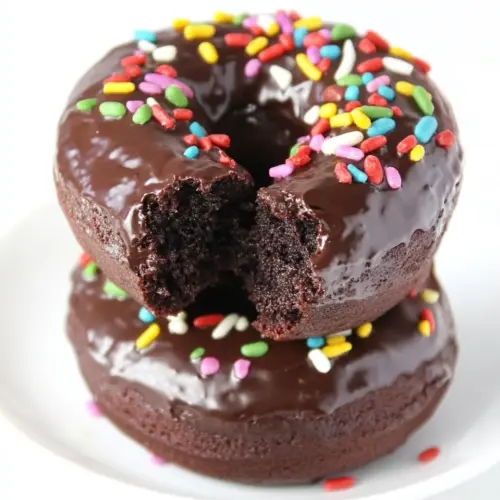
Double Chocolate Cake Donuts
Double Chocolate Cake Donuts deliver a rich, cakey texture with a glossy chocolate ganache finish. Soft crumb meets a silky topping for a simple, indulgent treat that is easy to make for brunch or a special snack. These donuts are quick to prepare and perfect for sharing, which makes them ideal for an easy weekend bake or an impromptu celebration.
Equipment
- Doughnut pan
- Large Bowl
- Whisk
- Sifter
- Butter knife
Ingredients
- 1 cup all purpose flour Provide structure and bulk to the donut batter, developing gluten when mixed and giving the donuts their crumb; sift to avoid lumps and ensure even texture. Measure precisely for balance with leaveners and cocoa to keep the donuts tender rather than dense.
- 1/2 cup dark brown sugar Add deep sweetness and a hint of molasses complexity to the batter while contributing moisture; cream or dissolve with the butter to ensure even distribution. Adjust packing to control sweetness level and to complement the chocolate flavor without overpowering it.
- 1/2 teaspoons salt Enhance overall flavor by balancing sweetness and intensifying chocolate notes while helping control fermentation and dough strength; dissolve thoroughly in wet ingredients. Use sparingly, as it also sharpens other flavors and supports leavening action.
- 1/4 cup cocoa powder Contribute intense chocolate flavor and color while absorbing some moisture from the batter to concentrate taste; sift to prevent clumping and ensure a smooth batter. Combine with flour and other dry ingredients to create an even chocolate base for the donuts.
- 1 teaspoon baking powder Provide rising power to the batter by releasing carbon dioxide when heated, creating lightness and lift; ensure freshness for optimal rise. Mix with the dry ingredients so it activates uniformly during baking for consistent texture.
- 1 teaspoon vanilla extract Impart aromatic sweetness and depth, rounding out the chocolate profile and enhancing perceived sweetness without extra sugar; add with the wet ingredients. Quality vanilla will subtly elevate all flavors and balance bitterness from cocoa.
- 1 large egg, at room temperature Bind the ingredients together, add richness and a tender crumb through fat and protein, and help trap air for lift; bring to room temperature for better emulsification. Beat gently into the batter to integrate fully without overmixing.
- 3 tablespoons unsalted butter, melted Introduce richness and moisture while adding a subtle buttery flavor; melting helps it incorporate smoothly into the wet mixture for even texture. Cool slightly before combining with eggs to avoid cooking and to maintain batter consistency.
- 1/2 cup milk (I used chocolate almond milk, but regular cow's milk will work fine) Provide liquid to hydrate dry ingredients and adjust batter thickness while contributing additional chocolate notes if using chocolate almond milk; temperature affects mixing and rise. Substitute with regular milk as needed, but maintain quantity for correct batter consistency.
- 1 cup confectioners' sugar Create a smooth, sweet glaze or icing base that dissolves easily into liquids and yields a glossy finish; sift to avoid lumps and achieve silky texture. Adjust quantity or consistency when combining with cream to get desired glazing thickness.
- 1/4 cup cocoa powder Add concentrated chocolate intensity to the glaze or icing, enriching flavor and darkening color; whisk in gradually to prevent lumps. Balance with confectioners' sugar and cream to achieve a smooth, spreadable consistency.
- 1/4 cup heavy cream (more if needed) Provide creaminess and liquidity to the glaze, creating a shiny, pourable texture while mellowing sweetness; adjust amount to reach desired thickness. Warm slightly to facilitate mixing and to allow the glaze to coat the donuts evenly.
- Pinch of salt Brighten and balance flavors by cutting sweetness and enhancing other taste notes; a small amount helps round out chocolate and sugar components. Dissolve into the glaze or batter to ensure uniform seasoning without detectable graininess.
- 1/2 cup rainbow sprinkles Add a playful visual contrast and crunchy texture to the finished donuts while contributing minimal sweetness; sprinkle immediately after glazing to adhere. Use sparingly for aesthetic effect and to maintain focus on the chocolate flavor.
Instructions
- Preheat oven to 350 degrees (F).: When the oven warms up you will notice a faint dry, warm aroma that signals a stable baking environment. This step ensures even rise and browning, so the centers bake through while the edges do not overcook. A common mistake is not allowing the oven to reach temperature, which can cause dense, under risen donuts. If your oven runs hot or cold, use an oven thermometer to confirm the setting.
- Lightly grease a doughnut pan; set aside.: Greasing the pan creates a slick surface so the donuts release easily, and you may hear a soft tinking when you tap the pan before pouring batter. Use a pastry brush or nonstick spray to coat each cavity evenly. Too much grease can fry the exterior, while too little will make the donuts stick; aim for a thin, even film.
- In a large bowl whisk together the dry ingredients. In a separate bowl whisk together the wet ingredients, then gently pour them into the dry ones. Fold ingredients together until just combined.: As you whisk the dry mix you will see cocoa and flour particles blend into a uniform color, and whisking the wet ingredients creates a glossy, integrated mixture. Folding is gentle work, so stop when streaks remain; over mixing develops gluten and yields a tough crumb. If you overmix, you may notice a gummy texture after baking, so fold briefly and patiently.
- Spoon mixture into prepared doughnut pan, and bake for 10-11 minutes, or until the doughnuts spring back when lightly pressed. Be careful not to over bake here!: During baking the batter puffs and the surface firms; you might smell the chocolate intensify and see the edges pull slightly away from the cavities. The spring back test is tactile and reliable, signaling that the interior is set. Leaving them in too long will dry them out, which leads to a crumb that flakes when bit into.
- Allow doughnuts to cool a few minutes in the pan before transferring to a doughnut pan to cool completely.: The short rest lets the structure stabilize so the donuts do not break when removed. You will feel a slight give as they cool, and the surface will lose its initial tackiness. Removing them too early may tear the sides, while leaving them in the pan too long could cause condensation on cooling; aim for a gentle window of transfer.
- While your doughnuts are cooling, make your ganache!: As you prepare the ganache the aroma shifts to a richer, creamier chocolate scent, and whisking brings a glossy sheen. Making the topping while the donuts cool saves time and ensures the ganache is warm enough to spread smoothly. A pitfall is making the ganache too thin or too thick; adjust with small amounts of cream to reach the ideal spreadable texture.
- Sift together the sugar, salt, and cocoa powder. Add cream and whisk until smooth, adding more cream - one tablespoon at a time - if needed to reach a thick but spreadable consistency.: Sifting aerates the dry ingredients and removes lumps, creating a silky ganache when combined with cream. Whisking builds a shiny, uniform mixture, and adding cream slowly helps you control viscosity. If you add too much cream you will end up with a runny glaze, so proceed gradually and stop when the texture coats the back of a spoon.
- Using a butter knife spread the ganache generously over the tops of each donut, then top with sprinkles. EAT!: Spreading the ganache should feel smooth and slightly resistant, and the gloss will settle into a thin film as it cools. The sprinkles add a crisp contrast and a cheerful visual pop. A common misstep is applying ganache when donuts are too warm, which can cause the topping to slide off; wait until they are cool to the touch for the best finish.
Notes
- Chocolate almond milk swap — Use chocolate almond milk as noted in the ingredients to introduce a subtle nutty sweetness, which enhances the chocolate without adding dairy complexity.
- Extra cocoa intensity — Increase the cocoa in the cake by one tablespoon for a deeper chocolate note, but be mindful it may absorb more liquid so the batter consistency could shift slightly.
- Milk adjustment — Substitute regular cow's milk if you prefer a fuller mouthfeel; this will make the crumb a touch richer and creamier.
- Ganache texture control — If you want a thicker topping, reduce the cream by a tablespoon at a time; for a glossier, thinner coating add small amounts of warm cream until you reach the desired sheen.
- Decor finishing — Swap the rainbow sprinkles for textured sprinkles or a dusting of cocoa to match an occasion, keeping the presentation playful or more refined as you prefer.