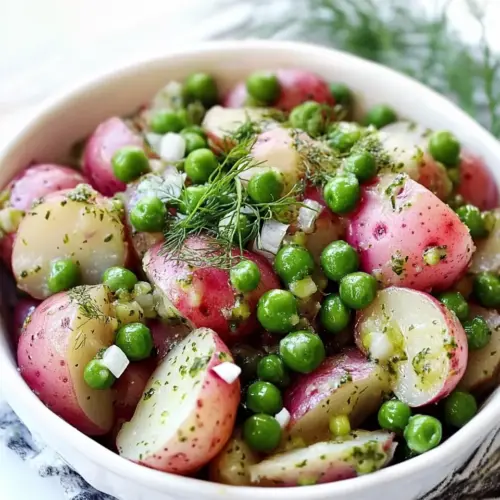
Dilled Red Potatoes and Peas
Dilled Red Potatoes and Peas is a creamy yet bright side that pairs tender small red potatoes with sweet fresh peas and buttery finish. This easy weeknight dinner addition offers vibrant spring flavors and an effortless technique, perfect for busy evenings or casual gatherings. Make it to add a comforting, herbaceous dish to your meal rotation.
Equipment
- Large Stockpot
- Colander
Ingredients
- 2 pounds small red potatoes Boil until tender and evenly cooked; small red potatoes provide a creamy texture and hold their shape well when tossed. Slice or halve after cooking to expose fluffy interiors that absorb butter and dill flavors. Offer a subtly sweet earthiness that balances the brightness of peas and herbs.
- 10 ounces fresh English peas, about 2 cups Add bright, tender sweetness and a burst of fresh flavor when shelled and briefly cooked; fresh English peas contribute a pop of color and light texture contrast. Steam or blanch to preserve their vivid green hue and natural sugars, then gently fold into warm potatoes to avoid crushing. Pair well with butter and dill for a classic springtime combination.
- 4 tablespoons butter Melt to coat and enrich the cooked vegetables; butter imparts a silky mouthfeel and carries fat-soluble flavors like dill. Brown slightly if desired to add a nutty depth, or simply melt and toss for a glossy finish that helps bind seasonings to the potatoes and peas. Balance salt with butter to enhance overall savory notes.
- 1/4 cup fresh dill leaves Chop finely to distribute a fragrant, anise-like herbal lift throughout the dish; fresh dill leaves brighten the potatoes and peas with citrusy and grassy tones. Stir in near the end of cooking to preserve delicate essential oils and visual appeal, creating aromatic bursts in each bite. Use generously for signature flavor without overpowering the other ingredients.
- Kosher salt and freshly ground black pepper Season generously with coarse mineral flavor and use freshly ground pepper to add heat and aromatic spice; kosher salt enhances natural sweetness and helps season potatoes internally during cooking. Adjust to taste, seasoning in stages to build depth and correct after adding butter and dill. Provide necessary balance so the dish is neither flat nor overly salty.
Instructions
- Place red potatoes in large stockpot of water with 1-2 teaspoons of kosher salt. Bring potatoes to boil and reduce to bubbly simmer. Cook for about 7-8 minutes or until fork easily pierces potatoes.: You will hear a gentle rush as the water begins to warm, and the aroma of the salted water is subtle but foundational. Salting early seasons the potatoes from the inside out, so they taste layered rather than flat. The pot should have enough water to cover the potatoes by an inch, and using a pot that is too small can cause uneven cooking. A common mistake is using too little water, which makes the surface starch concentration uneven and can lead to gummy texture.
- Add peas to potatoes and cook for 1 minute more or until they turn bright green. Carefully drain peas and potatoes without crushing peas.: As the water transitions from still to active, you will see rolling bubbles that then soften to a steady simmer. This gentle motion cooks the potatoes evenly without jostling them into pieces. Rapid, violent boiling can break delicate skins and cause water to evaporate too quickly, altering cook time. Watch the surface for consistent small bubbles rather than a furious boil, and adjust the heat to maintain that rhythm.
- Melt butter in same pot and add potatoes and peas back to pot. Season with kosher salt and freshly ground black pepper. Sprinkle with dill, stir gently to combine and serve immediately.: You will notice a faint steam scent and a slight change in the potatoes’ color as they approach doneness. Use a fork to test near the center of a larger potato; it should slide in with light resistance. This test prevents overcooking, which leads to collapsing flesh that will not hold up when tossed. Avoid the temptation to skip the fork check, because visual cues alone can be misleading depending on potato size.
- Add peas to potatoes and cook for 1 minute more or until they turn bright green: The peas will hiss and bob briefly as they hit the hot water, and their color will snap to a vivid green almost immediately. This short burst of heat is enough to cook them through while preserving sweetness and texture. Overcooking here dulls the color and makes the peas mushy, so time it carefully and set a timer if you need to.
- Carefully drain peas and potatoes without crushing peas: Drain in a colander and give it a gentle shake to remove excess water, but be mindful not to press the vegetables through the holes. You may feel a light steam release and smell concentrated vegetable sweetness. Letting the produce sit in hot water too long after draining can continue cooking, so move quickly to the next step. A common error is shaking too vigorously, which can bruise the peas and break the potatoes.
- Melt butter in same pot and add potatoes and peas back to pot: The butter will sizzle softly and release a warm, creamy aroma as it melts. Returning the vegetables to the empty pot allows the butter to coat them evenly, creating a glossy finish that carries seasoning. The residual heat helps the butter to meld into the surfaces without overcooking. If the pot is too hot and the butter browns, you'll change the flavor, so keep the heat low to medium.
- Season with kosher salt and freshly ground black pepper: Once the butter has coated the vegetables, sprinkle salt and grind pepper over them, then gently toss. You will notice the seasoning heighten the flavors immediately, bringing out the natural sweetness of the peas and the earthiness of the potatoes . Season incrementally and taste, because you can always add more but not take it away. A common mistake is over-salting; taste before adding large amounts.
- Sprinkle with dill, stir gently to combine and serve immediately: The fragrance of the fresh dill is bright and slightly citrusy, and sprinkling it last preserves that lift. Gently turning the vegetables ensures even distribution without crushing them, and the finished dish should glisten and smell herbaceous. Serve right away while warm for best texture. If held too long, the dill will wilt and the butter may congeal, dulling the final presentation.
Notes
- Choose the right potatoes: Small red potatoes are ideal because they are waxy and hold shape; when shopping, look for firm, blemish free tubers to ensure even cooking and a pleasant texture.
- Fresh versus frozen peas: Fresh peas offer the best color and snap, but frozen are a reliable alternative; add frozen peas directly to the hot water and watch carefully to avoid overcooking.
- Butter temperature matters: Melt butter gently over low to medium heat so it coats without browning, which keeps the flavor pure and prevents a nutty note you may not want here.
- Herb timing: Add most of the dill at the end to preserve aroma, and reserve a pinch for garnish so the green pops on the finished dish.
- Make ahead tips: You can parboil the potatoes earlier and finish with peas and butter just before serving, which saves time while preserving flavor and texture.