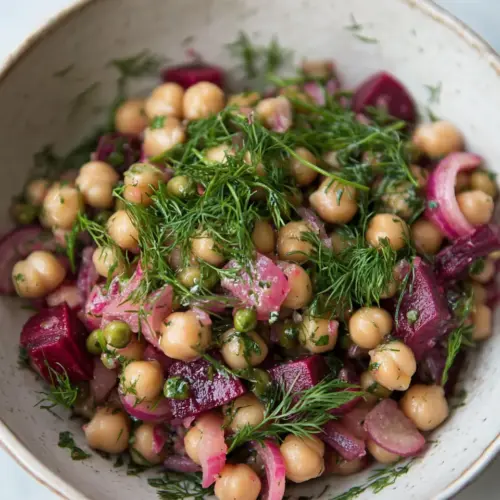
Dill Beet Chickpea Salad
Dill Beet Chickpea Salad is a bright, creamy and crunchy spring salad combining roasted chioggia beets, tender chickpeas, fresh dill, and toasted sunflower seeds. The lemony olive oil dressing lifts the earthy beets, creating an easy weeknight lunch or side that feels special. Make it ahead for effortless entertaining.
Equipment
- Oven
- Roasting Pan
- Parchment Paper
- Mixing Bowl
- Skillet
- Knife
Ingredients
- 1/2 lb chioggia beets Roasted or boiled to tender-crisp, adds sweet earthy flavor and vibrant color to the salad while providing a firm, juicy texture when sliced or diced.
- 2 teaspoons olive oil Drizzled over beets before roasting or used in the dressing to add richness and help carry fat-soluble flavors, contributing a smooth mouthfeel and slight fruitiness.
- 1/8 teaspoons salt Seasoned into the beets or dressing to enhance overall flavor balance; used sparingly to avoid overpowering the delicate beet sweetness.
- 1 cup cooked chickpeas (drained and rinsed if using canned) Tossed into the salad for hearty protein and creamy texture, offering nutty undertones and helping the dish feel substantial and satisfying.
- 1/4 cup chopped dill Finely chopped and folded through the salad to impart a fresh, aromatic lift with bright herbal notes that complement earthier components.
- 3 tablespoons toasted sunflower seeds Sprinkled atop the finished salad to contribute a toasty crunch and subtle nuttiness, adding contrast in texture and a pleasant bite.
- 2 tablespoons olive oil Emulsified into the dressing or combined with lemon to create a cohesive coating for the ingredients, adding fat for flavor and mouthfeel.
- 1 tablespoon lemon Squeezed into the dressing to provide bright acidity and balance the sweetness of beets while accentuating other flavors in the salad.
- 1/8 teaspoons salt (or more, to taste) Added to the dressing or used to finish the dish to enhance and balance flavors, with allowance for adjusting to individual taste preferences.
- 1/8 teaspoon black pepper Ground into the seasoning to provide a warm, mildly sharp counterpoint that lifts the salad's flavors and complements the herbs and beets.
Instructions
- Preheat oven to 425˚F. Trim the beet tops and ends if long, if necessary. Place in the middle of a piece of parchment and toss with the olive oil and salt. Fold the parchment paper up and create a sealed package (I usually fold the top part together a couple of times then tuck the sides under).: As the oven comes up to temperature, you should notice a clean, warm scent when you open it, a sign that the space will be ready to gently coax sugars out of the beets . A fully preheated oven ensures even roasting and predictable timing. If you skip this and put the beets into a cool oven, they will take much longer and may cook unevenly.
- Place the parchment packet in a roasting pan. Roast the beets until tender, 35 to 55 minutes (will depend on the size of each beet). Remove from the oven and let cool enough to rub the skin from the beets.: Handling the beets will release a faint, earthy aroma and a little beet juice on your cutting board. Removing long tops and tough ends creates neat pieces that roast uniformly. A common mistake is leaving on leafy stems which can interfere with even roasting and create uneven cook times.
- Once the beets are peeled, cut into 1/2" thick wedges and place in a bowl along with the cooked chickpeas, dill, and sunflower seeds. Measure in the olive oil, lemon juice, salt, and pepper. Toss until well combined. Taste and adjust salt as needed. This salad can be eaten immediately but does taste a bit better if allowed to rest for an hour or so.: When you coat beets with olive oil , they glisten and the oil helps the heat transfer, which encourages gentle caramelization. The salt at this stage starts to draw out moisture and enhance the natural sweetness. Overcoating with oil can make the exterior too soft instead of concentrated and caramelized.
- Fold the parchment paper up and create a sealed package: Sealing the beets in parchment traps steam and concentrates flavors, producing tender roots without drying. You will hear no sound once sealed, but as you open it after roasting you may notice a warm, earthy steam. If you fail to seal it well, the beets may dry out and roast unevenly, losing some of their sweetness.
- Place the parchment packet in a roasting pan: Nestling the packet in a roasting pan keeps any juices contained and makes transferring easier. The pan will stay cool to the touch until it hits the oven, then hum with dry heat that encourages the beets to soften. Avoid using a pan that is too small which can crimp the packet and stop even circulation.
- Roast the beets until tender, 35 to 55 minutes: As the beets roast, the kitchen fills with a warming, slightly sweet aroma, and the skins will begin to give under a paring knife when they are done. Larger roots need more time, so test with a skewer. A frequent error is under roasting, leaving them too firm and missing the caramelized complexity that develops with proper time.
- Remove from the oven and let cool enough to rub the skin from the beets: Cooling slightly makes the skins slip off easily when rubbed between your fingers or with a towel, revealing vibrant, tender flesh. You may notice a faint steam and a sweeter scent when you peel them. If you peel while piping hot, you risk burning your fingers, and if you wait too long the beets can cool beyond ideal assembly temperature.
- Once the beets are peeled, cut into 1/2 inch thick wedges: The texture of the cut edges should be smooth and moist, with a glossy appearance. Wedges of consistent size ensure an even bite with the chickpeas . Cutting too thin will create fragile pieces that fall apart when tossed, while too thick may overwhelm the balance of textures.
- Place in a bowl along with the cooked chickpeas, dill, and sunflower seeds: As you combine the ingredients, the aroma of fresh dill and toasted sunflower seeds will brighten the roasted beets . The contrasting textures should already feel promising in the bowl. A common slip up is to add the herb too late which prevents its flavor from melding through the salad.
- Measure in the olive oil, lemon juice, salt, and pepper: The dressing will start to blossom on contact, coating each piece with glossy sheen. The lemon lifts the beets and the olive oil smooths the overall profile, while the finishing salt and black pepper sharpen and balance. Overdressing can drown the delicate herb notes, so toss gently and taste as you go.
- Toss until well combined: When tossed, you should hear a soft clink of seeds and see the dressing cling to surfaces, creating a cohesive salad where every forkful has a bit of everything. Tossing distributes flavors and allows the dressing to permeate the legumes and vegetables. Toss too roughly and the wedges can break apart, losing their pleasing texture.
- Taste and adjust salt as needed: A careful taste will reveal where the balance sits, and a small additional pinch of salt can lift muted flavors. Adjust incrementally and let the salad rest a bit to let flavors settle before final seasoning. The mistake here is to add too much at once, which is hard to reverse.
- This salad can be eaten immediately but does taste a bit better if allowed to rest for an hour or so: Allowing the salad to rest lets the dressing marry the ingredients, deepening flavors and softening edges. The overall aroma will meld and the dill will infuse the mixture. If you serve it immediately, it will still be excellent, but you may miss the rounded profile that resting provides.
Notes
- Roast ahead Save time by roasting the beets up to 24 hours in advance. Cooled, they are easier to peel and slice, and the flavors often deepen when stored, making assembly faster the next day.
- Toast seeds for more crunch Gently toast the sunflower seeds in a dry skillet until they become aromatic, this adds warmth and depth. Keep them moving in the pan to prevent burning, which can introduce bitterness.
- Use cooked chickpeas from scratch If you have time, cook dried chickpeas for creamier texture and better control over salt. Soak overnight and simmer until tender for the best mouthfeel.
- Pack dressing separately For picnics or lunches, keep the olive oil and lemon dressing in a separate container and toss just before serving to maintain maximum crunch from the seeds.
- Double the herbs Amp up the freshness by adding extra chopped dill just before serving. The herbal aroma brightens the bowl and makes it feel more celebratory.
- Adjust acidity carefully Taste the dressing after mixing, then add more lemon if you want extra snap, but do so incrementally to avoid overpowering the other flavors.