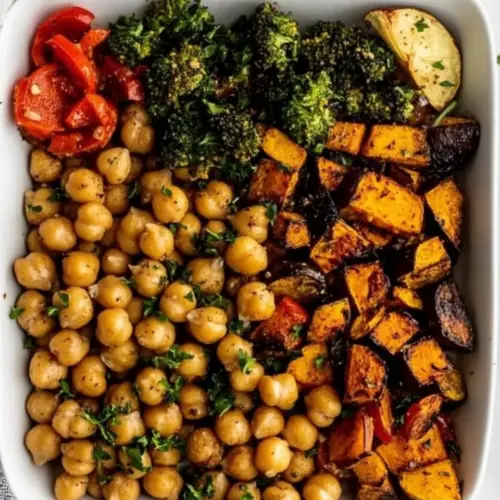
Dijon Garlic Sheet Pan Veggies Chickpeas
Dijon Garlic Sheet Pan Veggies Chickpeas delivers crispy roasted potatoes and vegetables tossed in a tangy mustard garlic marinade with crunchy chickpeas and a massaged kale salad, creating a vibrant, easy weeknight dinner. The texture contrast and bright lemon finish make this dish feel special while staying simple, perfect for quick family meals and meal prep. Try it for a flavorful, healthy reason to cook tonight.
Equipment
- Baking Sheet
- Large Bowl
- Spatula
Ingredients
- 2 tablespoons olive oil Combine into a vinaigrette to coat and help roast the vegetables evenly, adding rich, fruity fat that enhances browning and mouthfeel. Use for tossing potatoes, carrots, peppers, chickpeas, and kale to promote crisp edges and carry flavors. Adjust quantity slightly if vegetables seem dry to ensure even roasting and prevent sticking.
- 2 tablespoons Dijon mustard Whisk into the oil and garlic to create a tangy, emulsified glaze that brightens the dish and binds seasonings to the vegetables. Provide a sharp, savory counterpoint to the natural sweetness of roasted carrots and peppers while helping form a light crust. Add to the sheet pan mixture so each piece picks up concentrated mustard flavor during roasting.
- 3 cloves garlic crushed Mince or crush finely to release pungent, aromatic oils that infuse the oil-mustard mixture and permeate the vegetables during roasting. Deliver savory depth and a gentle heat that complements the mustard and lemon, balancing sweetness from the carrots and peppers. Scrape or press through a garlic press for maximum flavor distribution across the pan.
- Salt and pepper Season generously to enhance the natural flavors and balance acidity and richness in the dish, using salt to draw out moisture and pepper for a subtle heat. Sprinkle before and after roasting as needed to taste, ensuring the chickpeas and potatoes are well-seasoned for crisp, flavorful bites. Consider coarse salt for roasting to help texture and freshly ground black pepper for aroma.
- 1 pound gold or fingerling potatoes cut in half Halve to create bite-sized pieces that roast evenly, offering a creamy interior and crisp exterior when coated in the mustard-oil mixture. Provide a starchy, hearty base that soaks up seasonings and pairs well with the chickpeas and kale. Arrange cut-side down on the sheet pan to maximize caramelization and golden browning.
- 1 red bell pepper diced Dice into uniform pieces to add sweet, crisp bursts of color and flavor that roast quickly and caramelize at the edges. Contribute moisture and a fresh peppery-sweet note that contrasts with the earthy potatoes and hearty kale. Scatter evenly so pieces char slightly without burning, enhancing the overall texture profile.
- 3 carrots chopped Chop into even chunks to provide a naturally sweet, tender element that softens during roasting and develops caramelized edges. Complement the potatoes and bell pepper while adding body and fiber to the sheet pan. Adjust size to match potato pieces so everything finishes at the same time.
- 1 15 ounce can chickpeas rinsed and patted dry Rinse and pat dry to remove excess canning liquid, then toss with the seasoning to promote crisping in the oven rather than steaming. Offer a plant-based protein and creamy texture that contrasts with roasted vegetables while absorbing the mustard-garlic sauce. Spread chickpeas in a single layer to allow edges to become golden and slightly crunchy.
- Chopped parsley for serving! Provide a bright, herbal finish when chopped and sprinkled over the finished dish, adding color contrast and fresh flavor. Cut finely to distribute evenly and lift the roasted vegetables with a clean, slightly peppery note. Use immediately after roasting to preserve freshness and aromatic impact.
- 1 tablespoon olive oil Use to sauté or lightly coat kale in a quick pan or be mixed with the lemon-mustard dressing to soften fibrous leaves before adding to the sheet pan. Add a subtle, additional layer of fat for mouthfeel and help the kale wilt and crisp at the edges when roasted. Drizzle sparingly to avoid excess oiliness while ensuring even seasoning adhesion.
- 1 teaspoon Dijon mustard Incorporate into a lemony dressing or oil-mustard blend to enhance tang and create emulsification that clings to vegetables. Provide an intensified mustard flavor for finishing or for a separate tossed kale dressing, helping brighten roasted components. Stir thoroughly to combine with lemon juice and oil for a cohesive glaze.
- Juice of 1/2 lemon 1-2 tablespoons Squeeze to yield bright, acidic juice that cuts through the richness of oil and mustard, adding freshness and balance to the dish. Use to dress the kale or to finish the entire sheet pan, enhancing flavors and providing a zesty lift. Adjust amount between one and two tablespoons depending on desired brightness and acidity tolerance.
- Salt and black pepper to taste Season to taste as a final adjustment, balancing salt levels and adding freshly ground black pepper for aromatic heat and complexity. Sprinkle before serving or toss with the warm vegetables so seasoning adheres and flavors meld. Taste after roasting to ensure proper seasoning across all components.
- 1 bunch kale de-stemmed and chopped De-stem and chop to provide hearty, leafy greens that add texture, color, and a nutrient boost when roasted or lightly massaged with the dressing. Wilt slightly under high heat to reveal crisped edges and tender centers that complement the roasted potatoes and chickpeas. Add to the sheet pan in the final part of roasting or massage with oil and lemon before combining so it cooks evenly.
Instructions
- Prep: Preheat the oven to 415 F and set a baking tray aside.: The kitchen will smell warm and expectant as you preheat; as the oven climbs to 415 F , you may notice a faint hum and a slight heat that signals the start of transformation. Preheating ensures the tray hits hot air immediately, promoting browning and preventing the vegetables from stewing in their own juices. A common mistake is not waiting for the oven to fully reach temperature, which can lead to pale, soft vegetables rather than golden edges. Make sure the tray is set aside on a sturdy surface so you can transfer the coated vegetables promptly when ready.
- Make the Marinade: Whisk the oil, mustard, garlic, salt, and pepper together in a large bowl. Add the potatoes, bell pepper, and carrots to the bowl, then use a spatula to mix until they are evenly coated. Not all of the marinade will be absorbed, but that’s ok! Transfer the vegetables to the baking sheet and spread evenly across 2/3 of the sheet. Set aside.: When you whisk the olive oil , Dijon mustard , garlic , salt , and pepper together, you should see a slightly glossy emulsion form, with tiny ribbons of oil suspended in the mustard and garlic. This mixture smells pungent and bright, a fragrant base that will cling to the vegetables. Mixing the potatoes , bell pepper , and carrots in this bowl ensures each piece receives a coating, which encourages even caramelization in the oven. If you skip thorough coating, you might end up with uneven flavor and spots that stay bland, so take a moment to fold gently until all pieces look lightly glazed.
- Chickpeas: Add the chickpeas to the same veggie bowl and mix well, until they are coated in the remaining marinade. Spread evenly across the remaining 1/3 of the baking sheet.: As you spread the vegetables across two thirds of the sheet, notice how they sit in a single layer and have space between them, which helps hot air circulate so they crisp instead of steam. The visual cue to watch for is that each piece has some exposed surface area and is not crowded, and you will start to smell faintly sweet aromas as they warm under the oven light. Crowding is the typical error here, causing soggy edges, so arrange them with care for optimal browning.
- Roast: Bake in the top rack of the oven for 30 to 35 minutes, stirring after 15 minutes, until the potatoes are golden and crispy. (Note: keep the chickpeas separately from the other vegetables so they get crispy): When you add the chickpeas to the remaining third of the tray after coating them in the leftover marinade, they should be as dry as possible to encourage crisping; the marinade will give them flavor without making them soggy if they are patted dry first. As they roast, you will hear a faint pop and see them take on a toasted, slightly blistered look, which is exactly what you aim for. A frequent misstep is leaving too much surface moisture on the chickpeas , which prevents crisping, so pat them thoroughly before roasting.
- Kale Salad: Use the same bowl as the vegetables; add the oil, mustard, lemon juice, salt and pepper and whisk well. Add the chopped kale to the bowl and use clean hands to massage the dressing into the kale for 60 to 90 seconds, until the kale shrinks in size and appears glossy. Set aside.: During the 30 to 35 minutes on the top rack, aromas will intensify, and the tray will reward you with golden, caramelized potatoes and slightly charred bell pepper . Stirring after about 15 minutes redistributes heat and exposes new surfaces to the hot air, promoting even color, while keeping the chickpeas separate ensures they become crisp rather than soft. Watch for deep golden edges on the potatoes as the cue that they are done; under roasting yields waxy textures, so give them the time they need.
- Serve & Store: Divide the kale among serving bowls and top with roasted vegetables and chickpeas. Sprinkle with parsley, then serve warm. Leftovers will keep in the refrigerator for up to 3 days. I recommend reheating them in an oven, toaster oven, or air-fryer – the microwave will make them soggy.: When you return to the large bowl and whisk the second portion of olive oil with Dijon mustard , lemon juice , salt , and pepper , the dressing should smell bright and citrusy; when you add the chopped kale and massage it with clean hands for 60 to 90 seconds, the leaves will shrink and develop a glossy sheen. This process breaks down the fibrous texture and concentrates the flavor, transforming tough greens into tender, flavorful salad. A common error is skimping on the massage, leaving the kale bitter and stiff, so be generous with your hands until the leaves look noticeably softer.
- Serve & Store: As you divide the massaged kale among bowls, top with the warm roasted vegetables and crisp chickpeas and sprinkle with chopped parsley , the contrast of temperatures and textures will be immediately apparent and inviting. The finished dish should look colorful and smell herbal with a tangy undertone, and serving it warm preserves the contrast between the tender roasted elements and the fresh salad. For leftovers, store in the refrigerator for up to three days and reheat in an oven or air fryer to revive crispness; microwaving often leaves everything limp and sodden, which is the trap to avoid.
Notes
- Potato sizing If you are using fingerling potatoes, halving them is usually perfect; for larger round potatoes, cut into quarters or wedges so each piece is bite sized and roasts evenly, preventing large pieces from remaining firm at the center.
- Chickpea crisping After rinsing canned chickpeas, spread them on a clean towel and pat completely dry, this small step reduces steam in the oven and makes a dramatic difference in achieving crunchy, toasted exteriors.
- Dressing balance Taste the dressing before massaging the kale, adjusting lemon juice and salt as needed because the kale absorbs flavors; starting slightly under seasoned can help avoid an overly sharp final salad.
- Oven placement Use the top rack to encourage browning and to keep the chickpeas from becoming soggy, and rotate the sheet halfway through if your oven has hot spots to ensure uniform roasting.
- Make ahead You can roast the vegetables and chickpeas up to a day ahead and assemble just before serving; reheat in an oven or toaster oven to restore crispness and toss the kale with dressing shortly before plating.
- Parsley finish Add chopped parsley just before serving to maintain a fresh herbal note and pleasant color contrast against the roasted tones.