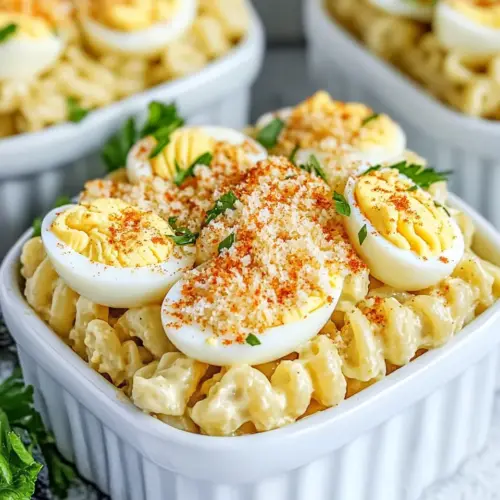
Deviled Egg Pasta Salad
Deviled Egg Pasta Salad is a creamy, tangy pasta bowl where whipped yolk dressing meets tender elbow macaroni and crunchy chopped pickles. This easy, make ahead salad offers satisfying texture and bright flavor, perfect for easy weeknight dinners or potluck sides. Try it when you want a comforting, crowd pleasing dish that travels well and keeps in the fridge for several days.
Equipment
- 6-quart saucepot
- Colander
- Chef Knives
- Cutting Board
- Mixing Bowls
Ingredients
- 21/2 cups elbow macaroni Cooked until tender and slightly firm, serves as the hearty base that soaks up dressing and binds the salad together with a familiar pasta texture.
- 8 large hard-boiled eggs Peeled and chopped to a chunky consistency, provides rich creaminess and classic deviled egg flavor while adding protein and a substantial bite.
- 11/2 cups mayonnaise Creamy and rich, acts as the primary dressing component to coat the pasta and eggs, lending moisture, richness, and a smooth mouthfeel.
- 2 tbsp Dijon mustard Sharp and tangy, contributes piquant flavor to the dressing that echoes classic deviled egg seasoning and balances the richness of mayonnaise.
- 6 whole baby dill pickles, chopped Firm and briny, brings crunchy texture and a vinegary, savory tang that mimics the pickle element in deviled eggs and brightens the salad.
- 1 tbsp pickle juice Sour and salty, intensifies the pickle flavor and adds bright acidity to cut through the richness of the mayo and eggs.
- 11/2 tsp kosher salt Salty and mineral-forward, used to season the entire salad for balanced flavor and to enhance the natural tastes of the other ingredients.
- 11/2 tsp garlic powder Pungent and savory, imparts a concentrated garlic aroma and depth that complements the creamy dressing and elevates overall flavor.
- 1/2 tsp paprika Smoky and mildly sweet, sprinkled in small amount to add color and a subtle smoky note that ties into the deviled egg concept.
- 11/2 tsp onion powder Savory and slightly sweet, provides oniony depth without raw bite, helping to round out the dressing’s flavor profile.
- 1/2 cup chopped celery Crisp and watery, adds fresh crunch and a mild vegetal flavor that lightens texture and gives contrast to creamy elements.
- 1 tbsp thinly sliced chives Mild and onion-like, used as a delicate garnish to add fresh, green flavor and a hint of sharpness without overpowering other ingredients.
Instructions
- Bring a large pot of salted water to a boil over medium-high heat. Add pasta and cook according to the package directions for al dente pasta. Drain and set aside to cool.: Warmth and steam will fill the kitchen as the water reaches a rolling boil, and the scent of mineral salted steam signals readiness. Salting the water seasons the pasta internally as it cooks, so don't skip this step. A common mistake is under salting, which leaves the pasta bland even after mixing. You'll know the water is ready when it reaches a steady, lively boil with continuous bubbles breaking the surface.
- Cut hard boiled eggs in half and remove yolks, and place in a large mixing bowl. Roughly chop the egg whites and set them aside.: As the macaroni softens, you'll hear the faint agitation of pieces bumping around in the pot and see them become plump and tender. Aim for a slight bite in the center, called al dente, which prevents a mushy final salad. Overcooking is the typical error, causing the pasta to break down and soak up too much dressing. Start testing a minute or two before the package time to catch the perfect texture.
- Mash egg yolks with a fork until creamy. Add mayonnaise, Dijon mustard, pickle juice, salt, garlic powder, onion powder, and paprika to the bowl with the egg yolks, and whisk until smooth.: After draining in a colander, a few quick taps remove excess water and the pasta will stop cooking. Cooling prevents the heat from wilting the chopped celery and cooked egg when combined. A frequent oversight is mixing hot pasta with mayonnaise, which can thin the dressing; cool the pasta to room temperature or briefly rinse with cool water to halt cooking.
- Add celery, chopped pickles, chopped egg whites, and cooked pasta to the bowl and stir to combine. Season with salt and black pepper, to taste. Garnish with chopped chives. Store in the fridge until ready to serve.: The shells come away with a satisfying crack and the bright yolks reveal themselves, ready for mashing. Separating the yolks into a bowl lets you create that deviled, creamy base while the whites are reserved for texture. If your yolks are crumbly rather than smooth, they may be overcooked; use a fork to break them down for a creamier result. Keep the chopped egg whites uniform so they fold in evenly later.
- Roughly chop the egg whites and set them aside: The chopped whites offer chunks of tender protein and a contrasting mouthfeel to the silky yolk dressing. Aim for pieces that are bite sized, and listen for the soft thud as the knife hits the cutting board, which indicates a clean chop. A common problem is uneven chopping, leading to some bites with no egg at all, so try to distribute evenly across the salad.
- Mash egg yolks with a fork until creamy: As you press and fork through the yolks, they will transform from crumbly crumbs into a smoother paste, releasing a warm, rich aroma. The texture here is crucial because it determines how well the dressing emulsifies with the mayonnaise . If you stop too early, the dressing may feel gritty; if you overwork them there is little harm, but aim for a velvety consistency. A small trick is to mash until mostly smooth before adding liquids to ensure a cohesive sauce.
- Add mayonnaise, Dijon mustard, pickle juice, salt, garlic powder, onion powder, and paprika to the bowl with the egg yolks, and whisk until smooth: The bowl will fill with tangy, savory aromas as you whisk, and a glossy, uniform dressing will form that clings to the fork when lifted. This step builds the core flavor, so whisk thoroughly to emulsify the fats with the yolk and acidic components. A frequent mistake is not tasting as you go, which can leave the dressing unbalanced; always sample and adjust small amounts for acidity and salt. The texture should be smooth and slightly thick, not watery.
- Add celery, chopped pickles, chopped egg whites, and cooked pasta to the bowl and stir to combine: When you fold these elements together, the scent shifts to a briny, herby bouquet and the visual contrast becomes obvious: pale pasta, flecks of green, and yellow pockets of yolk dressing. Combining at room temperature helps the dressing adhere without becoming greasy. Overmixing can break the pasta and make the salad gluey, so fold gently until ingredients are evenly distributed. If the salad seems dry, add a touch more mayonnaise or a teaspoon of pickle juice to reach the desired creaminess.
- Season with salt and black pepper, to taste: Final seasoning is where everything comes together, and a well seasoned salad will have balanced salt, acid, and spice. Sprinkle small increments, tasting between additions, so you don’t oversalt. One common error is not accounting for salty pickles , which can push the dish into over salted territory, so always taste first. If you overshoot, a squeeze of lemon or additional pasta can mellow the saltiness.
- Garnish with chopped chives: Chives add a light, oniony freshness and a pop of color when scattered on top, and the scent is pleasantly sharp when you bring a forkful to your mouth. Adding them right before serving keeps their texture bright and their flavor lively. If you add them too early, they wilt and lose that snap, so reserve them for the end. Chop thinly so they distribute evenly across the salad.
- Store in the fridge until ready to serve: Chilling deepens the marriage of flavors and firms the salad slightly, making it easier to serve. Keep it covered so it does not absorb other aromas, and consume within a few days for best texture. A frequent mistake is leaving it at room temperature too long, which can encourage bacterial growth; always refrigerate within two hours of mixing. When serving from the fridge, allow a few minutes at room temperature for flavors to come forward.
Notes
- Make ahead advantage The salad can be assembled a day ahead which helps flavors meld, but I recommend adding the chives right before serving to preserve their freshness and color.
- Adjust the tang If you like a brighter profile, add an extra teaspoon of pickle juice then taste. Move slowly because too much acid can overpower the creamy base.
- Evenly sized pieces I always dice the celery and chopped egg whites into uniform bits so each forkful contains a balanced mix of textures.
- Storage note Keep the salad in an airtight container in the fridge and consume within three to four days for best freshness and safety.
- Serving temperature Remove from the fridge about fifteen to twenty minutes before serving so flavors relax and the dressing becomes slightly more aromatic.