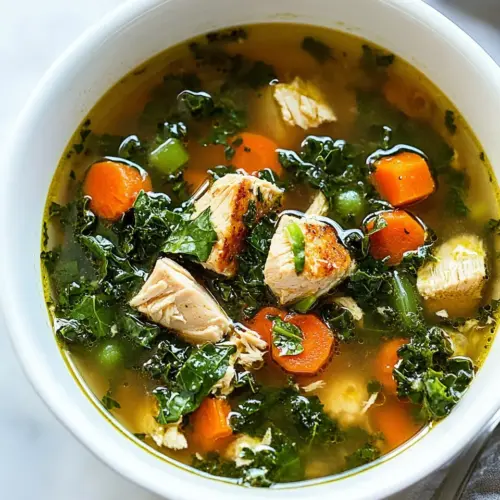
Detox Chicken and Kale Soup
Detox Chicken and Kale Soup is a light, savory bowl with tender chicken, leafy kale, and a clear, aromatic broth. This easy weeknight dinner is both comforting and nourishing, offering bright lemon notes and a hint of ginger for warmth. It’s perfect when you want something quick, wholesome, and satisfying, making it a smart choice for busy evenings.
Equipment
- Large Pot
- Wooden Spoon
- Knife
- Cutting Board
Ingredients
- 1 tablespoon extra virgin olive oil Sauté in the pan to provide a healthy cooking fat and develop aromatic flavors that form the soup base.
- 1 large white onion, diced Sweat until translucent to release sweet, savory notes that create depth and a foundational aromatic layer.
- 4 cloves garlic, crushed Crush and briefly cook to release pungent, flavorful oils that brighten and enhance the overall savory profile.
- 2 medium carrots, diced Dice and simmer to contribute subtle sweetness and body, balancing savory elements and adding texture.
- 2 stalks celery, diced Dice and sauté to add mild vegetal flavor and aromatic complexity while building the soup's savory backbone.
- 1 lb . organic boneless chicken breasts, cubed Cube and poach in the broth to supply lean protein, tender texture, and umami richness to the soup.
- 5 cups organic chicken stock Simmer as the liquid medium to carry flavors, cook ingredients evenly, and add savory chicken richness.
- 3 -4 handfuls fresh kale, ribs removed and roughly chopped Roughly chop and add toward the end to provide earthy, bitter-green nutrients and hearty leafy texture.
- Optional: 2 teaspoons ground ginger Sprinkle in optionally to introduce warm, zesty spice and digestive-supporting properties when desired.
- Optional: 1 teaspoon fresh lemon juice, more to taste Stir in optionally at the finish to introduce bright acidity that lifts flavors and balances richness.
- 1/2 teaspoon ea salt, more to taste Season at the start and adjust as needed to enhance and harmonize the soup's overall flavor profile.
- 1/2 teaspoon ground pepper, more to taste Grind and season to add subtle heat and complexity while highlighting other savory components.
- 1 tablespoon parsley, roughly chopped for garnish Roughly chop and scatter over the finished soup to add fresh herbaceous aroma and a colorful garnish.
Instructions
- In a large pot over medium-low heat, heat oil.: You will notice the oil shimmer slightly as it warms, releasing a faint fruity scent, which signals it is ready for aromatics. This gentle heat prevents burning and encourages even flavor release. If the oil smokes, the pan is too hot and you should remove it briefly from the heat to cool. Why this matters, the oil temperature controls how the onion and garlic brown, preventing bitterness and promoting sweetness.
- Add in onion and garlic and sauté for one minute.: As the onion and garlic hit the oil you will hear a soft sizzle and smell a sharp, warming aroma. That brief sauté takes the raw edge off the garlic while beginning the caramelization of the onion. Be careful not to let the garlic darken, because burnt garlic will add an unpleasant bitter note.
- Add in carrots and celery. Sauté for five minutes, until onion is translucent.: The vegetables will hiss gently as they join the pot and begin to soften. You will see the onion turn translucent and the carrots lose some of their rigid structure. This step builds layered sweetness and aromatic complexity, creating a base that supports the chicken . A common mistake is rushing the sauté, which can leave the vegetables underdeveloped and the broth flatter.
- Pat chicken dry and season generously with salt and pepper.: Drying the chicken gives it a better surface for seasoning to adhere to and encourages better contact with the pan. When the chicken sizzles it should produce a clean sound and faint scent of searing meat. Avoid soggy pieces by ensuring they are dry before seasoning.
- Once onion is translucent, add in chicken and sauté until chicken is opaque and fully cooked through. Should take about 8-10 minutes. Stir occasionally.: As the chicken cooks you will notice it firm and change from glossy to opaque, and the pan will produce a light savory aroma. Turning occasionally ensures even browning and prevents sticking. Overcooking here can make the chicken dry, so aim for just-cooked tenderness.
- Pour in chicken stock and season with salt, pepper, ginger and lemon juice if using.: When the stock hits the pot you will hear a deeper simmer start and smell the melding of flavors. The liquid lifts browned bits from the bottom, which is where much flavor resides. Adding ginger and lemon now allows their bright notes to infuse the broth. Don’t add all the lemon at once; you can always brighten more later if needed.
- Add in kale.: Dropping the chopped kale into the simmering broth will cause an immediate peroxide of green as it wilts, releasing an earthy, vegetal scent. You will notice the leaves shrink and soften, but retain texture. Overcooking the kale will make it limp and lose color, so add it late to maintain vitality.
- Bring to a boil over high heat. Turn heat down to low and let simmer for 15 minutes. Taste and adjust seasoning as desired.: The pot will produce lively, rolling bubbles and an intensified aroma as impurities rise to the surface. Boiling briefly helps integrate flavors quickly. However, avoid prolonged violent boiling, which can break down the chicken fibers and cloud the broth.
- Turn heat down to low and let simmer for 15 minutes: A gentle simmer smooths and melds flavors, producing a rounded, cohesive broth. You will see small, gentle bubbles and will smell the ingredients mellowing into each other. Use this time to taste for balance. Simmering too long can overly soften vegetables, whereas too short will leave flavors uneven.
- Taste and adjust seasoning as desired: The final tasting should guide your adjustments, whether that is more salt , a crack of ground pepper , or an extra splash of lemon juice . Small changes can brighten the whole pot. Avoid oversalting by adding incrementally and tasting between additions.
Notes
- Swap stock quality If your stock is rich and homemade you will need less salt, which keeps the bowl lighter. If using store bought, taste first and adjust sparingly.
- Ginger intensity Adding the optional ground ginger warms the soup, so start with a smaller amount and build if you prefer more heat in the background.
- Lemon finish Use the optional lemon juice at the end to brighten the entire pot, but add in small increments so you can stop when it sings.
- Texture control If you want the kale softer, stir it in earlier and simmer a few extra minutes, but be mindful of color loss.
- Herb garnish Sprinkle the parsley just before serving for a fresh aroma and visual contrast; add more for a herbier finish.