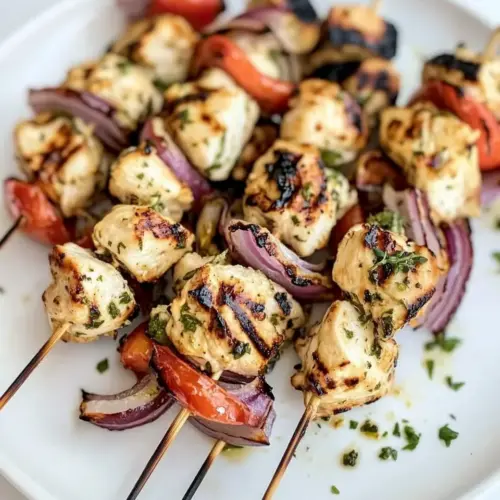
Delicious Greek Chicken Kebabs
Delicious Greek Chicken Kebabs are juicy, bright, and easy to make, with a zesty lemon and garlic marinade that caramelizes beautifully on the grill. This easy weeknight dinner delivers tender chicken and blistered vegetables, perfect for summer gatherings or a quick family meal. Make them for a fuss free, flavorful reason to cook tonight.
Equipment
- Grill or Oven
- Skewers
- Mixing Bowl
- Tongs
Ingredients
- 4 garlic cloves minced Mince finely to release strong aromatic oils that form the base of the marinade and add savory depth to the kebabs. Use immediately or let sit briefly to mellow the sharpness and infuse the chicken with pungent garlic flavor.
- 1 tablespoon olive oil Drizzle lightly to provide a smooth, rich medium for the marinade that helps coat the chicken and vegetables evenly. Warm gently if desired to blend with herbs and lemon juice, contributing healthy fats and a glossy finish when grilled.
- 1/4 cup lemon juice Squeeze freshly to introduce bright acidity that tenderizes the chicken and balances the richness of olive oil and garlic. Combine with herbs and salt to create a lively, citrusy marinade that enhances all kebab components.
- 1 tablespoon oregano fresh, minced Chop finely to release fragrant, resinous notes that evoke classic Greek flavors and complement the lemon and garlic. Mix into the marinade so the herbaceous, slightly peppery character permeates the chicken and vegetables during marination.
- 1 teaspoon kosher salt Measure precisely to season and enhance all flavors while helping the lemon juice mildly tenderize the meat. Dissolve into the marinade to ensure consistent seasoning throughout the chicken and grilled vegetables.
- 2 chicken breasts boneless and skinless, cut into large chunks Cut into large chunks to allow quick, even cooking on skewers while retaining juiciness and texture inside. Marinate thoroughly so the pieces absorb the garlic, lemon, oil, oregano, and salt for flavorful, tender results when grilled.
- 1 red onion cut into large chunks Slice into large chunks to provide caramelized, sweet, and slightly crisp bites that contrast the tender chicken. Skewer alongside meat and vegetables so the onion’s savory-sweet juices mingle with the marinade and add complexity.
- 1 cup grape tomatoes Leave whole or halve for burst-in-the-mouth sweetness and juicy pops that add acidity and freshness to each skewer. Toss with the marinated chicken and vegetables before grilling to soften gently and develop light charred flavor.
- 1 zucchini cut into large chunks Cut into large chunks to maintain a firm texture that grills well and offers a mild, slightly sweet, vegetal contrast to the meat. Marinate so the zucchini soaks up flavors and develops appealing grill marks without becoming mushy.
Instructions
- Combine the garlic, olive oil, lemon juice, and oregano in a small bowl.: The bowl will smell bright and herbal immediately, a sign the marinade is fresh and assertive. Stir until the olive oil and lemon juice emulsify slightly, releasing the aroma of crushed garlic and minced oregano . This step is important because well distributed acid and oil ensure the marinade coats every piece of chicken evenly, helping with both flavor and tenderness. Listen for the quiet sizzle later when the oil meets the heat; if you skip proper mixing, flavors can be uneven. One mistake people make is using too much acid compared to oil, which can start to cook the surface of the chicken and change the texture.
- Place the diced chicken breast in a medium bowl and drizzle about 3/4 of the garlic and lemon juice mix over the chicken. Toss to coat the chicken in the marinade, cover, and refrigerate for at least 30 minutes. Reserve the remaining 1/4 of the marinade.: As the marinade hits the chicken , you will notice the raw poultry brightening in scent, carrying hints of citrus and herb. Toss with clean hands or a spoon until each chunk glistens, ensuring the marinade adheres to the meat. Cover and refrigerate for at least 30 minutes so the acid and aromatics gently penetrate, while reserving the remaining marinade for finishing. Proper marination results in juicier cooked chicken and more cohesive flavor; rushing this step often leads to bland interior bites even if the exterior is well seasoned.
- Preheat grill to medium heat. If a grill is unavailable, preheat oven to 400 degrees.: On the grill you should hear a steady sizzle as the skewers hit the grates, with a hint of char aroma rising quickly. In the oven, set a sheet pan and aim for a hot environment where the surface of the chicken will brown. Temperature matters because too low a heat results in pale, steamed meat, while too high can char the exterior before the center cooks. A frequent mistake is not preheating; adding cold skewers to a cool grill produces uneven cooking and rubbery texture.
- Place one cube of chicken onto a skewer, followed by one piece of onion. Place a second piece of chicken onto the skewer, followed by a tomato. Place a third chicken cube onto the skewer followed by a piece of zucchini. Repeat until the skewer is full. Continue this process on skewers until all ingredients are used.: Thread the ingredients tightly enough to maintain contact, alternating chicken , red onion , chicken , grape tomatoes , and zucchini so that the flavors mingle while cooking. The assembled kebab should look colorful and balanced. Visual cues include plump tomatoes and slightly translucent onions as they near doneness. Avoid crowding skewers so heat circulates evenly; overpacked skewers are a common reason for uneven cooking and underdone pockets.
- Set each filled skewer onto the hot grill (or place on a sheet pan in the oven). Cook for about 5 minutes and turn the kebabs. Turn the kebabs and cook an additional 5 minutes or until chicken is cooked through. Remove from the grill (or the oven) and brush with reserved marinade. Serve.: When the skewers touch the hot surface you will hear a confident sizzle and smell the first hints of searing. Let them cook for about 5 minutes before turning to get a good sear, which locks in juices and creates those attractive grill marks. Watch for the chicken to change from translucent to opaque and for juices to run clear as signs of progress. A typical error is flipping too often; constant turning prevents proper browning and can dry the meat.
- Cook for about 5 minutes and turn the kebabs: After the initial cook you should see golden edges and some charring on the surfaces that touched the grill. Turning distributes heat and gives all sides a chance to brown. The sound will shift from a loud sear to a softer sizzle as the exterior finishes. If any piece looks deeply browned but still raw inside, move it to a cooler part of the grill to finish without burning. Many home cooks overlook this and end up with dry exterior and undercooked centers.
- Turn the kebabs and cook an additional 5 minutes or until chicken is cooked through: In this final stage the aroma becomes richer and sweeter as the vegetables roast and sugars caramelize. Check for a firm spring in the chicken cubes and clear juices; an instant read thermometer should read 165 degrees at the center for safety. This ensures tender, safe to eat meat. A common slip up is relying solely on color, which can be misleading with marinades; temperature is the most reliable indicator.
- Remove from the grill (or the oven) and brush with reserved marinade: Immediately after cooking, brush the skewers with the reserved marinade to add a glossy finish and boost flavor. The residual heat helps the brushed marinade meld without becoming overly raw tasting. This final touch increases juiciness and brings back some of the bright lemony aroma lost to heat. Avoid using the reserved marinade if it was in contact with raw chicken unless you have boiled it first; cross contamination is a risk many underestimate.
- Serve: The finished kebabs should be juicy, with browned bits on the edges of the chicken and softened, slightly charred vegetables. Plate them so the colors show, and let them rest briefly so juices redistribute. If you rush to cut into them while scalding hot, you will lose some juice to the plate; a short rest helps keep the meat succulent.
Notes
- Marinade boost: Add a pinch of ground black pepper to the marinade for a subtle heat that plays well with the lemon and oregano.
- Vegetable swaps: Try bell peppers in place of some zucchini chunks to introduce more sweetness and color contrast on the skewers.
- Serve with a dip: A cooling yogurt based sauce pairs beautifully and complements the lemony marinade, enhancing the Mediterranean vibe.
- Advance prep: Assemble skewers and refrigerate them for up to a day, this saves time when guests arrive and the flavors meld further.
- Oven method: If grilling is not possible, roast the skewers on a hot sheet pan so you still get browning and concentrated flavor.