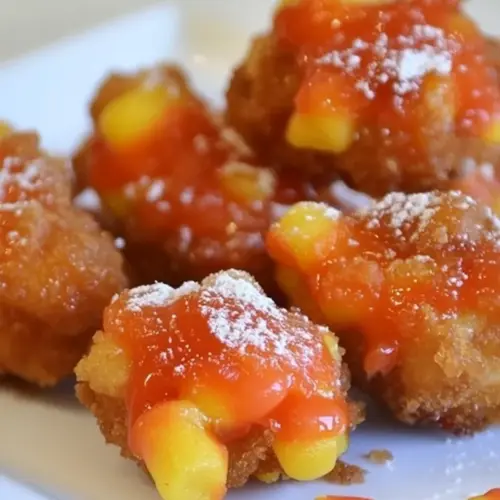
Deep Fried Candy Corn
Deep Fried Candy Corn delivers a crispy golden shell with pockets of sweet, melty candy, offering a playful, nostalgic treat. This easy to assemble snack uses simple pantry staples for quick batch frying, perfect for an easy party appetizer or fall gathering. Crisp texture and surprise centers make it a crowd pleaser, so give it a try for your next seasonal celebration.
Equipment
- Dutch Oven
- Candy thermometer
- Wire Rack
- Slotted Spoon
Ingredients
- 2 cups all-purpose baking mix, Bisquick Provides structure and bulk to the batter while offering a neutral, slightly savory base that browns when fried; contains leavening agents to help create a light, tender interior for the candy-studded fritters. Helps bind the wet ingredients and ensures a consistent dough texture that crisps properly in hot oil.
- 1 large egg Adds moisture and protein to enrich the batter, contributing to tenderness and helping emulsify the mixture so it holds together during frying. Promotes a richer flavor and helps create a uniform crumb around the chopped candy pieces.
- 1/2 to 3/4 cups buttermilk Adjusts batter consistency to the desired thickness, lending slight tang that enhances overall flavor and reacts with leavening agents for lift and lightness. Allows control over batter viscosity so the mixture will coat properly and cook through without becoming greasy.
- 3/4 cup candy corn, coarsely chopped Contributes pockets of sweet, chewy candy throughout the fried bites and melts partially to create bursts of cornstarch-sweet flavor; chopping disperses pieces for even distribution. Adds colorful visual interest and concentrated sweetness that contrasts with the fried exterior.
- 1/2 cup cornflakes cereal Provides a crunchy coating element or mix-in that adds texture contrast to the soft interior; crushed flakes also help absorb excess moisture from the batter to improve crisping. Offers mild corn flavor that complements the candy and helps create an appealing crust when fried.
- Vegetable oil Enables deep frying at the correct high temperature to crisp the exterior quickly while cooking the interior; choose a neutral oil with a high smoke point for best results. Immerses the batter pieces so they develop golden, evenly browned surfaces and a satisfying crunch.
- Powdered sugar Supplies a fine dusting of sweetness for finishing, adding visual appeal and a light extra sweet note to balance the fried dough; adheres well to warm surfaces. Can be sifted over cooked pieces to give a classic dessert presentation and an immediate hint of sugary flavor.
Instructions
- In a large bowl, mix together Bisquick, the egg, and buttermilk.: The moment you combine the all purpose baking mix , egg , and buttermilk , you will notice a thick, sticky batter forming with a faint milky aroma. The texture should be cohesive but still scoopable, not runny, which ensures the dough will hold together when dropped into hot vegetable oil . Mixing by hand helps you feel for any dry pockets, and a few strokes will hydrate the flour uniformly, preventing dense spots. A common mistake is over mixing which can tighten the batter and lead to less tender centers, so stop once the ingredients are just combined. If the batter seems too dry, add small additional splashes of buttermilk until you reach a consistency that holds shape on a spoon. The batter should look pale and slightly lumpy, not glossy like a glaze.
- Stir in candy corn and cornflakes.: When you fold in the coarsely chopped candy corn and cornflakes cereal , you will see crunchy bits and amber flecks dispersed throughout the batter, which is a good visual cue that the mix is balanced. The cereal gives texture contrast, so fold gently to avoid pulverizing it, which preserves those satisfying crispy pockets. The aroma will shift to a sweeter, toasted corn scent as the pieces mingle with the batter. Watch for uniform distribution so every scoop gets candy and crunch. A frequent error is adding too much cereal which can dry the mixture, so keep the ratio steady. If the cornflakes become soggy from resting too long, stir briefly just before scooping to restore loft and ensure even frying.
- Pour 2 inches of oil in a Dutch oven and heat to a temperature of 350 degrees. I like to attach a candy thermometer to the side of the pan.: As the vegetable oil warms, you will notice it shimmer and slightly move in the pot, and a candy thermometer helps you maintain the steady 350 degrees mark. Achieving the right temperature is crucial, because too cool oil results in greasy, undercooked centers, while too hot oil will brown the exterior before the inside cooks. I prefer a heavy Dutch oven because it holds heat steadily, reducing temperature swings when you add batter. One common slip is not stabilizing the flame or burner which causes the temp to spike; watch the thermometer and adjust heat to keep it consistent. You may test with a small drop of batter to ensure it sizzles and rises without burning instantly.
- Carefully drop rounded tablespoonfuls of dough into oil. Fry about 6 at a time and cook for about 1 minute per side.: When you drop rounded tablespoonfuls into the hot oil, listen for a pronounced sizzle that signals the exterior is sealing quickly. Fry about six at a time to avoid crowding the pot, which cools the oil and yields pale, greasy results. The batter should float and puff slightly, taking on a warm golden tone as it cooks. Use a spoon or small scoop to keep pieces uniform in size so they cook at the same rate. A typical mistake is adding too many pieces, which can clump together and steam instead of crisping. Keep tongs or a slotted spoon handy to gently separate any that touch, and maintain an eye on the thermometer to keep the oil near 350 degrees .
- Drain on a wire rack placed over paper towels.: As these cook for roughly one minute per side, you will hear a steady, soft crackle and see the surface transform to a deep golden brown. Turn them with care to achieve even color and avoid jostling which can deflate the airy interior. The sound will become a gentler sizzle as the moisture inside decreases, and the aroma will shift to a bready, toasty note that signals readiness. A common pitfall is misjudging time if pieces vary in size, so try to maintain consistent scoops; if one side browns much faster, lower the heat slightly to allow full cooking without burning. The goal is a crunchy shell with a tender, warm center illuminated by little pockets of melted candy corn .
- To serve, sprinkle with powdered sugar.: After frying, moving the balls to a wire rack over paper towels helps air circulate so they stay crisp rather than becoming soggy. The oil will continue to settle for a minute, and you will notice tiny beads of residual oil glint on the surface that the rack helps dissipate. This resting step keeps the texture contrast intact and avoids steam buildup that happens when they sit directly on absorbent paper. A frequent oversight is piling them on a plate which traps heat and softens the crust, so take the extra moment to arrange them single layer. If you see excess oil pooling, blot gently with paper towels, but avoid pressing which can flatten the shape.
- To serve, sprinkle with powdered sugar: The final dusting of powdered sugar offers a soft sweetness and a visually appealing finish, settling into crevices for a bakery style look. Sprinkle just before presenting so the sugar clings lightly and does not dissolve into warm spots. When the sugar lands, you will get a gentle, snowy contrast that brightens the golden color. An easy mistake is dusting too early which causes the sugar to melt away, so wait until the pieces are slightly cooled but still warm. Serving immediately maximizes crispness and the pleasant contrast between the warm interior and the cool dusting.
Notes
- Adjust the buttermilk amount to control batter consistency, starting with 1/2 cup and adding up to 3/4 cups for a scoopable texture that holds together when dropped into oil.
- Maintain oil temperature by frying in small batches and reducing the heat slightly if the oil spikes past 350 degrees to avoid overbrowning the exterior.
- Keep candy pieces moderate by coarsely chopping the candy corn, which ensures molten pockets instead of a fully melted candy that blends into the batter.
- Use fresh cornflakes to add crunch, folding them in just before frying so they do not turn soggy from resting in the batter.
- Serve immediately after a light dusting of powdered sugar to preserve the contrast between warm centers and a cool sugary finish.