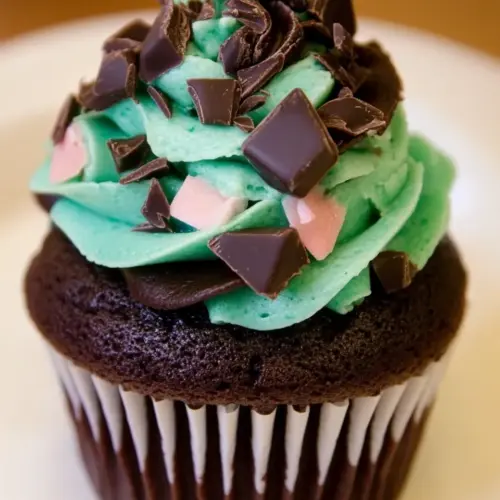
Dark Chocolate Creme de Menthe Cupcakes
Dark Chocolate Creme de Menthe Cupcakes marry rich, slightly bitter dark chocolate with cool mint frosting for a creamy, festive treat. These moist cupcakes are easy to assemble and impressive to serve, with a two tone buttercream and halved mint garnish that delight every crowd. Perfect for celebrations or easy weeknight baking, they offer a balanced, memorable dessert you'll want to make again.
Equipment
- Muffin Pan
- Paper liners
- Mixing Bowls
- Whisk
- Electric Mixer
- Spatula
- Measuring Cups
- Oven
- Cooling rack
- Piping Bag
Ingredients
- 1 cup milk or coconut milk Provide a liquid base and tenderizing fat that hydrates the batter; milk or coconut milk contributes moisture and richness while helping dissolve sugar and activate leaveners. Use at room temperature for even mixing and to improve crumb and mouthfeel in cupcakes.
- 1/3 cup canola oil Add a neutral-flavored fat that keeps cupcakes moist and tender; canola oil contributes a soft crumb and improves shelf life. Measure accurately to maintain proper batter consistency and avoid greasy texture.
- 1 teaspoon vanilla extract Impart aromatic depth and subtle sweetness that enhances overall flavor; vanilla extract balances chocolate and mint notes. Use pure or high-quality extract sparingly to avoid overpowering delicate flavors.
- 3/4 cup sugar Contribute sweetness and contribute to structure through caramelization during baking; sugar also helps retain moisture and supports leavening reactions. Be sure to dissolve thoroughly into wet ingredients for even sweetness and texture.
- 1 cup all-purpose flour Provide the primary structure and bulk to the cupcakes; all-purpose flour forms gluten when mixed with liquids, giving the cupcakes their crumb and stability. Sift or aerate before measuring to ensure accurate volume and consistent texture.
- 1/3 cup dark cocoa powder Supply concentrated chocolate flavor and deep color while contributing to dry structure; dark cocoa powder intensifies chocolate notes without adding fat. Mix evenly with other dry ingredients to prevent clumping and ensure uniform distribution.
- 3/4 teaspoon baking soda Serve as a leavening agent that reacts with acidic ingredients to produce carbon dioxide, lightening the cake crumb; use measured baking soda to achieve proper rise. Ensure fresh soda for maximum effectiveness and avoid overuse which can cause off flavors.
- 1/2 teaspoon baking powder Provide additional leavening and slight lift to produce a tender crumb; baking powder complements baking soda for balanced rise. Measure precisely because excess can impart a metallic or bitter aftertaste.
- 1/4 teaspoon salt Enhance overall flavor by balancing sweetness and strengthening gluten formation slightly; salt elevates chocolate and mint flavors while controlling yeast or leavener activity perceptions. Use the specified small amount to avoid salty taste but improve depth.
- 1 cup butter or margarine, room temperature Contribute richness, flavor, and structure to the frosting; butter or margarine at room temperature creams smoothly with sugar to create a stable, airy buttercream. Use softened but not melted butter for optimal texture and better piping results.
- 2 tablespoons soymilk, divided Adjust frosting consistency and add moisture in small increments; divided soymilk helps thin the frosting to desired spreading or piping thickness. Add gradually to avoid over-thinning and maintain stability in warm conditions.
- 1 1/4 cups confectioners’ sugar, divided Sweeten and stabilize the frosting while adding fine texture; divided confectioners’ sugar allows initial creaming and later adjustment for sweetness and firmness. Sift if necessary to avoid lumps and achieve smooth, glossy buttercream.
- 2 ounces dark chocolate, melted Introduce intense chocolate flavor and a silky texture when melted; dark chocolate enriches the frosting with depth and helps balance mint. Temper or cool slightly before incorporating to prevent melting butter in the frosting.
- creme de menthe flavoring Provide concentrated mint flavor to the frosting or batter; creme de menthe flavoring delivers bracing coolness and pairs with dark chocolate. Use sparingly and taste as you go to maintain balanced mint intensity.
- green food coloring Add vibrant color and accentuate the mint theme visually; green food coloring tints frosting to a festive hue without affecting flavor. Use gel or paste color for stronger tint with minimal liquid impact.
- 6 Andes mints, halved on the diagonal Offer a mint-chocolate garnish and textural contrast when halved on the diagonal; Andes mints create a decorative topper and reinforce the mint flavor. Press halves into frosting after piping for an attractive finish and added crunch.
Instructions
- Preheat oven to 350 degrees F. Line muffin pan with paper liners.: Warmth in the oven sets the stage for even rising and proper texture, and scent is the first sign it's ready, a soft dry heat that feels steady when you open the door. Preheating also ensures the leaveners react at the right moment, giving you tall, tender cupcakes rather than flat, dense ones. If your oven runs hot or cool, use an oven thermometer to verify accuracy, because even small deviations can change bake time and texture. A common mistake is not preheating, which can produce uneven rise and longer baking times.
- Whisk together the coconut milk, sugar, oil, and vanilla extract and beat till foamy. In a separate bowl, sift together the flour, cocoa powder, baking soda, baking powder, and salt. Add in two batches to wet ingredients and beat until no lumps remain (or very few remain).: When you whisk these wet elements, you will notice the mixture become lighter in color and slightly foamy, which means air is being incorporated to help lift the batter. The aroma of vanilla extract will bloom and blend with the sweetness of the sugar , signaling balance. Be careful not to overbeat after you add dry ingredients because that can strengthen gluten and toughen the crumb. If your mixture looks curdled or separated, a few extra slow stirs to emulsify will usually rescue it.
- Pour into liners, filling each with 1/4 cup of batter. Bake 18-20 minutes, until a toothpick inserted into the center comes out clean. Transfer to a cooling rack and let cool completely.: Sifting removes lumps from the dark cocoa powder and evens out the flour , resulting in a uniform, velvety batter. The dry mix should smell faintly of chocolate and have a powdery, even texture. Properly combined dry ingredients distribute leaveners so cupcakes rise evenly; failing to mix them well can cause uneven pockets of flavor or uneven rise. Avoid compacting the sifter, and tap lightly to keep an airy texture.
- For frosting, cream butter until smooth and fluffy, 2-3 minutes. Add 1/2 tablespoon soymilk and mix to combine. Remove half of butter mixture to another bowl and set aside. Add 4 drops of creme de menthe extract and a few drops of green food coloring to remaining butter mixture, along with 1/4 cup confectioners’ sugar. Beat until combined. Add remaining sugar 1/4 cup at a time and mix until light and fluffy, 3-5 minutes. Spoon frosting into one half of a piping bag, set aside.: Adding the dry mix in stages helps maintain a smooth batter and prevents over working the gluten. After each addition, mix just until the flour is incorporated; the batter should be smooth and glossy, with a chocolate aroma that deepens as you fold. Overmixing at this stage risks a chewier texture, so stop when you still see a few small streaks dissolve with gentle motion. If the batter looks grainy, a few gentle strokes will usually finish the job without toughening the cake.
- Move remaining half of butter mixture back into the mixing bowl. Slowly add melted chocolate, and beat until fluffy and incorporated, 3-5 minutes. Add remaining 1/2 cup confectioners’ sugar, a little bit at a time, mixing well after each addition. Add 3 drops creme de menthe flavoring, and more soymilk if needed. Beat until fluffy. Spoon into other half of piping bag, and pipe onto cooled cupcakes. Top with halved mints and enjoy!: Use a measuring cup or scoop to portion batter evenly, which ensures consistent bake times and uniform tops. The batter should feel slightly thick but pourable and should settle into the liner without air pockets. Filling evenly prevents some cupcakes from overflowing while others remain underfilled. A common error is overfilling, which creates rounded domes that crack and bake unevenly; aim for that measured quarter cup for consistent results.
- Bake 18 to 20 minutes, until a toothpick inserted into the center comes out clean.: During baking, the kitchen will fill with the deep, toasty scent of dark chocolate as edges set and centers rise. The tops should spring back slightly when touched, and a toothpick in the center should emerge with only a few moist crumbs. If the tops are browning too quickly while centers remain wet, tent with foil to prevent overcoloring. Avoid opening the oven repeatedly, which can cause temperature drops and uneven structure.
- Transfer to a cooling rack and let cool completely.: Cooling on a rack lets air circulate, preventing soggy bottoms and allowing crumbs to set before frosting. You will notice the scent mellow as steam dissipates, and the cupcakes will firm up to the right texture for decorating. Frosting warm cupcakes can cause the buttercream to melt and slide, so patience at this stage pays off. If you are in a hurry, chill briefly, but not too long or condensation can form when brought back to room temperature.
- For frosting, cream butter until smooth and fluffy, 2 to 3 minutes.: When creaming butter , look for a pale, light texture that holds peaks, and the sound of the mixer will change to a softer, aerated hum. This process traps air, which translates into a lighter frosting, and the temperature of the butter matters a lot; it should be soft but not greasy. Overbeating can cause excess heat and a thin frosting, while under beating leaves it dense. If your butter seems too warm, chill briefly and rewhip.
- Add 1/2 tablespoon soymilk and mix to combine. Remove half of butter mixture to another bowl and set aside.: The small amount of soymilk lightens texture and improves spreadability, while reserving half allows you to create two distinct frostings. The butter should feel glossy and supple after this addition, ready to accept sugar. If the mixture separates or looks loose, beat briefly to reincorporate; if it becomes too soft, refrigerate briefly to firm up for piping. Mistiming this split can make one half too stiff or too soft for piping, so divide carefully.
- Add 4 drops of creme de menthe extract and a few drops of green food coloring to remaining butter mixture, along with 1/4 cup confectioners’ sugar.: At this point the mint aroma will be concentrated and you will see the frosting take on a pale green hue that deepens as you add color. Adding confectioners’ sugar gradually prevents graininess and helps you reach the right balance of sweetness and texture. Taste cautiously because extracts can vary in strength; too much can be overpowering. If the frosting becomes too thin, add a tablespoon more confectioners’ sugar to thicken.
- Beat until combined. Add remaining sugar 1/4 cup at a time and mix until light and fluffy, 3 to 5 minutes. Spoon frosting into one half of a piping bag, set aside.: As you add the rest of the confectioners’ sugar , the frosting will transform into a billowy, airy texture that holds shape when piped. Listen for a steady mixing cadence and watch for glossy peaks. If the frosting feels gritty, it likely needs more mixing or a fine sift of sugar. Transfer gently into a bag to avoid deflating the air you've whipped in.
- Move remaining half of butter mixture back into the mixing bowl. Slowly add melted chocolate, and beat until fluffy and incorporated, 3 to 5 minutes.: When you fold in the warm but not hot melted dark chocolate , the mixture will take on a richer color and a deeper chocolate scent. The texture should become smooth and silkier, and the act of beating incorporates air so the chocolate frosting stays light rather than heavy. If the chocolate is too hot, it can melt the butter and make the frosting runny, so allow it to cool to lukewarm first. A common mistake is adding the chocolate straight from the microwave without stirring to even out hot spots.
- Add remaining 1/2 cup confectioners’ sugar, a little bit at a time, mixing well after each addition.: Gradual addition prevents an overly sweet or grainy texture and helps you control firmness. The frosting should end up thick enough to pipe but still silky when spread. If it becomes too stiff, add a teaspoon of soymilk to loosen. Conversely, if it is too loose, add a tablespoon more confectioners’ sugar and rewhip gently.
- Add 3 drops creme de menthe flavoring, and more soymilk if needed. Beat until fluffy.: A final accent of mint refines the chocolate frosting, giving a subtle echo of the mint in the green half. Texture should be pillowy and soft but stable enough to hold peaks. Taste and adjust carefully because concentrated flavoring can quickly dominate. If the frosting splits or looks oily, a few stirs and a short chill usually bring it back together.
- Spoon into other half of piping bag, and pipe onto cooled cupcakes.: When you pipe, you will see clear contrast between the green mint and the chocolate swirl, creating a pretty two tone finish. The sensation when piping should be smooth resistance, and the frosting should hold shape on the cupcake top. If the frosting slides, it may be too warm; chill the bag briefly and try again. Pressing too hard can flatten the design, so practice a steady, moderate pressure for consistent swirls.
- Top with halved mints and enjoy!: The final touch of halved Andes mints adds a crisp texture and immediate mint burst as you bite into the creamy frosting and tender cake beneath. The mint also signals the flavor clearly and makes the cupcakes look festive. Place mints gently to avoid pressing them through the frosting, and serve at room temperature so the frosting feels silky rather than firm. Leaving them in a warm environment can cause the candy to soften and shift over time.
Notes
- Room temperature matters When creaming butter for frosting, aim for soft but not oily butter to trap air and create fluffy peaks; overly warm butter will produce a greasy frosting, while too cold butter will remain lumpy and refuse to whip properly.
- Control your extract Creme de menthe flavoring is potent, so add a few drops at a time and taste between additions to avoid a medicinal note; extracts vary in strength, so start small and build to your preference.
- Chocolate temperature Let melted dark chocolate cool to lukewarm before adding to butter, so it blends smoothly without melting the butter and altering frosting texture.
- Consistency tweaks If frostings are too thick, add soymilk a teaspoon at a time; if too thin, add small amounts of sifted confectioners’ sugar until it holds shape for piping.
- Even portioning Use a 1/4 cup scoop or measuring cup to fill liners evenly, which guarantees uniform bake times and tidy presentation across the whole batch.