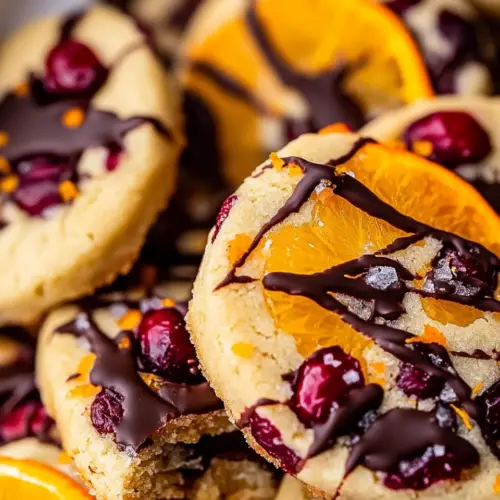
Dark Chocolate Cranberry Orange Slice Bake Cookies
Dark Chocolate Cranberry Orange Slice Bake Cookies deliver a crisp edge and tender center with bright citrus, chewy cranberries, and rich dark chocolate. These easy slice and bake cookies are perfect for holiday platters or coffee breaks, offering a festive look and balanced flavor. Make ahead friendly and giftable, they are worth baking for any cozy gathering.
Equipment
- Stand mixer or handheld electric mixer
- Paddle attachment or mixing bowl
- Cutting Board
- Sharp Knife
- Baking Sheet
- Parchment paper or Silpat
- Medium heat proof bowl
- Double boiler or microwave
- Plastic Wrap
- Cooling rack
Ingredients
- 4 ounces unsalted butter, softened to room temperature Soften to room temperature to ensure easy creaming and even incorporation into the batter; provides rich flavor and tender texture in the cookies. Use unsalted butter so you can control overall saltiness and achieve a balanced sweetness. Cream thoroughly with sugar and orange zest to create lightness and help the slice set properly during baking.
- 1 teaspoon orange zest, finely grated Finely grate to release bright citrus oils that infuse the dough with fresh orange aroma and a tangy top note. Use just enough to complement the sweetness without adding bitterness from the pith. Add during creaming so the zest distributes evenly and lifts the overall flavor profile.
- 1/2 cup granulated sugar Granulate for structure and controlled sweetness; helps aerate the butter when creamed to create a lighter crumb in the bake. Dissolves into the batter during mixing and baking, contributing to spread and browning of the cookies. Adjust slightly only if you prefer a less sweet or more cookie-like texture.
- 1 teaspoon vanilla extract Add to provide a warm, rounded vanilla aroma that enhances other flavors and deepens sweetness perception. Measure accurately to avoid overpowering the citrus and chocolate notes. Stir in with the egg so the flavor is evenly distributed throughout the dough.
- 1 large egg, at room temperature Bring to room temperature to improve emulsification and ensure even mixing with butter and sugar; adds moisture and structure via proteins that set during baking. Beat in to help bind dry ingredients and create a tender crumb in the finished slices. Use one large egg to maintain the intended texture and richness.
- 1 and 1/2 cups all-purpose flour Sift or measure properly to form the base structure of the cookies; provides gluten that gives the slices body and chew. Combine with the wet ingredients until just mixed to avoid overdeveloping gluten and becoming tough. Use all-purpose flour to strike a balance between tenderness and structure for slice-style cookies.
- 1 cup dried cranberries Include for concentrated chewy bursts of fruity sweetness and tart contrast that complement the dark chocolate and orange. Rehydrate slightly by tossing with a bit of flour if plumping is desired and to prevent sinking during baking. Fold in near the end of mixing to keep pieces intact and evenly distributed.
- 8 ounces dark chocolate, chopped Chop into chunks to provide intense cocoa bitterness and melty pockets that pair with cranberries and orange zest. Use high-quality dark chocolate for deeper flavor and smoother melting behavior during baking. Fold in so the pieces remain throughout the slice, creating textural contrast between soft crumb and rich chocolate.
- sparkling sugar, optional Optional sparkly sprinkle to add a decorative glitter and subtle crunch on top of the baked slices; enhances presentation and gives a festive finish. Apply just before or immediately after baking so crystals adhere without dissolving. Use sparingly to avoid excessive sweetness or stiffness on the cookie surface.
Instructions
- In the bowl of a stand mixer fitted with the paddle attachment, or in a large bowl using a handheld electric mixer, combine the butter, orange zest, and sugar and beat on medium-high speed until pale and fluffy. Add in the vanilla. Add in the egg and beat until combined. Add in the flour and dried cranberries and beat until just combined. Your dough should be stiff.: You will notice the mixture lighten in color and become airy as tiny pockets of air form, which is what gives the final cookie lift; it should feel slightly billowy when you lift the paddle. The aroma of orange zest will become pronounced and fragrant, signaling proper emulsification. If the butter feels too soft and the mixture looks greasy rather than fluffy, chill the bowl briefly and try again, because overwarm butter prevents proper aeration. A common error here is rushing the creaming process, which yields dense cookies, so beat until you see a pale, ribbonlike texture.
- Sprinkle 2 Tablespoons of flour over a clean work surface. Scrape the cookie dough onto the surface and gently knead it for 30 seconds. Divide the dough in half, then roll each portion of cookie dough into a log that's roughly 2" in diameter. Roll each log in turbinado sugar, if using. Then wrap each log tightly in plastic wrap and refrigerate for at least 3 hours (or up to 5 days).: As you fold the vanilla in, inhale a deeper, rounded scent that helps unify the citrus and sugar. The vanilla acts as a flavor bridge, smoothing sharp edges and enhancing perceived sweetness, even in small amounts. If the vanilla is added too late when the mixture is already aerated, it still integrates, but adding it before the egg helps it disperse evenly. Watch for splashing if your mixer speed is high, and reduce speed to avoid losing aroma into the air.
- When you're ready to bake, preheat the oven to 350 degrees (F). Line a large baking sheet with parchment paper or a Silpat baking mat.: The batter will take on a slightly more cohesive, glossy texture as the egg melds into the creamed butter and sugar, indicating the proteins are beginning to bind. You should stop mixing as soon as the mixture looks homogeneous, because overbeating can tighten the gluten later when flour is added, leading to a tougher cookie. If you see streaks of egg, scrape the bowl and blend briefly; if the mixture separates, chill it for a few minutes to let the fat firm up.
- Remove the dough from the fridge and place it on a cutting board. Using a sharp knife, slice the logs of cookie dough into 1/4" rounds.: Once the all purpose flour and dried cranberries vanish into the dough, you will notice the texture shift from glossy to thick and slightly stiff, which is ideal for shaping. The cranberries should be evenly distributed, and small pockets of flour should not remain. Resist the urge to overmix, because extra kneading develops gluten and can yield dense cookies. If the dough seems crumbly, a quick pulse with a small splash of liquid could bring it together, but avoid adding more moisture unless necessary.
- Place the cookies 1/2" apart on the prepared baking sheet, and bake for 10 to 12 minutes, or until lightly golden.: The right stiffness means the dough holds shape when pressed, but still yields slightly under your fingers; it should not be sticky. This firmness is what allows clean slicing and keeps the cookies from spreading too much in the oven. If it feels too soft, chilling will firm it and improve sliceability. A typical mistake is trying to slice warm dough, which creates ragged edges, so always chill adequately.
- Remove the oven and place the pan on a cooling rack. Cool for at least 15 minutes before removing.: The lightly floured surface prevents sticking while you knead and shape without adding excess flour into the dough itself. As you work, the dough will take on a slightly smoother sheen and any rough edges will firm up, helping you form consistent logs. Overflouring can dry the exterior, so use just enough to prevent sticking. Watch for scrapes of dough left behind, as they indicate you need a touch more flour rather than forceful handling.
- In the meantime, make the chocolate coating.: Gentle kneading smooths the dough, aligns the ingredients, and ensures the dried cranberries are evenly tucked inside, resulting in uniform slices. You should feel the dough cohere into a compact mass and see a slightly smoother outer texture. Too vigorous kneading develops gluten and can toughen the cookies, so keep it brief and deliberate.
- Melt the chopped chocolate in a double boiler or in the microwave. If using the microwave method, place the chopped chocolate in a medium heat-proof bowl. Melt in the microwave, on low power, in 15 second increments, stirring after each increment until completely melted and smooth.: Rolling yields consistent thickness so your slices bake evenly and brown at the same rate; you should feel resistance as you shape, and the surface should look tight and slightly glossy. If the log is uneven, rotate and press gently to even it out. Avoid stretching the dough thinly in spots because thinner areas will bake faster and risk overbrowning.
- Dip each cookie halfway into the chocolate then return to the lined baking sheet.: The coarse sugar adds a crunchy, sparkling crust that catches the light and adds texture contrast to the tender interior. As you roll, the sugar adheres to the slightly tacky exterior; press gently so it sticks without compressing the log. If sugar falls off in clumps, pat it lightly to secure it before wrapping.
- Sprinkle wet chocolate with turbinado sugar and additional orange zest, if desired.: Chilling solidifies the fat and allows the flavors to meld, which prevents excessive spread during baking and sharpens the citrus essence. The logs will feel firmer and easier to slice after chilling. A common mistake is underchilling, which leads to misshapen slices, so be patient and give it the full resting time for best texture.
- Allow the chocolate to set before serving. To speed this up, place the baking sheet into the refrigerator.: A fully preheated oven ensures accurate rise and browning, producing even color and crisp edges. You should hear the faint hum of heating and smell the warm, dry air as the oven steadies. Avoid opening the oven door frequently while baking, as temperature drops affect spread and texture.
- Once set, serve and enjoy! These are really good with coffee or tea.: A lined sheet prevents sticking and promotes even bottom browning, giving you a clean release. The cookies should slide off easily once cooled. Using an unlined pan can cause uneven browning and make transfer tricky.
- Remove the dough from the fridge and place it on a cutting board.: The chilled log will feel firm under your hands, making slicing precise; it should not be rock hard, which would cause crumbling. If it resists slicing cleanly, let it sit at room temperature for a minute, but not long enough to soften significantly. Dull knives cause ragged edges, so use a sharp blade for neat rounds.
- Using a sharp knife, slice the logs of cookie dough into 1/4" rounds.: Slicing thin rounds yields crisp edges and tender centers; you should see neat, coin shaped disks with visible flecks of dried cranberries and dark chocolate . Clean the knife between cuts if the edges smear. Cutting too thick will lengthen bake time and change texture, while cutting too thin risks burning.
- Place the cookies 1/2" apart on the prepared baking sheet, and bake for 10 to 12 minutes, or until lightly golden.: As they bake you will notice the aroma of orange zest and dark chocolate rising, and the edges will take on a gentle golden tint. The centers may still look slightly soft, but edges should be set; this ensures a tender interior. Overbaking renders them dry, so pull them when edges are lightly golden.
- Remove the oven and place the pan on a cooling rack.: Letting them rest on the pan for a few minutes allows internal steam to settle, preventing breakage when transferring. The cookies will continue to set as they cool, solidifying into firm disks. If you try to move them too soon, they may bend or collapse, so be patient.
- Cool for at least 15 minutes before removing.: This pause guarantees the cookies have reached the correct texture and will release cleanly. You should feel the cookies hold together when nudged. Rushing this step often results in misshapen cookies and broken edges.
- In the meantime, make the chocolate coating.: As you melt the chopped dark chocolate , note the glossy transformation from solid to silky liquid and the rich chocolate scent that deepens the mood of the kitchen. Melt slowly to maintain smoothness; high heat can scorch. A frequent error is overheating, which causes grainy, separated chocolate.
- Melt the chopped chocolate in a double boiler or in the microwave.: Using a double boiler provides gentle, even heat so the chocolate stays glossy, while microwaving in short bursts lets you control the melt. Stir frequently and stop when the chocolate is mostly melted to avoid thermal shock. If chocolate seizes, a small splash of neutral oil can sometimes smooth it, but prevention is better than rescue.
- If using the microwave method, place the chopped chocolate in a medium heat-proof bowl.: Microwave in 15 second increments on low power, stirring after each increment until completely melted and smooth, which preserves the silky texture and keeps the aroma bright. Stirring distributes heat and stops hot spots that burn chocolate. Avoid microwaving on high power, which can cause sudden overheating and graininess.
- Dip each cookie halfway into the chocolate then return to the lined baking sheet.: The contrast between the glossy, dark coating and the pale cookie is visually striking, and you will feel the slightly sticky warmth as you dip. Allow excess chocolate to drip back into the bowl for a neat finish. A sloppy dip can create uneven coverage, so tap gently to remove excess.
- Sprinkle wet chocolate with turbinado sugar and additional orange zest, if desired.: The sugar adds sparkle and crunch while a touch more orange zest brightens the top note, completing the flavor profile. Apply decorations while the chocolate is still tacky so they adhere. If you wait until the chocolate sets, toppings will not stick properly.
- Allow the chocolate to set before serving.: The chocolate will firm up to a glossy finish, signaling the cookies are ready, and the flavors will have had a moment to settle together. To speed this up, place the baking sheet into the refrigerator for a short time, but avoid prolonged chilling that can dull aroma. Rushing this step risks smudged surfaces and sticky fingers.
- To speed this up, place the baking sheet into the refrigerator.: A quick chill helps the chocolate firm quickly and produces a satisfying snap when bitten, which looks and feels professional. However, avoid leaving them too long or condensation can form when returning to room temperature, softening the coating. Always transfer to a covered container once set to maintain texture.
- Once set, serve and enjoy!: The final moment is rewarding, with the bittersweet bite of dark chocolate , the fruity chew of dried cranberries , and the citrus lift from orange zest all playing together in a thin, crisp cookie. Share with friends or pair with coffee or tea for a cozy finish. A common slip is storing warm cookies in a sealed container, which can trap steam and soften them, so ensure they are fully set and cooled before packing.
Notes
- Chill for firmer slices: If you need cleaner rounds, extend chilling to overnight; this firms the fat and reduces spreading during baking.
- Adjust sweetness: If you prefer less sweet cookies, reduce the granulated sugar slightly or choose a darker chocolate to introduce more bitterness without changing texture.
- Keep cranberries plump: If your dried cranberries seem dry, soak briefly in warm water and drain well before adding, to avoid tugging on the dough and to ensure chewy bites.
- Control chocolate shine: To maintain a glossy chocolate coating, melt slowly and avoid overheating; if it dulls, a quick gentle warm bath can restore some sheen.
- Make ahead strategy: Prepare and freeze wrapped logs for up to one month; slice frozen and add a minute or two to the bake time for convenience.
- Presentation boost: For a fancier look, dip fully and drizzle contrasting chocolate across the top; do this before the coating sets for easy decoration.