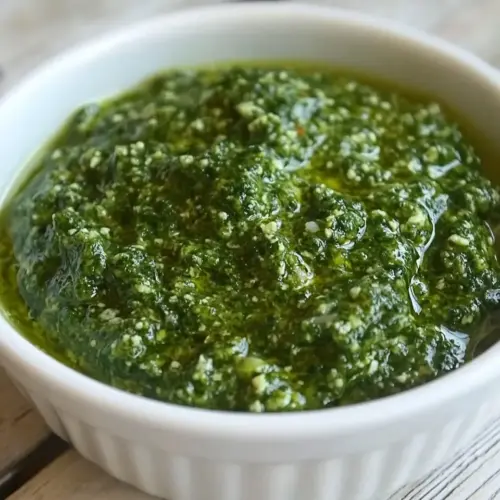
Dandelion Pesto
Dandelion Pesto is a bright spring sauce that blends slightly bitter greens with creamy Parmesan and toasted pine nuts for a savory spread or pasta topper, perfect for an easy weeknight dinner. It offers a silky olive oil base, garlicky lift, and nutty texture, making it versatile and economical. Try it on crostini, stirred into grains, or tossed through pasta for an instantly elevated meal.
Equipment
- Food Processor
- Blender
Ingredients
- 12 ounces (350 g) washed and cleaned dandelion leaves Provide a bitter, leafy green base that gives the pesto its distinctive springtime flavor and a slightly astringent bite; wash thoroughly to remove grit and trim any tough stems before processing. Chop or pack into the blender to help achieve a smooth, vibrant sauce and balance the richness of oil and cheese.
- 1 cup (250 ml) olive oil Add a rich, fruity fat that carries flavors and creates a silky texture; pour gradually while blending to emulsify the pesto and adjust consistency. Use good-quality olive oil to enhance aroma and mouthfeel, and reserve a little to drizzle when serving to maintain gloss.
- 4 cloves garlic, peeled Contribute a sharp, pungent depth that brightens the pesto and complements the bitterness of the greens; peel and smash or finely mince before adding to better release its oils. Adjust the amount to taste for milder or more pronounced garlic presence and consider briefly pulsing to avoid over-pureeing.
- 6 tablespoons (40 g) pine nuts, lightly toasted Provide a nutty, toasty richness and body that helps thicken the sauce and add pleasant crunchy notes if left slightly coarse; lightly toast to intensify flavor but avoid burning. Stir or pulse in toward the end to control texture, and set aside a few for garnish if desired.
- 1 1/2 teaspoons sea salt Enhance and balance flavors by seasoning the pesto, drawing out taste from greens, cheese, and oil while moderating bitterness; dissolve well into the mixture for even distribution. Start with the listed amount and taste before adding more, remembering that cheese contributes salty depth as well.
- 2 1/2 ounces (70 g) Parmesan or Romano cheese, grated Supply savory, umami depth and a creamy, slightly granular texture that completes the pesto’s flavor profile; grate finely and fold in to meld with oil and greens. Choose Parmesan or Romano based on desired sharpness, and add gradually to reach preferred saltiness and body.
Instructions
- Put about one-third of the dandelion greens in the food processor or blender with the olive oil and chop for a minute, scraping down the sides. Add the remaining dandelion greens in two batches, until they’re all finely chopped up.: The first pulses release bright green aromas and soften the leaves visually into ribbons and tiny flecks, and you should hear a steady chopping hum rather than a high speed whir. This initial stage ensures the oil begins to emulsify with the greens so the final texture is smoothly integrated; if you dump everything in at once the machine can struggle and leave larger fibrous bits. A common issue here is overcrowding the bowl which leads to uneven chopping, so keep this small batch approach to promote even processing and scrape down the sides when you see larger pieces clinging to the bowl.
- Add the garlic cloves, pine nuts, salt, and Parmesan, and process until everything is a smooth puree.: As you add the second and third batches you will notice the mixture change from wet clumps to a uniformly chopped, nearly paste like texture with a glossy sheen. The layered addition lets the blades handle the load without overheating, preserving fresh green color and aroma. If the mixture seems dry or the motor strains, pause and scrape sides, then add another splash of olive oil to ease movement. Avoid running the processor nonstop for too long, because heat can dull the bright herbal notes.
- Taste, and add more salt if necessary. If it’s too thick, you can thin it with more olive oil or water.: Once the nuts and cheese are incorporated the texture becomes richer and silkier, and you should smell warm, toasty notes from the pine nuts alongside the savory tang of the Parmesan . Processing until smooth encourages an emulsion that coats pasta and bread well. If the pesto is too coarse, add more olive oil in small amounts; if it becomes too thin, pulse briefly to retain some texture. A frequent slip up is over processing so the pesto turns runny; counter that by pulsing and checking often so you keep some character in the puree.
- Taste and add more salt if necessary: After the puree reaches a pleasing consistency take a small taste, ideally on a neutral cracker or spoon, to judge seasoning. Because Parmesan can vary in saltiness, you might need a pinch more sea salt to balance the natural bitterness of the dandelion leaves . If you add too much salt, a small squeeze of lemon or a drizzle of oil can help recalibrate; the easiest way to avoid oversalting is to add gradually and taste between additions.
- If it’s too thick you can thin it with more olive oil or water: The finished pesto should spread or toss easily, so adjust viscosity by adding a tablespoon at a time of olive oil or neutral water until you reach a glossy, spoonable consistency. Warm pasta cooking water is ideal for loosening the pesto when tossing through noodles because the starch helps the sauce cling. A rookie mistake is adding too much liquid at once which dilutes the flavor, so add sparingly and judge by the way the sauce clings to a spoon.
Notes
- Storage suggestion The pesto keeps well refrigerated for up to four days in a sealed jar; pour a thin layer of olive oil on top to limit exposure to air and slow color change.
- Freezing method Freeze pesto in ice cube trays for convenient single serve portions, then transfer the frozen cubes to a bag for up to two months; thaw gently before stirring into pasta or spreading.
- Adjusting bitterness If the pesto tastes too bitter, add a small extra drizzle of room temperature olive oil and a tiny pinch more sea salt, tasting as you go to avoid overcorrecting.
- Serving with pasta Reserve a little starchy pasta cooking water and add it gradually when tossing to make a silky sauce that clings to the noodles.
- Parmesan swap note If using a sharper cheese like Romano, reduce the added sea salt by about half and taste before adding more to prevent oversalting.