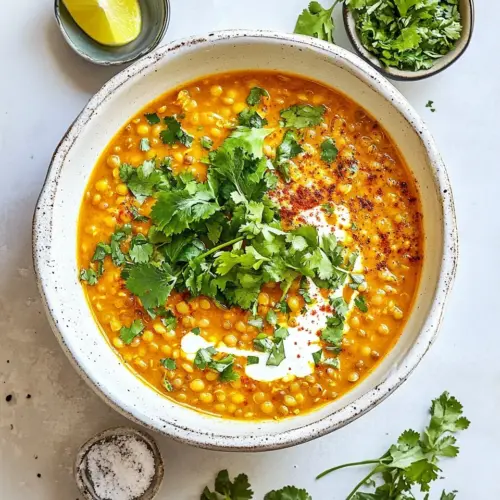
Curry Lentil Soup
Curry Lentil Soup is a creamy, aromatic bowl that balances warming curry spices, silky coconut milk, and tender red lentils for an easy weeknight dinner. Bright notes from fire roasted tomatoes and fresh cilantro keep each spoonful vibrant, while the body from lentils makes it satisfying. Make it for cozy nights when you want something wholesome and simple to prepare.
Equipment
- Large Pot
- Wooden Spoon
Ingredients
- 2 tablespoons olive oil or coconut oil Use to sauté aromatics and vegetables; imparts a mild, fruity or tropical flavor and helps distribute spices evenly. Choose olive oil for a Mediterranean note or coconut oil for complementary coconut undertones in the curry.
- 1 medium yellow onion, diced Provide a sweet, savory base when diced and sautéed until translucent; contributes depth and natural sugars that balance spices. Softens and melds flavors with other vegetables and aromatics during cooking.
- 1 carrot, diced Add subtle sweetness and body when diced; contributes texture and vegetal sweetness that complements the curry spices. Softens during simmering and helps thicken the soup slightly.
- 1 red bell pepper, seeds removed and diced Offer bright color and a crisp-sweet flavor when seeds removed and diced; adds freshness and a slight peppery note. Melts into the base of the soup while retaining some texture for contrast.
- 4 garlic cloves, finely chopped Deliver pungent, aromatic depth when finely chopped; boosts savory umami and layers of flavor. Releases essential oils when sautéed, enhancing the overall complexity of the curry.
- 2 -inch piece ginger, peeled and finely grated Provide warm, zesty heat and bright aromatics when peeled and finely grated; heightens the curry’s freshness and piquant backbone. Balances richness from coconut milk and body from lentils.
- 1 tablespoon yellow curry powder Introduce warm, earthy, and slightly sweet curry flavor when added; acts as the primary spice blend defining the dish. Binds other spices together and colors the soup with golden hues.
- 1/4 teaspoon crushed red pepper flakes Contribute adjustable heat and a lingering spiciness when added sparingly; allows control over the soup’s chili level. Enhances complexity without overwhelming other flavors.
- 3/4 cup red lentils, rinsed, drained, and picked over Supply hearty, protein-rich body when rinsed, drained, and picked over; cooks down to a creamy texture that thickens the soup. Absorbs spices and liquids, making the dish satisfying and nutritious.
- 2 1/2 cups vegetable broth Provide savory liquid base and seasoning; supplies depth and allows lentils to cook and absorb flavors. Use vegetable broth for a vegetarian foundation and adjust seasoning as needed.
- 1 14.5-ounce can diced fire roasted tomatoes Add bright acidity, charred tomato flavor, and chunky tomato texture from a can of fire roasted tomatoes. Balances richness and adds umami and slight smokiness to the soup.
- 1 13.5-ounce can coconut milk, shaken well Contribute rich, creamy mouthfeel and subtle coconut sweetness when shaken and added; enriches the broth and rounds out spices. Creates a silky finish and helps mellow heat.
- 1/2 cup chopped cilantro Offer fresh herbal brightness when chopped; adds a citrusy, slightly peppery finish. Fold in near the end to preserve color and aroma for garnish and flavor lift.
- Kosher salt and pepper, to taste Season to taste with kosher salt and freshly ground pepper; enhances and balances all flavors in the soup. Add gradually during cooking and adjust at the end for optimal seasoning.
- Garnish: extra cilantro, drizzle of coconut milk, lime wedges Enhance presentation and flavor with extra cilantro, a coconut milk drizzle, and lime wedges; provides freshness, creaminess, and acidity. Allow guests to customize brightness and creaminess at serving.
Instructions
- In a large pot, heat the oil over medium-high heat. Add the onion, carrot, and red bell pepper and cook until tender, about 4 to 5 minutes.: As the oil warms, you will notice a faint shimmer and a gentle scent, signaling it is ready; this creates a hot but controlled surface for the onion , carrot , and red bell pepper to release moisture and sweet flavors. Searing at too high a heat can scorch the vegetables and introduce bitterness, so aim for a steady medium to medium high and listen for a soft sizzle as you add them. The sound should be lively but not aggressive, and visually you want edges to become translucent rather than brown. Stir frequently to ensure even cooking, and if pieces begin to stick, lower the heat slightly and add a splash of broth to deglaze and collect those fond bits, which contribute depth. Avoid crowding the pan or you will steam instead of sweat, which changes the texture. A common mistake is rushing this phase, which leaves raw onion flavor in the soup; take the time to sweat until the vegetables are tender and aromatic.
- Stir in the garlic, ginger, curry powder, and crushed red pepper flakes. Cook for 1 minute and stir in the red lentils.: Right after the vegetables soften, the air will fill with a sharp, spicy perfume as the garlic and ginger hit the hot oil, and blooming the yellow curry powder releases its oils for a richer, deeper spice profile. These aromatics should be cooked very briefly, roughly about one minute, just until they become fragrant but before they darken. Listen for a quick, lively hiss when you add them, and watch closely because burnt garlic turns bitter in seconds. Stir constantly to prevent sticking and to ensure the spice blends coat the vegetables evenly. This step infuses the base and sets the tone for the whole pot; if you rush it or skip it the final soup can taste flat. If the mixture starts to brown rapidly, reduce the heat immediately to protect the delicate flavors.
- Pour in the vegetable broth, tomatoes, and coconut milk. Stir in the cilantro and season with salt and pepper. Bring the soup to a boil and then reduce the heat to low. Simmer for 20 minutes, stirring occasionally, or until the lentils are soft, but not mushy. Taste the soup and season with additional salt and pepper, if necessary.: As the spices bloom, the kitchen will smell warmly spiced, and folding in the rinsed red lentils allows them to toast slightly and begin to absorb flavors before liquid is added. You will notice the lentils becoming glossy as they take on the oil and spice, which helps them integrate into the broth later. This pre toasting step enhances nuttiness, but do not let them sit dry too long or they can stick and scorch. Keep stirring to distribute heat evenly and ensure every lentil is coated. A common error is adding cold lentils straight into a cold pan, which delays cooking; adding them now speeds the process and contributes to even texture.
- Ladle the soup into bowls and garnish with cilantro, a drizzle of coconut milk, and a squeeze of lime juice, if desired. Serve immediately.: When the liquids hit the pot, you will hear a satisfying simmer as steam rises and aromas marry; the vegetable broth forms the base while the diced fire roasted tomatoes add acidity and a smoky touch, and the coconut milk brings creaminess. Stir to combine, watching the color change as the broth takes on the curry and tomato hues. The surface may show gentle bubbles and a fragrant steam; this is the broth coming together. Mixing thoroughly ensures the lentils are submerged and can cook uniformly. Avoid bringing the pot to a roaring boil at this stage because violent boiling can break down the lentils too aggressively and make the texture mushy. If you see excessive bubbling, reduce the heat to maintain a gentle simmer.
- Stir in the cilantro and season with salt and pepper: Adding fresh cilantro into the simmering pot releases herbal brightness and layers fresh aromatics into the cooking liquid, while a measured addition of kosher salt and pepper lifts the flavors. Taste the broth to calibrate saltiness, because the salt level in store bought vegetable broth varies widely. Stirring now helps flavors marry as the pot gently heats through. Resist the temptation to over salt early, because reduction during simmering concentrates seasoning. A typical misstep is to salt aggressively at the beginning, leaving the finished soup too salty once reduced; add most salt later if needed.
- Bring the soup to a boil and then reduce the heat to low: As the pot nears a boil you will see stronger, persistent bubbling and a more intense steam; reducing to low produces a gentle simmer ideal for softening the red lentils without disintegrating them. This transition is about control, letting flavors meld slowly so the texture becomes creamy while retaining pleasant bite. Keep the lid partially on if you want to limit evaporation, or off to concentrate flavors through reduction. Avoid leaving the pot unattended at a vigorous boil, as boiling can cause uneven cooking and potential splattering. Adjust the heat so you see occasional slow rings of bubbles rather than rolling turbulence.
- Simmer for 20 minutes, stirring occasionally, or until the lentils are soft, but not mushy: During the twenty minutes the pot will emit a steady savory steam and the soup will thicken as the red lentils release starch. Stirring occasionally prevents sticking and helps you monitor the texture; you are aiming for lentils that are tender yet retain a touch of structure so the soup does not turn to glue. If the soup becomes too thick, add small amounts of broth and stir to reach your preferred consistency. A frequent error is undercooking, leaving lentils chalky, or overcooking until everything collapses; rely on visual and bite tests to decide doneness.
- Taste the soup and season with additional salt and pepper, if necessary: Now the flavors are concentrated, and tasting reveals how the curry, tomato, and coconut notes balance. I often add a tiny squeeze of lime at this point for brightness, though this is optional. Adjusting seasoning now ensures you correct for any under or oversalting from earlier. If the soup tastes flat, a pinch of salt or a touch more crushed red pepper can elevate it. Avoid dumping large amounts of salt at once; make small adjustments and taste repeatedly to reach harmony.
- Ladle the soup into bowls and garnish with cilantro, a drizzle of coconut milk, and a squeeze of lime juice, if desired: Serving is the final sensory moment, where garnish transforms the dish visually and flavor wise; the fresh cilantro will pop against the warm bowl, the drizzle of coconut milk adds a silky swirl, and the lime cut brightens the palate. The contrast in temperature and texture makes every spoonful interesting. Present each bowl with care, wiping rims for a clean look. One common oversight is skipping garnish, which may leave the soup looking monochrome; small finishing touches make a big difference.
Notes
- Control the Heat: Start with medium heat when sautéing the aromatics so the onion, carrot, and red bell pepper soften without browning; burned bits will introduce bitterness that is hard to correct later.
- Rinse the Lentils: Always rinse and pick over the red lentils to remove any debris and to prevent gritty texture, which improves mouthfeel significantly.
- Bloom Spices: Briefly cook the yellow curry powder in hot oil to release essential oils and deepen flavor, but limit this to about one minute to avoid burning the spices.
- Watch Simmering: Maintain a gentle simmer so the lentils become tender without disintegrating; a rolling boil can make the soup gluey rather than silky.
- Adjust at the End: Taste and season after simmering because reduction concentrates flavors; add small increments of salt or pepper and re taste until balanced.
- Garnish Thoughtfully: Finish with a drizzle of coconut milk, fresh cilantro, and lime wedges to add contrast and a fresh lift to each bowl.