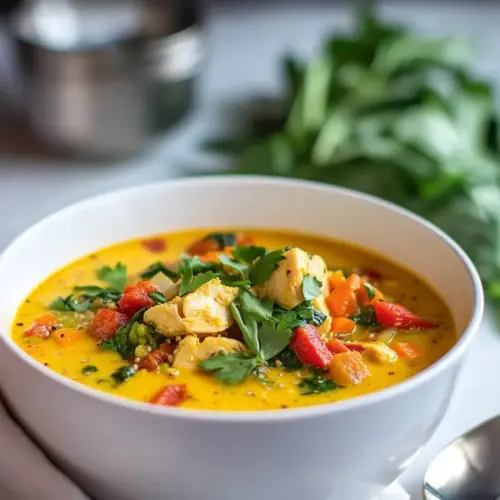
Curry Chicken and Quinoa Soup
Curry Chicken and Quinoa Soup is a creamy, spiced, and comforting bowl that blends tender chicken with nutty quinoa and aromatic spices for an easy weeknight dinner. The fragrant broth, boosted by toasted coriander and cumin, balances warmth and brightness, making it perfect for colder nights. Its a hearty, fast recipe that’s both nourishing and crowd friendly, so youll find plenty of reasons to make it.
Equipment
- Large Pot
- Wooden Spoon
- Fine mesh sieve
Ingredients
- 2 1/2 tbsp olive oil Heat and enrich the soup base while providing a silky mouthfeel; olive oil helps sauté aromatics and bloom spices for deeper flavor.
- 3 medium carrots, diced (1 1/4 cups) Add natural sweetness and body when diced; carrots contribute texture, color, and gentle sweetness that balances savory spices.
- 1 large yellow onion, chopped (1 3/4 cups) Create a savory foundation when chopped and softened; yellow onion lends sweetness, umami, and aromatic depth to the broth.
- 1 large red or yellow bell pepper, diced (2 cups) Introduce bright, crisp flavor and color when diced; bell pepper adds a mild sweetness and slight vegetal bite to the soup.
- 1 tbsp peeled and finely minced fresh ginger Impart fresh, zesty warmth when peeled and minced; ginger adds brightness and a subtle peppery-spicy note that lifts the curry.
- 6 garlic cloves, minced (2 Tbsp) Provide pungent, savory depth when minced; garlic boosts overall flavor and complements the ginger and spices for complexity.
- 1 tbsp ground coriander Offer citrusy, floral warmth as a ground spice; coriander rounds the curry blend with gentle sweetness and aromatic complexity.
- 2 tsp ground cumin Deliver earthy, warm notes as a ground spice; cumin adds savory depth and a slightly smoky undertone to the curry profile.
- 3/4 tsp paprika Contribute mild smoky sweetness as a powdered spice; paprika enhances color and gently rounds the overall spice mix.
- 3/4 tsp turmeric Supply warm, bitter-sweet color and fragrant earthiness; turmeric gives the soup its golden hue and subtle depth of flavor.
- 1/2 tsp ground cinnamon Add warm, sweetly spiced undertones in small amounts; cinnamon contributes complexity and a cozy aromatic accent to the curry.
- 1/8 tsp cayenne pepper, or more to taste Provide concentrated heat and a spicy kick; cayenne pepper adjusts the soup's heat level and enlivens the flavor profile.
- 3 (14.5 oz) cans low-sodium chicken broth Create the savory liquid foundation using low-sodium stock; chicken broth hydrates ingredients and carries the curry flavors through the soup.
- 1 (15 oz) can fire roasted diced tomatoes Introduce bright acidity and textured tomato pieces; fire roasted diced tomatoes add smoky sweetness and body to the broth.
- 1/2 cup (heaping) quinoa, well rinsed and drained Supply tender grain body and slight nuttiness when well rinsed; quinoa thickens the soup slightly and adds protein and texture.
- Salt and freshly ground black pepper Season and balance flavors with crystalline savory notes; salt and freshly ground black pepper enhance and clarify the overall taste.
- 2 cups cooked shredded chicken breasts or thighs (I used rotisserie chicken) Provide protein and hearty texture as shredded meat; cooked chicken adds richness, substance, and savory backbone to the soup.
- 1 (14.5 oz) can chick peas, drained and rinsed Add creamy, nutty texture and plant-protein bites; chickpeas contribute chewiness and help make the soup more filling.
- 1/2 cup heavy cream or coconut milk Impart creamy richness and smooth mouthfeel; heavy cream or coconut milk rounds flavors and softens the curry spices.
- 1/4 cup chopped cilantro Finish with fresh herbaceous brightness when chopped; cilantro adds a lively, citrusy note that brightens the finished soup.
Instructions
- Heat olive oil in a large pot over medium-high heat.: Warm oil should shimmer slightly and spread across the pan, releasing a faint fruity scent if it is fresh. You will hear a soft hush as vegetables hit the surface, which helps create those golden edges that add flavor. This initial heat level is important because if the oil is not hot enough, the vegetables will stew, losing the toasty depth we want. A common mistake is to overcrowd the pot, which drops the temperature and prevents browning, so give the pot space.
- Add in carrots, onion, bell pepper and ginger and saute 5 minutes. Add in garlic and saute 1 minute longer.: You should smell a sweet, savory mix as the onion softens and the carrots begin to release their sugars. The peppers will start to wrinkle and soften, and the minced ginger brings a bright, spicy perfume. After five minutes the vegetables will look glossy and slightly translucent. When you add the minced garlic , it should sizzle briefly and give off a toasty aroma within about a minute. Avoid letting the garlic brown too much, or it will taste bitter.
- Toss in coriander, cumin, paprika, turmeric, cinnamon and cayenne pepper and saute 1 more minute.: This quick spice toast fills the kitchen with an intoxicating layered scent, the aromas blooming as the ground spices hit the warm oil. Stir constantly so the powders bloom without sticking or burning, which would create an acrid flavor. The minute is just enough to unlock essential oils and deepen color. If you skip this toasting, the spices can taste flat, so take the extra minute to develop complexity.
- Pour in chicken broth, tomatoes, and quinoa and season with salt and pepper to taste.: When the liquid hits the pan you will hear a soft bubbling as it comes together, and the tomatoes break down, releasing fruity juices. The rinsed quinoa will float and then sink as it hydrates. Season lightly at first because the broth and canned items may add salt. Stir to combine flavors evenly; this helps the quinoa absorb the seasoned liquid. A common error is over salting early, so wait to adjust fully until after simmering.
- Bring to a boil then reduce heat to medium-low. Cover and simmer stirring occasionally, until quinoa is tender, about 15 minutes.: The boiling point is when the surface has steady vigorous bubbles, but reduce the heat so the simmer is gentle and aromatic steam rises without violent movement. You want small, steady bubbles so the quinoa cooks through without breaking apart. Stir occasionally to prevent any sticking to the bottom and to check the texture. The quinoa should be plump and slightly translucent with a tiny white germ ring visible. Overcooking will make it mushy, so watch and test at the 12 minute mark.
- Stir in chicken, chick peas, and cream and heat through, about 1 minute.: As you fold in shredded chicken and rinsed chick peas, the soup will instantly feel heartier and the temperature will dip then quickly rebound, so allow a brief minute for everything to warm. Adding cream or coconut milk now softens the spice edges and creates a silky mouthfeel. Be gentle when boiling after the cream goes in, you only need to warm it through to preserve texture; too much heat can separate dairy or thin coconut milk.
- Stir in cilantro and serve warm.: Fresh chopped cilantro tossed in at the end adds bright herbal contrast and a lifted aroma that makes the bowl sing. You will notice the green color and fresh scent right away, which signals readiness. Serve while warm so the cream adds that comforting richness and the cilantro remains vivid. A mistake is adding the cilantro too early, which dulls its brightness and causes wilting.
- Recipe source: Cooking Classy: Cooking Classy : Acknowledge where the inspiration came from while adapting the dish to your style, appreciating tested techniques. Noting the source helps you recall original proportions and any authored tips that guided your adjustments. Avoid altering the proportions drastically without testing, because balance of spice to liquid is crucial.
Notes
- Bloom your spices: Toast spices briefly in the hot oil to release essential oils and deepen the aroma, but keep them moving so they do not burn.
- Rinse the quinoa: Use a fine mesh sieve and rinse until the water runs clear to remove the bitter coating and ensure a light texture.
- Use rotisserie chicken for speed: Ready cooked chicken is a great time saver and absorbs the broth flavors beautifully when shredded.
- Choose coconut milk for dairy free: Coconut milk offers a creamy texture and adds a subtle tropical note that complements the curry spices.
- Adjust salt at the end: Wait until after simmering to finish seasoning, because the broth and canned tomatoes contribute variable salt.