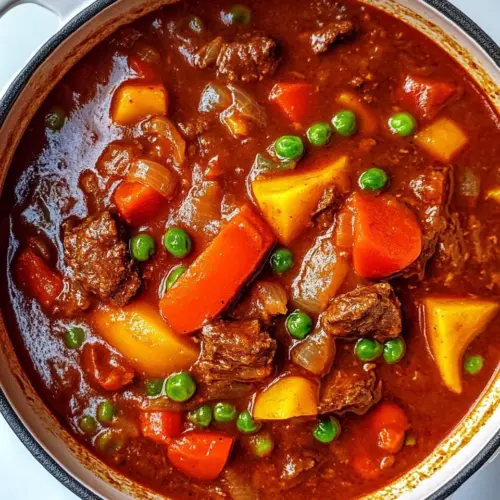
Curry Beef Stew
Curry Beef Stew is a creamy, savory, and slightly sweet one pot comfort with tender beef simmered in coconut and Thai red curry. This easy weeknight dinner yields deep aromatic flavors and bright finishing notes, perfect for cold evenings or family gatherings. Make it for reheatable leftovers that taste even better the next day.
Equipment
- Large Stockpot
Ingredients
- 2 tsp olive oil Heat gently to coat the pan and prevent sticking while adding a mild fruity flavor; ideal for browning meat and sautéing aromatics. Use at moderate temperatures to avoid burning and impart a subtle richness to the stew base.
- 2 pounds chuck roast, fat trimmed, cut into 1-inch pieces Brown thoroughly to develop deep savory flavors and render some fat that contributes to the stew's body; cut into uniform 1-inch pieces for even cooking. Sear in batches if necessary to avoid crowding, which helps create a concentrated flavorful fond for deglazing.
- 1 tsp salt, divided Season early and mid-cook to enhance overall taste and help proteins retain moisture; divide supply so part can flavor the meat and part can finish the stew. Dissolve into liquids to build a balanced savory background and heighten other seasonings without overpowering.
- 1/2 tsp pepper Season lightly to add subtle heat and accentuate savory notes without overwhelming the dish; adjust to taste depending on curry paste intensity. Grind fresh if possible to release brighter pepper aromas and distribute evenly throughout the stew.
- 1 large onion, diced Sauté until softened and translucent to form the aromatic base and contribute natural sweetness; diced texture ensures even distribution through the stew. Caramelize slightly for added depth and to complement the curry paste and tomatoes.
- 2 tsp garlic, minced Cook briefly with the onion to release pungent, savory aromatics and enhance complexity; minced form allows quick flavor extraction. Add near the start of sautéing so garlic can mellow and infuse the oil without burning.
- 3 tsp Thai Red Curry Paste, your choice of spice level Incorporate to provide concentrated curry heat, fragrant spices, and umami; adjust quantity to control overall spice level. Dissolve into the hot oil and aromatics to bloom its flavors before adding liquids for a more vibrant curry profile.
- 28 oz diced tomatoes, drained Add drained to provide bright acidity, sweetness, and texture while preventing excess liquid; diced form disperses evenly and contributes tomatoey depth. Stir into the simmering stew to balance richness and complement the coconut milk and chutney.
- 14 oz coconut milk, lite Pour in to add creamy body, subtle sweetness, and tropical coconut flavor that tames spicy and acidic components. Use lite coconut milk for lower fat while still contributing silkiness to the stew's sauce and aiding emulsification.
- 3 tbsp mango chutney, prepared Stir in to introduce fruity sweetness, tang, and a complex condiment character that balances savory and spicy elements. Use prepared mango chutney for a quick flavor boost that layers sweetness and mild acidity into the curry sauce.
- 3 tbsp lemon juice Squeeze in to add bright citrus acidity that lifts and balances the dish; lemon juice cuts richness and enhances other flavors. Add gradually and taste to achieve a pleasant tang without making the stew sharp.
- 2 tsp ginger, minced Mince to contribute warm, peppery, citrusy notes that complement the curry paste and freshen the overall flavor profile. Add with garlic and aromatics early to allow ginger to release its essential oils into the base.
- 1 bay leaf Add whole to subtly infuse earthy, herbal notes during simmering and provide a gentle depth to the stew's background. Remove before serving to avoid an overpowering bay leaf texture while retaining its aromatic contribution.
- 1 1/2 cups carrots, cut into pieces Cook until just tender to add natural sweetness, color, and body; uniform pieces ensure consistent doneness. Add at the appropriate time so carrots become soft but still hold their shape, contributing texture to each bite.
- 1 medium red bell pepper, diced Sauté or simmer briefly to retain a crisp-tender bite and add sweet, vegetal flavor and vibrant color to the stew. Diced form melds into the sauce and pairs well with the curry spices and coconut richness.
- 1 cup peas, frozen Fold in near the end of cooking to provide bursts of sweetness, bright color, and a tender pop of texture; frozen peas thaw quickly and require minimal cooking. Avoid overcooking to preserve their fresh flavor and pleasant firmness.
- 3 cups Jasmine rice, hot cooked Serve hot alongside the stew to soak up sauce and provide fragrant, slightly sticky grains that complement curry flavors. Cook jasmine rice in advance to ensure it is fluffy and ready for plating when the stew finishes.
Instructions
- Heat 1 tsp of oil in a large stockpot over medium heat until hot. Season the meat with 1/2 tsp salt and pepper. Brown the meat in the hot oil, then remove from the pot and set aside.: The pan should sizzle when the first pieces of beef hit the surface, releasing a toasty, meaty aroma that tells you the Maillard reaction is happening. You want a deep brown crust, not grayness, because that crust contributes savory complexity to the final stew. Listen for an energetic sizzle, and let each side form color for about two to three minutes without moving the pieces constantly. If the pan is crowded the meat will steam, so brown in batches if necessary. A common misstep is overcrowding which prevents proper browning and yields less flavor. If the meat releases a lot of liquid, wipe the pan and increase heat slightly before adding the next batch.
- Heat the remaining oil in the pan and add onion. Cook and stir 3-5 minutes or until onion is tender. Stir in the garlic and cook for 30 seconds, until fragrant.: As the onion softens you will smell its sweetness blooming, accompanied by gentle sizzling. The goal is a translucent, slightly golden onion which forms the aromatic base. Add the minced garlic briefly so it becomes fragrant but does not brown or burn, as burnt garlic turns bitter. Keep the heat moderate, and stir frequently to avoid any scorched bits which would add an unpleasant taste. If your pan is very hot, lower it before adding garlic so it gently releases aroma.
- Add the curry paste, stir and cook for one minute. Stir in the tomatoes, coconut milk, chutney, lemon juice, ginger, bay leaf and browned beef cubes, then bring to a boil. Reduce heat to a simmer; cover tightly and simmer for 1 1/4 hours.: When you add the Thai Red Curry Paste to the aromatics, the oils release and the kitchen fills with intoxicating spice notes. Stir for about a minute to bloom those flavors, then introduce the diced tomatoes and coconut milk which create a velvety sauce. Adding the browned beef back in allows those crusted bits to meld into the liquid. Bring the pot to a lively boil so everything integrates, then lower to a gentle simmer and cover to trap steam. This slow gentle heat breaks down connective tissue in the meat and concentrates flavors. A frequent error is simmering too vigorously which can toughen meat and evaporate liquid too fast, so keep the surface at a gentle ripple.
- Add the carrots to the stockpot and continue simmering, covered, 30-45 minutes or until the beef and carrots are fork-tender. Stir in the bell pepper and peas and cook uncovered for 5 to 6 minutes or until the bell pepper is crisp-tender; stirring occasionally. Remove and discard the bay leaf. Stir in the remaining 1/2 tsp salt.: Adding carrots at this stage ensures they soften without turning to mush, while the beef finishes melting into tenderness. You will notice the sauce thicken slightly and aromas deepen as collagen dissolves. When testing tenderness, pierce a piece of beef or carrot with a fork; they should give easily. Stirring occasionally prevents sticking and promotes even cooking. Add the bell pepper and peas late so they retain bright color and a touch of bite. Discard the bay leaf since it has done its job of infusing background herbal notes, and finish seasoning with the remaining salt. One pitfall is overcooking the pepper and peas, which dulls their vibrancy, so time carefully.
- Serve in a bowl over the hot rice. Garnish with freshly chopped cilantro if desired. Enjoy!: The final presentation is about contrast, serve the steaming Jasmine rice first to catch the warm sauce, then ladle the stew over it so each spoonful combines fluffy grain and rich sauce. You should see glossy coconut sheen, tender cubes of beef , and colorful vegetables. If the sauce seems flat, a tiny squeeze of additional lemon juice brightens it immediately. A common oversight is serving lukewarm rice which cools the stew rapidly, so make sure the rice is hot before plating.
Notes
- Brown in batches — Prevents steaming and ensures each piece of beef develops a flavorful crust which enhances the overall stew.
- Bloom the curry paste — Briefly cooking the Thai Red Curry Paste in the pan unlocks essential oils and deepens its aroma, making the stew more complex.
- Use low simmer — Gentle heat allows collagen to break down gradually, producing tender, silky beef rather than tough meat from aggressive boiling.
- Adjust sweetness last — The mango chutney adds sweetness, so balance with lemon at the end rather than early in the cook to avoid over sweetening.
- Finish with bright acid — A final splash of lemon juice brightens flavors and lifts the dish, making it taste fresher and more balanced.
- Rest before serving — Allow the stew to sit off heat briefly so flavors marry and the sauce thickens slightly for better coating on rice.