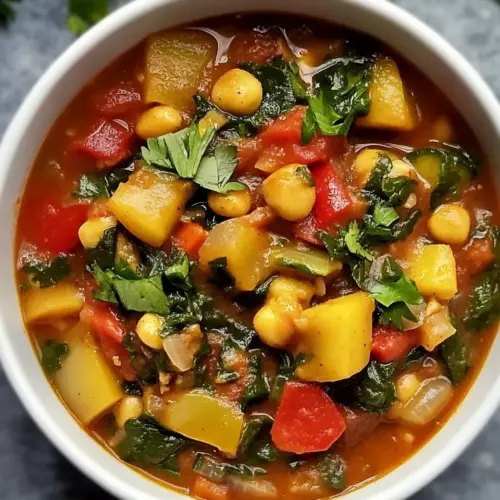
Curried Vegetable Stew
Curried Vegetable Stew is a creamy, spiced, and comforting one pot meal that blends roasted tomato depth with coconut milk silkiness and hearty chickpeas. Perfect for an easy weeknight dinner or make ahead lunches, this stew offers warming curry flavor, tender potatoes, and vibrant greens. Give it a try for a satisfying plant based bowl that reheats beautifully and feeds a crowd.
Equipment
- Large soup pot
- Large Skillet
- Slow Cooker
- Wooden Spoon
Ingredients
- 1 tablespoon olive oil Sauté to provide a neutral, fruity fat for browning aromatics and preventing sticking while building flavor in the stew.
- 1 whole large onion, diced Dice to release sweet, savory compounds that form the aromatic base; cook until softened and translucent to deepen overall stew flavor.
- 2 1/2 teaspoons kosher salt, divided Season sparingly and incrementally to enhance and balance flavors throughout cooking; divide use to control saltiness at different stages.
- 1 tablespoon curry powder Spice up the dish with warm, earthy notes that define the curry profile; bloom in oil to maximize fragrance and taste.
- 1 tablespoon brown sugar Sweeten subtly to counterbalance acidity and heat, adding depth and a slight caramelized note during caramelization of aromatics.
- 1 inch piece fresh ginger, peeled and grated (about 1 tbsp) Grate finely to contribute bright, zesty heat and aromatic warmth; add early to infuse the cooking liquid with fresh spice.
- 3 whole garlic cloves, minced Mince finely to add pungent, savory depth and a roasted garlic aroma when sautéed with onions and spices.
- 1/4 teaspoon black pepper Season lightly to introduce background warmth and complexity; add with other spices to build layered savory flavors.
- 1/4 teaspoon cayenne pepper (if you're spice sensitive, omit) Kick up heat with a controlled touch; include or omit based on desired spice level to complement curry and spices.
- 1/2 cup vegetable broth Deglaze and thin the stew while adding subtle savory umami; use to loosen browned bits and build a cohesive sauce.
- 6 whole baby yellow potatoes, diced Dice into bite-sized pieces to provide a creamy, starchy body that absorbs curry flavors and adds texture to the stew.
- 3 1/2 cups chickpeas, drained and rinsed Rinse and add for hearty protein and fiber, contributing a nutty, satisfying bite that soaks up the sauce and spices.
- 2 whole red bell peppers, diced Dice to add sweet, crisp bursts of flavor and bright color; soften during cooking to meld with the curry base.
- 1 head of cauliflower, cut into bite sized florets Cut into florets to contribute a tender, slightly nutty vegetable that soaks up curry sauce and adds bulk to the stew.
- 28 ounces fire roasted tomatoes Add canned roasted tomatoes for smoky, acidic depth and a rich tomato base that enhances the curry sauce body.
- 10 ounces baby spinach or baby kale Fold in leafy greens to introduce fresh, slightly bitter notes and a tender green texture that wilts into the stew.
- 13.5 ounces coconut milk, full fat Stir in full-fat coconut milk for creamy richness and tropical sweetness that balances spices and creates a velvety sauce.
- Cooked rice, quinoa or grains for serving (optional) Serve alongside to provide a neutral, absorbent base that soaks up the stew; optional grain choice customizes the meal.
Instructions
- Heat the oil in the bottom of a large soup pot over medium heat. Add the onion and 1 tsp of salt and sauté until translucent, about 5 minutes.: You will notice the oil glimmering as it warms, and a faint aroma will rise when it is ready, which is the moment to add the onion . This step is about creating an even, hot surface that helps the onion soften rather than burn, and it allows the subsequent spices to bloom. If the oil smokes quickly, turn the heat down right away to prevent bitterness. A common mistake is rushing this step, which leads to underdeveloped savory notes, so be patient and let the onion become translucent and tender before moving on.
- Add the curry, brown sugar, ginger, garlic, black pepper and cayenne and stir until fragrant, about 30 seconds. Pour in 1/2 cup of vegetable broth and scrape up and brown bits from the bottom of the pan.: As the onion softens you will see it lose its opaque edge and become glossy, releasing sweet scents. The salt draws moisture out and speeds caramelization, giving you deeper flavor. Stir occasionally so the onion cooks evenly and watch for any edges that begin to brown too quickly, which means your pan is too hot. Overcooking here can introduce bitter, burnt flavors, so keep the heat moderate and scrape up any fond gently to incorporate those caramelized bits.
- Add the potatoes, chickpeas, peppers, cauliflower, tomatoes (with the juice) and an additional 1 1/2 tsp of salt. Stir to combine and bring to a boil. Cover and simmer over for 45 - 60 minutes, stirring occasionally, until the vegetables are tender.: The second your spices hit the warm pan you will sense an immediate lift in aroma, a peppery and sweet perfume that tells you the oils are releasing. This short toasting time transforms the raw powdery taste into something rounded and aromatic. Avoid leaving the spices on the heat unattended, because they can burn in an instant; if you smell a bitter or acrid note, lower the heat and add the broth to rescue the pan.
- Stir in the coconut milk. Add the baby spinach or kale and stir until the greens have wilted slightly. Add more salt and pepper to taste, if desired. Serve warm as-is or over your choice of cooked rice.: Adding the vegetable broth deglazes the pot, dissolving concentrated flavors stuck to the bottom and folding them back into the stew, which enriches the overall profile. Use a wooden spoon to gently loosen any browned bits, they are flavor gold. A common oversight is skipping this deglazing, which results in a flatter final dish; take the extra minute to scrape thoroughly.
- Heat oil in a large skillet over medium heat. Add the onion and 1 tsp of salt and sauté until translucent, about 5 minutes. Add the potatoes and an additional tsp of salt. Sauté until the potatoes turn slightly translucent around the edge. Add the curry, brown sugar, ginger, garlic, black pepper and cayenne and stir until fragrant, about 30 seconds. Pour in 1/2 cup of vegetable broth and scrape up the brown bits from the bottom of the pan. Transfer the potato/onion mixture to a 6 qt (or larger) slow cooker. Add chickpeas, peppers, cauliflower, tomatoes (with the juice), and an additional 1 1/2 tsp salt. Stir to combine. Cover and cook for 4 hours on high heat. Add the coconut milk and baby spinach or kale and stir until the greens have wilted slightly. Add more salt and pepper if desired. Serve warm as-is or over your choice of cooked rice.: At this stage the pot becomes a mosaic of color and texture, and the liquid should just come up around the solids so everything simmers evenly. The potatoes and cauliflower will absorb the spiced broth, while the chickpeas maintain structure and add creaminess. Stir to combine so the seasoning distributes evenly; uneven stirring can leave pockets of under seasoned vegetables, so make sure to fold everything together.
- Stir to combine and bring to a boil: You want to see lively bubbles across the surface as the pot reaches a boil, but do not leave it at a rolling boil. This vigorous bubble indicates the liquid is hot enough to cook the starchy potatoes through, yet you will soon lower the heat to simmer. Boiling hard for too long can break down delicate vegetables prematurely, so transition to a gentle simmer once it has boiled.
- Cover and simmer over for 45 to 60 minutes, stirring occasionally, until the vegetables are tender: As the stew simmers the aroma deepens and a gentle bubbling sound will become steady and comforting. The potatoes should yield to a fork but not disintegrate, and the cauliflower should be tender with a slight bite. Stirring occasionally prevents sticking and ensures even cooking; neglecting to stir can cause scorching, especially if your heat is too high, so check every 10 to 15 minutes and adjust the heat to maintain a slow, steady simmer.
- Stir in the coconut milk: When you add the coconut milk the stew will instantly look silkier and the surface may steam and simmer more gently. The coconut rounds the spices and mellows acidity, creating a smooth, cohesive broth. After adding it, let the pot come back to a gentle bubble so the flavors marry. If the coconut milk separates or curdles, it usually means the heat was too high, so reduce the temperature and whisk gently to incorporate.
- Add the baby spinach or kale and stir until the greens have wilted slightly: Fresh spinach or kale will seem voluminous at first but will quickly collapse into the stew, releasing a fresh vegetal scent. Wilt just until the color deepens and the leaves are tender, this preserves texture and prevents a mushy result. Overcooking greens can flatten their flavor and texture, so add them at the end for a bright finish.
- Add more salt and pepper to taste, if desired: Tasting is the final act of seasoning, and you should test a spoonful of broth and vegetable to decide whether it needs a small lift. Salt amplifies flavors and pepper adds a gentle warmth, so adjust incrementally to avoid oversalting. A frequent error is adding too much at once; add small amounts, taste, and then refine until it feels balanced to your palate.
- Serve warm as-is or over your choice of cooked rice: The stew will be aromatic and slightly thickened, and when spooned over cooked rice it creates a satisfying contrast of textures. Plate while steaming hot for the best sensory experience, and offer grains on the side so guests can personalize portions. Leaving the stew to sit too long before serving can mute the aromatics, so serve promptly for the most vibrant flavors.
- Heat oil in a large skillet over medium heat: If you choose the skillet to slow cooker route, the shimmering oil indicates readiness and will help you build flavor for a larger batch. Browning in the skillet creates caramelized notes that transfer into the slow cooker and intensify the final stew. Avoid overheating the oil, which can lead to burning and bitterness, so keep the heat at medium when sautéing.
- Add the onion and 1 tsp of salt and sauté until translucent, about 5 minutes: This repeats the stovetop base in a skillet, and you should see the same glossy change in the onion . The goal here is gentle caramelization for depth, which will carry through the slow cook cycle. Rushing this step results in a flatter flavor in the finished slow cooker version.
- Add the potatoes and an additional tsp of salt: Sautéing the potatoes briefly gives their edges a hint of translucence, which helps them finish tender inside the slow cooker without becoming mushy. Watch the bottom of the pan so nothing sticks, and stir occasionally. Skipping this pre-sauté can leave the potatoes firmer or less infused with the base flavors.
- Sauté until the potatoes turn slightly translucent around the edge: You are looking for a subtle change where the surface of the potatoes loses its opaque raw look; this indicates they have started to cook through. The slight translucence means they will finish with a pleasant texture after the longer cook, rather than a raw core. Overcooking during this step can make them fall apart later, so stop once the edges look ready.
- Add the curry, brown sugar, ginger, garlic, black pepper and cayenne and stir until fragrant, about 30 seconds: The quick toasting of spices in the skillet releases intense, roasted aromatics that will carry into the slow cooker. The scent will be immediate, bright and warm. If the spices begin to darken too much, lower the heat; burned spices will impart bitterness to the whole pot.
- Pour in 1/2 cup of vegetable broth and scrape up the brown bits from the bottom of the pan: Deglazing here captures the concentrated flavor stuck to the skillet, which enriches the slow cooker base. The bubbling broth lifts fond and blends it into a cohesive mixture. Missing this step wastes those caramelized flavors, so take the time to scrape the pan thoroughly.
- Transfer the potato/onion mixture to a 6 qt (or larger) slow cooker: Moving the aromatics and partially cooked potatoes into the slow cooker sets the stage for long, even cooking. Spread the mixture so heat distributes evenly and the additional ingredients will cook uniformly. Crowding or packing too tightly can lead to undercooked pockets, so give the pot room.
- Add chickpeas, peppers, cauliflower, tomatoes (with the juice), and an additional 1 1/2 tsp salt: Layer in the remaining components and stir to combine so the seasoning is uniform. The canned tomatoes bring both liquid and acidity, helping the slow cooker maintain a gentle simmer. Skipping even distribution can make parts of the stew bland, so fold everything together before covering.
- Stir to combine: Take a moment to mix the contents thoroughly so each spoonful will have a balance of vegetables, legumes, and sauce. This ensures the seasoning is consistent and prevents dry pockets from forming during the long cook. If the mixture seems overly dry, add a splash of broth to keep the slow cooker moist throughout the cycle.
- Cover and cook for 4 hours on high heat: During this time the pot will emit a steady, soft simmer and the flavors will meld into a unified profile. The long, moist heat helps tough fibers break down and infuses the legumes and vegetables with the spiced broth. A common slow cooker mistake is lifting the lid frequently, which lengthens the cooking time and lets heat escape; resist the urge to peek.
- Add the coconut milk and baby spinach or kale and stir until the greens have wilted slightly: Adding these at the end preserves the creaminess of the coconut milk and the fresh character of the greens. The color of the spinach or kale will deepen, and the aroma becomes luscious and round. If you add them too early they can lose texture and become overly soft, so do this step just before serving.
- Add more salt and pepper if desired: Final seasoning adjustments let you tailor the stew to your taste and compensate for variations in canned ingredients or broth. Taste and add seasoning sparingly, then rest briefly and taste again, because flavors settle and become more pronounced after a minute. Oversalting is hard to reverse, so adjust carefully.
- Serve warm as-is or over your choice of cooked rice: Ladle the stew into bowls so you can appreciate the steam and aroma immediately, and offering cooked rice or grains alongside allows each person to customize their portion. Serving promptly preserves the aromatics and texture at their peak, and leftovers can be refrigerated for easy reheating.
Notes
- Swap the greens: Try baby kale instead of spinach for a heartier finish that holds up better to reheating.
- Make it chunkier: Leave larger pieces of potato and cauliflower if you prefer prominent bites rather than a spoonable stew.
- Adjust the heat: Skip the cayenne pepper or add a pinch more for lovers of warmth; always add spice gradually and taste between additions.
- Boost umami: Stir in a splash of extra vegetable broth reduced on the stove to concentrate savory notes before adding it to the pot.
- Serve over grains: Offer cooked rice, quinoa, or bulgur so diners can tailor the starch to their preference and the stew soaks into the grains for comfort food vibes.
- Make ahead: The flavors often deepen after a night in the fridge, so consider making it a day ahead and reheating gently on the stove to serve.