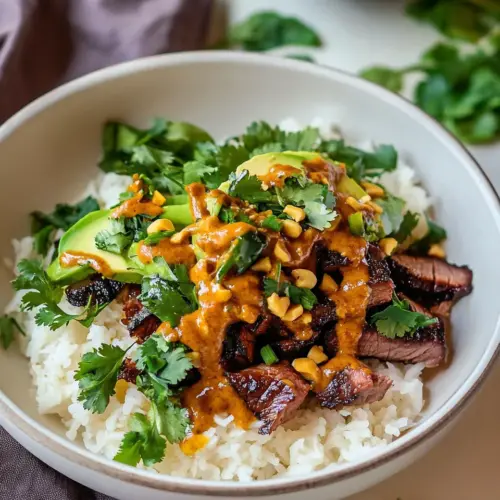
Curried Thai Beef with Peanut Sauce
Curried Thai Beef with Peanut Sauce marries creamy peanut richness, savory tamari, and bright mango salsa for a vibrant, easy weeknight dinner. The tender seared flank steak gets a glossy, caramelized finish while the peanut sauce adds silky depth and toasted crunch from sesame and peanuts. Serve over coconut rice for a crowd pleasing, flavor packed meal you will want to make again and again.
Equipment
- Large Skillet
- Blender or glass jar
Ingredients
- 1/2 cup creamy peanut butter Provide rich, creamy texture and nutty flavor while binding sauces; helps create a smooth, velvety peanut sauce that coats the beef evenly and balances spicy curry notes.
- 1/3 cup tamari/soy sauce Add salty, umami depth to the marinade and sauce; contributes savory complexity and helps tenderize the meat while balancing the sweetness of other components.
- 2 -3 tablespoons Thai red curry paste Deliver concentrated heat and aromatic Thai flavors; infuse the dish with red chilies, galangal, and kaffir lime undertones to create authentic curry character.
- 1 tablespoon chopped pickled ginger Introduce bright, tangy-sweet contrast and mild pungency; chopped pickled ginger lifts heavy flavors and adds a refreshing palate cleanser between rich bites.
- 1 tablespoon toasted sesame oil Impart a toasty, aromatic finish and help disperse flavors; sesame oil provides a nutty accent that complements peanut butter and enhances overall aroma.
- 1 1/2 pounds flank steak, thinly sliced Supply hearty, meaty substance and satisfying chew; thinly sliced flank steak soaks up marinades and cooks quickly for tender, flavorful pieces in the curry.
- 1 pinch black pepper Season subtly and balance flavors without overpowering; a pinch of black pepper adds mild heat and earthy warmth to round out the savory profile.
- 2 teaspoons cornstarch or arrowroot powder Thicken sauces and help the peanut-curry mixture cling to the beef; cornstarch or arrowroot powder creates a glossy, velvety finish and stabilizes the sauce.
- 1/4 cup Thai red curry paste Concentrate additional curry flavor and heat where needed; added red curry paste intensifies spice and aromatic notes for a layered, robust sauce.
- 3 tablespoons salted butter Contribute rich, savory fat and a slight caramelized flavor when melted; salted butter enhances mouthfeel and helps sauté aromatics for depth.
- 4 cloves garlic, chopped Provide sharp, aromatic bite and foundational savory flavor; chopped garlic becomes fragrant when cooked and supports the curry and peanut elements.
- 1 tablespoon lemongrass paste (optional) Offer bright citrusy lemongrass aroma and authentic Southeast Asian fragrance; optional paste elevates complexity and adds fresh, lemony notes.
- 2 tablespoons chopped pickled ginger Deliver extra bursts of tangy-sweet pickled brightness and textural contrast; additional chopped pickled ginger refreshes the palate between rich bites.
- 1/3 cup tamari/soy sauce Add another layer of salty, umami seasoning and help balance sweet and spicy elements; second portion of tamari/soy ensures consistent savory depth throughout the dish.
- 2 tablespoons sweet Thai chili sauce Introduce sweet-spicy glaze and sticky chili flavor; sweet Thai chili sauce provides sweet heat and glossy, pleasant sweetness to the sauce.
- 1 cup chopped mango Provide juicy tropical sweetness and subtle acidity to balance savory and spicy flavors; chopped mango contributes fresh fruit contrast and texture.
- 1 jalapeño pepper, seeded and sliced Bring bright, crisp heat and a vegetal note when sliced; seeded jalapeño adds controlled spiciness and a fresh, peppery edge to the dish.
- 1/2 cup fresh cilantro, chopped Add vibrant herbaceous freshness and citrusy lift; chopped cilantro complements rich peanut and curry flavors while providing aromatic green contrast.
- 2 green onions, chopped Offer mild oniony bite and fresh crunch; chopped green onions add color, delicate sharpness, and a finishing garnish for brightness.
- 2 tablespoons sesame seeds Provide crunchy, nutty garnish and visual appeal; sesame seeds add toasty flavor and texture when sprinkled over the finished dish.
- 2 tablespoons chopped peanuts Deliver additional crunchy peanut texture and reinforce the peanut flavor profile; chopped peanuts add contrast and a satisfying bite.
- 2 tablespoons lime juice Introduce bright acidity and zesty lift to balance richness; lime juice cuts through the sauce, enhancing flavors and adding a refreshing finish.
Instructions
- To make the peanut sauce. Add all ingredients to a glass jar or blender and blend to combine, adding water as needed to thin the sauce. In a bowl, toss together the beef, a pinch of pepper, and the cornstarch (or arrowroot powder). Melt one tablespoon of butter in a large skillet over medium-high heat. Add the beef and curry paste. Cook until the beef becomes crispy, about 5 minutes. Add two tablespoons of butter, the garlic, lemongrass, and ginger. Cook until the garlic is lightly crisping, 1 minute. Reduce the heat to low. Add the tamari/soy sauce and Thai chili sauce. Cook for 2-3 minutes until the meat is caramelized. In a bowl, mix the mango, jalapeño, cilantro, green onion, sesame seeds, peanuts, and lime juice. Spoon the mango salsa over the bowls of rice. Add the beef, then pour the peanut sauce on top. Enjoy!: The first thing you will notice is the sweet, nutty aroma when you blend the peanut butter with the savory liquids. A well emulsified sauce has a glossy sheen and a smooth, pourable texture, and if it smells too intensely salty, thin with a tablespoon of water and taste again. The reason you blend is to break down the peanut butter so it enrobes the other components, producing a velvety mouthfeel. One common error here is failing to thin the sauce enough, which results in a paste that will not easily coat rice or meat; correct that by adding water or a splash of extra tamari/soy sauce a little at a time.
- Add all ingredients to a glass jar or blender and blend to combine, adding water as needed to thin the sauce: As you blend, watch the mixture become homogenous and fragrant, the surface showing tiny ribbons from the blade. The texture should be creamy without lumps, and you can smell the toasted sesame and tang from pickled ginger coming through. The why behind this is texture control, emulsification binds the sauce so it does not separate when warm. Avoid over blending to the point of warming the sauce, which can mute fresh aromatics; if it becomes warm, chill slightly before using.
- In a bowl, toss together the beef, a pinch of pepper, and the cornstarch or arrowroot powder: The meat will feel slightly coated and tacky, which is precisely what you want so the curry paste and pan sauce cling. This layer creates a protective coating that promotes even browning and helps create a glossy finish when the pan sauce forms. You should be able to see an even dusting; clumps indicate too much starch in one spot. A typical misstep is overcrowding the meat at this point, which can make the coating clump and lead to uneven searing.
- Melt one tablespoon of butter in a large skillet over medium-high heat: You will hear a gentle sizzle when the butter hits the pan and smell the rich, dairy aroma as it begins to foam. That foaming tells you the butter is hot enough to sear. This step is important to develop a caramelized crust quickly, adding depth to the final dish. If the butter browns too quickly and smokes, lower the heat, because burnt butter will impart bitterness that cannot be removed.
- Add the beef and curry paste: Once the beef hits the pan you will hear immediate sizzling and see juices start to be released, and the curry paste will darken slightly and become fragrant. Those darkening edges signal Maillard reactions, which build savory complexity. Stir gently to ensure the paste coats the meat, creating that irresistible savory layer. A common issue here is stirring too frequently, which prevents proper browning; let the meat sit briefly between turns.
- Cook until the beef becomes crispy, about 5 minutes: Look for edges turning golden brown and slightly caramelized, and listen for steady sizzling that indicates moisture is evaporating and crust is forming. That crispness gives textural contrast against the silky sauce. The reason timing matters is that overcooking will dry out flank steak , so check early and often. If pieces are done unevenly, press them gently flat with the spatula to ensure contact with the pan.
- Add two tablespoons of butter, the garlic, lemongrass, and ginger: When you add these, the pan will briefly hiss and a fragrant steam will rise. The garlic should become lightly golden, releasing a nutty aroma; the lemongrass lifts citrusy notes, while the ginger adds bright warmth. This step amplifies aromatics and builds layers of flavor that penetrate the meat. Overcooking garlic here leads to bitterness, so watch for just a light golden hue and move quickly to the next step.
- Cook until the garlic is lightly crisping, 1 minute: A single minute is enough to turn raw garlic into fragrant, slightly crisped bites. You should see tiny flecks of gold and smell a toasty, pungent scent that complements the curry. Crisped garlic adds a delightful texture that contrasts the sauce and meat. The danger is leaving it longer, which will yield burnt, bitter pieces, so set a short timer if you are unsure.
- Reduce the heat to low: Dropping the temperature lets flavors meld without scorching, and you will notice the pan quiet down and the sauce begin to gently bubble rather than aggressively simmer. This control preserves delicate aromatics and helps create a more cohesive glaze. Skipping this leads to overly reduced, burnt-tasting pan sauce; take the heat down as instructed.
- Add the tamari soy sauce and Thai chili sauce: When these liquids hit the pan they will loosen any browned bits and begin to form a glossy, slightly sticky coating on the meat. You will smell an increase in umami and a subtle sweet heat from the chili sauce. This combination is crucial for balancing salt and sweet while developing a caramelized edge on the meat. Pour gradually and taste, because too much can make the dish overly salty or sweet; adjust accordingly.
- Cook for 2 to 3 minutes until the meat is caramelized: Visual cues are key here, look for a deepened color and a shine to the pan sauce, with edges showing concentrated browning. The aroma should be rich and savory with a hint of toasted sugar from the chili sauce. This short, intense cook seals flavors and builds complexity. A mistake is leaving it too long, which can dry the meat and make the sauce sticky; remove from heat when you see a glossy coat and darkened edges.
- In a bowl, mix the mango, jalapeño, cilantro, green onion, sesame seeds, peanuts, and lime juice: The salsa should be colorful and fragrant with a bright citrus scent and a gentle peppery heat. The mango should be juicy but not mushy, and the herbs should remain vibrant. This fresh mixture cuts through the richness of the beef and peanut sauce, providing textural contrast and brightness. Avoid mixing too far ahead, because the lime juice will soften the fruit and herbs over time.
- Spoon the mango salsa over the bowls of rice: When you add the salsa to warm rice, the heat will release its aromas and slightly warm the fruit, making it silkier without losing structure. The visual contrast is appealing, and the fruit juices mingle subtly with the rice. Serve immediately to maintain crisp textures; letting it sit will cause the salsa to release liquid and make the rice soggy.
- Add the beef, then pour the peanut sauce on top: As you arrange the seared flank steak over rice and spoon the sauce, you should see glossy ribbons of peanut sauce pooling and coating the meat. The final combination should offer warm, savory beef, cool crunchy salsa, and a velvety sauce. Pour to taste to avoid drowning the other components. A frequent error is adding too much sauce, which can overpower the bright salsa elements; use restraint and offer extra on the side.
- Enjoy: At the first bite you should experience a harmony of textures and flavors, the creamy peanut butter , savory tamari/soy sauce , sweet mango, and spicy curry melding together. If something tastes unbalanced, a spritz of extra lime juice brightens and rescues the dish. The final touch is personal preference, so adjust as you serve and savor the meal with friends or family.
Notes
- Make the peanut sauce in advance, it stores well in the fridge for up to four days, and chilling allows the flavors to meld. When ready to use, stir or thin with a splash of water to reach the desired consistency. I often make extra for dipping spring rolls or drizzling on steamed greens, and if it firms in the fridge, let it come to room temperature and whisk until smooth.
- Slice the flank steak against the grain, which shortens muscle fibers and yields a more tender bite. I find slicing while the meat is slightly chilled makes this easier and produces clean edges for quick searing. Avoid slicing with the grain which results in chewier pieces that do not absorb sauce as well.
- Control the heat when searing, medium-high gives a good crust without burning the butter. If the pan smokes, reduce the heat to protect the aromatics and prevent bitterness. Use a heavy skillet for even heat distribution and to keep consistent sizzling.
- Toast nuts and seeds briefly to boost their aroma, but watch carefully as they can burn in seconds. I usually shake the pan constantly over medium heat for 30 to 60 seconds until fragrant. Burnt nuts will impart an acrid flavor that is hard to mask.
- Adjust curry paste to taste, starting with less if you are sensitive to spice. You can always add more during cooking, but you cannot remove excess heat. Keep extra spoonfuls on hand so you can build layers incrementally and control the final spice level.
- Serve extra peanut sauce on the side for guests who want more, as it allows each person to balance sauciness and brightness with the mango salsa. This also prevents the rice from getting soggy for those who prefer a drier bowl. Put it in a small pitcher for easy pouring at the table.