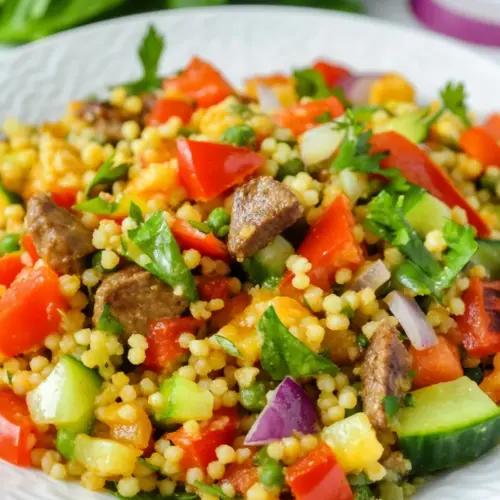
Curried Couscous Salad
Curried Couscous Salad is a bright, fragrant bowl of whole wheat pearled couscous tossed with crisp vegetables and warm spices. Creamy textured couscous meets crunchy cucumbers and juicy cherry tomatoes, finished with lemon and olive oil for a fresh, easy weeknight meal or picnic dish that keeps well and tastes great leftover.
Equipment
- Medium Pot
- Mixing Bowl
- Salad spinner
- Spoon
Ingredients
- 1 cup whole wheat pearled couscous Cook until tender and fluffy to provide a nutty, chewy base that absorbs flavors and adds whole-grain nutrition to the salad; rinse before cooking if desired to remove surface starch and prevent clumping.
- 2 cups vegetable broth or water salted to taste Boil gently to cook the couscous and infuse it with savory flavor; use vegetable broth for extra depth or salted water to control seasoning while keeping the dish vegetarian.
- 1/2 small onion, diced Sauté or sweat until translucent to add a mild sharpness and aromatic foundation; finely dicing ensures even texture and distribution through the salad.
- 2 garlic cloves, minced Mince finely and add briefly to sautéed aromatics or stir in raw for a bright pungency; garlic enhances savory depth and balances sweeter vegetables.
- 1/2 tsp . curry powder Season lightly to introduce warm, slightly floral curry notes that tie the dish together; adjust quantity to control overall spice character without overwhelming other flavors.
- 1/4 tsp . cumin powder Sprinkle measured amounts to contribute an earthy, warm undertone that complements the curry and enhances the savory profile; toast gently if a more pronounced aroma is desired.
- 1/4 tsp . sweet paprika Dust sparingly to impart a subtle sweetness and smoky color; use as a balancing accent against the curry and vegetables for complexity without heat.
- 2 handfuls spring mix greens Toss in fresh to add tender, leafy texture and a peppery, slightly bitter contrast; use as a bed or mixed throughout for volume and color.
- 2 small cucumbers, cubed Cube and mix to provide cool, crisp hydration and a refreshing crunch that contrasts the cooked couscous; peel or leave skin on depending on preferred texture.
- 1 medium bell pepper, diced Dice uniformly to introduce sweet, juicy crunch and vibrant color; bell pepper contributes vitamin C and a pleasant contrast to softer components.
- 10 -15 cherry tomatoes, halved Halve and scatter throughout to add bursts of sweet acidity and juiciness; cherry tomatoes brighten the salad and balance richer flavors.
- 2 scallion stalks, diced Dice finely and sprinkle to lend a mild onion-like bite with green freshness; scallions add visual contrast and a light, crisp allium note.
- 2 tbsp . lemon juice Squeeze fresh and mix into the dressing to add bright acidity and lift flavors; lemon juice balances oil and spices while enhancing overall freshness.
- 2 tbsp . olive oil Whisk into the dressing to bind ingredients and add a smooth, fruity richness; olive oil carries flavor and creates a pleasant mouthfeel.
- 1/4 tsp . salt or to taste Season sparingly and adjust to taste to enhance all combined flavors; salt brings out sweetness in vegetables and balances the spices.
- 1/4 tsp . black pepper or to taste Grind freshly and add to taste to introduce mild heat and aromatic sharpness; black pepper accentuates savory elements and completes the seasoning profile.
Instructions
- In a medium pot, add the oil and saute the garlic and onion until they are lightly browned.: Warmed olive oil will shimmer and release gentle aromas as the minced garlic and diced onion hit the pan, producing a soft sizzle that signals flavor building. You want the onion to become translucent with just a hint of golden edges, which brings out natural sweetness. Listen for the change from aggressive sizzling to a softer whisper, that tells you sugars are caramelizing. A common mistake is cooking over too high heat, which can brown the garlic too quickly and introduce bitterness, so keep the temperature moderate and stir frequently to ensure even color and prevent sticking.
- Add the curry powder, cumin, and paprika and stir until they coat the vegetables.: The moment the spices meet the warm aromatics the kitchen fills with a fragrant lift, a toasty, warm perfume from the curry powder , cumin , and sweet paprika . Stir them so each piece of onion and garlic glows with spice, this brief toasting blooms essential oils and deepens the final flavor. Expect the scent to intensify quickly, and if it darkens too much reduce heat immediately to avoid burning. Avoid dumping the spices in and walking away, because they can scorch in an instant and turn bitter, which will dull the salad's brightness.
- Add the couscous and veggie broth. Stir. Cover the pot and cook until the couscous is soft and fluffy.: When you add the whole wheat pearled couscous to the spiced aromatics it will begin to toast slightly and pick up flavor. Pour in the vegetable broth or salted water, and you should hear a gentle bubbling as the liquid comes to a low simmer. Covering the pot traps steam so the couscous cooks evenly, absorbing the liquid until tender. Visual cues include the grains swelling and the surface becoming matte rather than glossy. Resist the temptation to lift the lid repeatedly, because releasing steam can lengthen cooking time and yield uneven texture. A typical pitfall is using too much liquid, which makes the couscous mushy, so measure carefully and drain any excess promptly if needed.
- In a bowl, add the spring mix. Then add the cucumbers, bell pepper, cherry tomatoes, scallions, and couscous on top.: Layering the crisp spring mix greens first protects them from heat and gives a fresh base for the salad. As you add the cubed cucumbers , diced bell pepper , halved cherry tomatoes , and diced scallions , you will notice a lively interplay of color and texture. Spoon the slightly cooled couscous over the vegetables so that it doesn’t wilting the greens immediately. Pay attention to temperature, a warm but not hot couscous allows flavors to mingle without turning the greens limp. Avoid adding piping hot grains directly onto greens, because that is the main reason salads get soggy.
- Squeeze fresh lemon juice over the salad and add olive oil. Then sprinkle it with salt and pepper to taste. Using two spoons, toss the salad. Plate and serve.: The first squeeze of lemon juice brightens everything, and the oil adds silk to the mouthfeel. When you season with salt and black pepper , do so gradually and taste in between additions because the salt strengthens other flavors and can quickly dominate. You should detect a lively balance of acid and fat, with spice nestled in the middle. A frequent error is over dressing early, which makes the salad overly slick; start light, toss gently, and add more if needed.
- Using two spoons, toss the salad. Plate and serve: Gently tossing with two spoons ensures each grain and vegetable is coated without crushing the ingredients. You will hear soft scraping as the spoons move through the mix and see a sheen form on the couscous and vegetables from the dressing. Taste a forkful to check seasoning and texture before plating. If the salad tastes flat, a small additional squeeze of lemon juice or a pinch more salt usually revives it. A common mistake is over tossing, which bruises delicate greens, so aim for two to three gentle lifts and turns, rather than vigorous mixing.
Notes
- Dry your greens well Use a salad spinner or pat the spring mix greens completely dry to keep the salad crisp and prevent the dressing from becoming watery.
- Cool couscous slightly Let the couscous come down to warm or room temperature before adding to the greens to avoid wilting.
- Toast spices briefly Bloom the curry powder, cumin, and paprika in the pan with the aromatics to release their essential oils and deepen flavor.
- Measure your liquid Stick to the ratio of 1 cup couscous to 2 cups broth or water to prevent mushy grains.
- Adjust acidity last Add lemon juice gradually and finish by tasting so you don’t overpower the salad with acid.
- Serve at room temperature This salad is at its best when slightly cool or room temperature, which lets the flavors settle and meld without being muted by chill.