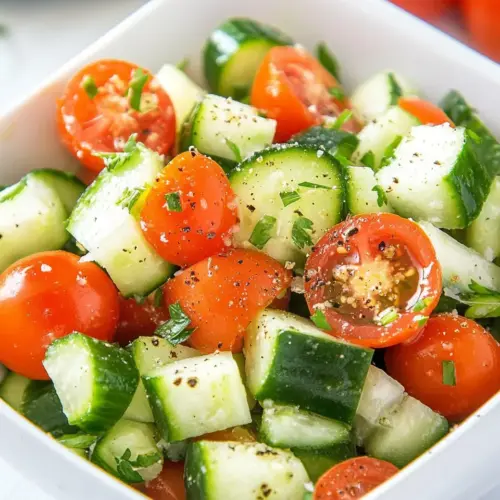
Cucumber Tomato Salad
Cucumber Tomato Salad is a bright, crisp summer classic with juicy cherry tomatoes, crunchy English cucumbers, and a simple olive oil and balsamic dressing. This easy to assemble salad is perfect for quick weeknight dinners or casual gatherings, offering refreshing textures and balanced flavors. Make it when tomatoes are at their best to let the natural sweetness shine.
Equipment
- Mixing Bowl
- Whisk
- Knife
- Cutting Board
Ingredients
- 1 pin cherry tomatoes halved Halve cherry tomatoes to add bright, juicy bursts of sweetness and acidity that brighten the salad. Provide a tender texture contrast and release flavorful juices that mingle with the dressing. Help balance richer elements and add appealing color to the dish.
- 2 long, skinny English cucumbers sliced (about 2 cups) Slice long English cucumbers thinly to contribute crisp, refreshing crunch and high water content that lightens the salad. Offer a mild, slightly sweet flavor that complements tangy and savory components. Maintain structural contrast and keep the salad cool and refreshing.
- 3 -4 fresh basil leaves Tear fresh basil leaves into pieces to impart aromatic, slightly peppery, and sweet herbal notes that elevate the overall flavor. Add fragrance and complexity while complementing tomatoes and mozzarella. Serve as a fresh garnish that ties the ingredients together.
- mozzarella pearls optional Add mozzarella pearls optionally to provide creamy, mild richness and a soft, silky texture that balances acidic tomatoes. Offer a neutral, milky flavor that soaks up dressing and enhances mouthfeel. Create a more substantial, salad-like experience when included.
- 2 tbsp olive oil Drizzle olive oil to create a smooth, fruity base for the dressing that carries flavors and coats ingredients evenly. Emulsify with vinegar to bind seasonings and add pleasant mouthfeel. Contribute healthy fats that enhance flavor absorption and satiety.
- 1 tbsp balsamic vinegar Whisk in balsamic vinegar to introduce tangy, slightly sweet acidity that brightens and balances the oil. Add depth and a subtle caramel-like flavor that pairs well with tomatoes and basil. Help cut richness and unify the dressing components.
- 1 tsp sugar Stir in sugar to mellow the vinegar's sharpness and round out acidity with gentle sweetness. Enhance the natural flavors of tomatoes and balsamic while preventing the dressing from tasting too tart. Provide subtle balance without noticeable sweetness.
- 1/2 tsp salt Add salt to season and amplify the natural flavors of the vegetables and dressing while balancing sweetness and acidity. Help draw out moisture from tomatoes and cucumbers slightly, concentrating flavors. Ensure overall taste harmony when used sparingly.
- pepper Grind or sprinkle pepper to contribute a warm, pungent note that complements basil and tomatoes. Add a subtle spicy finish that contrasts the salad's cooling elements. Use freshly cracked pepper for best aromatic impact.
Instructions
- Combine the tomatoes, cucumbers and basil in a bowl. (Plus mozzarella pearls if you're using them.): The moment when you mix the sliced cucumbers with the halved cherry tomatoes the air fills with a fresh vegetal perfume, and you will notice the tomatoes begin to release tiny beads of juice. Visually, the glossy red of the tomatoes against the pale green cucumber creates a lively contrast that signals freshness. I like to use a bowl large enough to toss without spilling, so the ingredients move freely and get an even coating later. A tactile cue is the slight weight change as tomatoes start to soften, but you do not want them to break down entirely. One common mistake is pressing the tomatoes too hard when slicing, which causes excess juice and a mushy texture; handle them gently and use a sharp knife to make clean cuts. This step matters because the distribution of ingredients sets the stage for the dressing to cling and for every bite to contain balance between crispness and juiciness.
- Whisk together dressing ingredients in a separate bowl. Pour over tomato and cucumber mixture and toss until well covered.: When you whisk the olive oil , balsamic vinegar , sugar , salt , and pepper together you will see the oil and vinegar briefly come together into a slightly opaque emulsion, and the sugar will dissolve leaving a glossy sheen. The aroma will shift, the fruity notes of the oil and the sweet tang of the vinegar becoming more pronounced, which tells you the dressing is ready. Use a small whisk or a fork and make sure the salt is dissolved so it does not sit grainy on the vegetables. A typical problem is adding oil too quickly and ending with a separated dressing; instead add the oil in a slow stream while whisking to help it emulsify. This is important because a well combined dressing clings uniformly, carrying flavor to every bite rather than pooling at the bottom of the bowl.
- Pour over tomato and cucumber mixture and toss until well covered.: As you drizzle the dressing over the vegetables and toss, listen for the soft clink of the spoon or spatula against the bowl, and observe how the dressing beads on the tomato skins before spreading across the cucumber surfaces. The visual cue you are aiming for is an even, glossy coat across pieces, not a puddle of oil at the base. Use a gentle folding motion to lift and turn the mixture so the basil pieces don not clump together or bruise excessively. A sensory detail to watch is the scent shift; when well coated the salad will smell cohesive, with acid, oil, and herb all present. Avoid over tossing which can damage tomato integrity and make the salad watery; once everything is evenly dressed, stop. This step ensures texture remains crisp while flavor is distributed, and prevents the salad from becoming soggy which is a frequent misstep if you let it sit too long after dressing.
- (Plus mozzarella pearls if you're using them.): If you add the mozzarella pearls fold them in last so they maintain their rounded shape and creamy mouthfeel; you will notice their milky scent and soft texture compared to the snap of the cucumbers . Adding them earlier can lead to crushing and leakage, which alters both visual appeal and texture. When included, they create pockets of richness that contrast beautifully with the acidic dressing and crunchy vegetables. A common error is adding cold cheese straight from the fridge into a bowl where the dressing is very acidic, which can mute the cheese flavor; let the pearls come closer to room temperature if you have time. This technique matters for the overall balance because the pearls act as small flavor anchors that make each forkful feel more substantial.
Notes
- Choose the best tomatoes Fresh, ripe cherry tomatoes are crucial, they provide the natural sweetness that the dressing balances. When tomatoes are at their peak flavor you barely need sugar, and the overall salad becomes more vibrant. Taste a raw tomato before slicing to judge sweetness and acidity; if it is too acidic, a touch more sugar will help round the flavor.
- Keep cucumbers cold Chilled cucumbers add a refreshing contrast to the warm weather and hold their crunch longer. I store cucumbers in the fridge until the last minute before slicing, which preserves both texture and crunch during serving. If they sit at room temperature too long they may soften and release water.
- Adjust vinegar to taste Not all balsamic vinegar is created equal, so start with less and add gradually. A milder balsamic needs a bit more to shine, while a syrupy aged balsamic can dominate; taste and tweak until the balance suits your palate. Adding a pinch of sugar can help smooth a sharp vinegar.
- Serve quickly for best texture This salad is best within a short window after dressing, when the cucumbers remain crisp. If you must make it ahead, keep the dressing separate and toss just before serving to avoid sogginess. If left dressed for too long the tomatoes will soften and the salad will lose its lively contrast.
- Use good oil A high quality extra virgin olive oil makes a noticeable difference, lending fruitiness and body. Cheap oil can taste flat or greasy, and it will not meld with the vinegar the same way. If you are looking for a bright finish, choose an oil with a peppery finish.