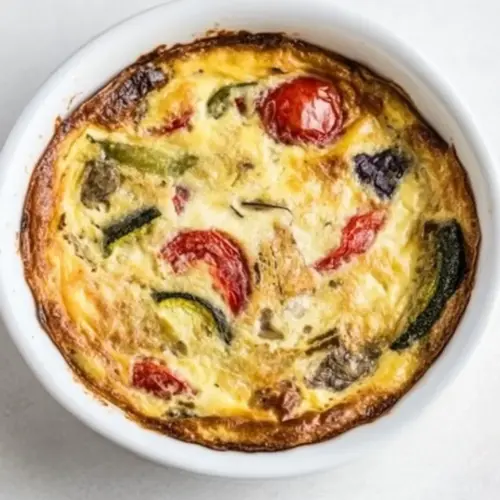
Crustless Vegetable Quiche
Crustless Vegetable Quiche is a creamy, veggie packed, and easy dish that delivers savory comfort without the fuss of a pastry shell. Bright bell peppers, tender zucchini, and broccoli nestle in a light egg custard with a hint of parmesan, making it perfect for an easy weeknight dinner or a make ahead brunch centerpiece. Try it for a flavorful, simple way to showcase fresh produce.
Equipment
- Skillet
- Mixing Bowl
- Whisk
- 9-inch pie dish
- Oven
Ingredients
- 1 tablespoon olive oil Enhance flavor and prevent sticking by coating the skillet with a tablespoon of olive oil; use it to sauté aromatics and vegetables until tender and lightly browned. Provide healthy monounsaturated fats that help carry other flavors and promote browning for a better texture in the quiche.
- 1 yellow onion small, diced Add gentle sweetness and savory depth by sautéing a small diced yellow onion until translucent and slightly caramelized. Contribute moisture and body to the vegetable base while creating a flavorful foundation that balances the egg custard.
- 2 garlic cloves, minced Infuse strong savory aromatics by mincing two garlic cloves and cooking briefly with the onions to release aromatic oils without burning. Provide an underlying pungent note that brightens the overall flavor profile and complements the vegetables and cheese.
- 1/2 cup red bell pepper, diced Bring crisp, sweet pepperiness by dicing half a cup of red bell pepper and sautéing until softened yet slightly charred. Contribute color, natural sweetness, and a juicy texture that contrasts well with the egg custard and other vegetables.
- 1/2 cup green bell pepper, diced Deliver mild, grassy flavor and crunchy texture by dicing half a cup of green bell pepper and cooking with the other peppers. Offer a balanced contrast to sweeter peppers and add visual variety and volume to the quiche filling.
- 1/2 cup zucchini, sliced Add tender, slightly sweet vegetal notes by slicing half a cup of zucchini and sautéing until just softened to avoid excess water release. Provide a light, moist component that melds well with eggs and other vegetables without overpowering the dish.
- 6 broccoli florets Introduce a firm, slightly earthy crunch by using six broccoli florets, chopped or left small and briefly steamed or sautéed. Supply fiber, nutrients, and a contrasting texture that holds up in the custard and adds visual green flecks.
- 1/4 cup sun-dried tomatoes, diced Concentrate sweet-tart tomato flavor by dicing a quarter cup of sun-dried tomatoes, adding chewy bursts throughout the quiche. Impart umami intensity and concentrated acidity that elevate the overall savory profile without adding excess moisture.
- 3 eggs large Bind and set the filling by whisking three large eggs to provide structure, richness, and a silky custard when baked. Supply essential proteins and fat that coagulate during cooking to hold the vegetables and cheese together in a sliceable quiche.
- 4 egg whites large Lighten the custard and increase protein while reducing fat by adding four large egg whites to the whole eggs. Help create a firmer, slightly less rich texture and extend the volume of the filling without significantly altering flavor.
- 2 tablespoons milk, low-fat Add creaminess and a touch of moisture by incorporating two tablespoons of low-fat milk into the beaten eggs to smooth the custard. Help create a tender set and improve mouthfeel while keeping overall fat content moderate.
- 1 teaspoon dried oregano Provide herbal warmth and Mediterranean aroma by stirring in a teaspoon of dried oregano to season the custard and vegetables. Enhance savory complexity and complement tomatoes, peppers, and cheese with its earthy, slightly bitter notes.
- 1/2 teaspoon black pepper Season with balanced heat by adding half a teaspoon of black pepper to the egg mixture or to taste. Contribute mild pungency that accentuates other flavors without overwhelming the delicate custard.
- sea salt to taste Adjust overall seasoning and bring out natural flavors by adding sea salt to taste during or after mixing the custard and vegetables. Enhance sweetness and umami in ingredients and ensure the finished quiche is properly seasoned to preference.
- 1/4 cup plus 1 tablespoon parmesan cheese, low-fat, optional Add nutty, savory richness by sprinkling a quarter cup plus one tablespoon of low-fat parmesan cheese, used optionally for a lighter finish. Provide a salty, umami boost and a slightly granular texture that melts into the custard and gratinates lightly on top when baked.
Instructions
- Preheat oven to 425 degrees.: You will notice a warm, dry smell as the oven comes up to temperature, which helps the quiche begin with an immediate blast of heat for a good initial rise. Preheating matters because a hot oven encourages the custard to puff, setting the outer edges while the center finishes slowly. A common mistake is placing the dish in a cold oven, which can yield a dense texture, so wait until it reaches the full 425 degrees before baking.
- In a large skillet on medium-low heat, add oil and sauté onion and garlic until tender, about 4 minutes. Add diced bell pepper, zucchini, broccoli, and sun-dried tomatoes and continue sautéing for 2 minutes.: As the olive oil warms, it will shimmer slightly, releasing a faint fruity aroma; when you add the onion , you'll hear gentle sizzling and smell the sweetness emerging as the pieces soften. The garlic becomes fragrant almost immediately, so keep the heat moderate to avoid charring, which smells sharp and bitter. Sautéing slowly builds a sweet, savory base that the custard layer depends on, and rushing this step often leaves raw onion or acrid garlic notes in the final dish.
- In a medium mixing bowl, whisk together eggs, egg whites, milk, spices, and 1/4 cup parmesan cheese. Lightly spray a 9 inch pie dish, add sautéed vegetables. Pour egg mixture over vegetables, make sure to cover all veggies.: When you add the red bell pepper , green bell pepper , zucchini , broccoli , and sun-dried tomatoes , the pan will fill with mixed vegetal aromas and a brighter sweetness. Two minutes lets the vegetables warm through and release a little steam, but keeps them slightly crisp so they hold textural contrast against the creamy custard. Overcooking here can soften them too much and cause excess moisture, which may lead to a soggy center in the finished quiche.
- Loosely cover with foil and bake 10 minutes at 425 degrees, reduce heat to 350 and continue baking 20-25 minutes. Remove foil the last few minutes of baking time and sprinkle with the remaining parmesan cheese. Quiche is done when it puffs and a knife inserted in the center comes out clean.: As you whisk the eggs , you'll see the color become even and pale, and small frothy bubbles will form at the surface indicating air has been incorporated for a light set. The addition of milk creates a silkier mouthfeel, while the parmesan cheese begins to dissolve into the mixture, lending savory depth. Whisking thoroughly ensures an even texture; insufficient mixing can leave streaks of dense egg in the bake, so whisk until uniform.
- Lightly spray a 9 inch pie dish, add sautéed vegetables.: When you transfer the vegetables into the prepared pie dish, press them into an even layer so every slice will get a good distribution. The pan should feel warm to the touch but not hot enough to steam the egg mixture on contact. Using a light spray prevents sticking and aids in clean slicing later. If the vegetables mound unevenly, the quiche may set unevenly, so spread them out evenly for consistent baking.
- Pour egg mixture over vegetables, make sure to cover all veggies.: As you pour the custard, watch it flow into crevices and around florets, smoothing to form a glossy surface. The visual cue that the liquid has filled the dish uniformly is a continuous reflective layer with no dry spots, which ensures even setting. If you pour too quickly and create bubbles, sit the dish for a minute so small bubbles rise and pop, preventing holes in the finished surface.
- Loosely cover with foil and bake 10 minutes at 425 degrees, reduce heat to 350 and continue baking 20 to 25 minutes.: The initial high heat will make the custard puff, visible as it rises and firms at the edges; you may hear a faint settling sound as steam escapes. Lowering to 350 degrees finishes the interior gently so it sets without cracking. A common pitfall is leaving the foil too tight, which traps steam and makes the top soggy; a loose tent maintains heat while allowing moisture to escape.
- Remove foil the last few minutes of baking time and sprinkle with the remaining parmesan cheese.: Taking off the foil exposes the top to dry heat so the surface can take on a light golden color and the parmesan cheese can melt and slightly brown, adding a savory crust. You will see tiny bubbles subside and a gentle browning appear as this happens. If you skip this step, the top may remain pale and lack that toasty flavor, so plan to uncover briefly for color.
- Quiche is done when it puffs and a knife inserted in the center comes out clean.: Check doneness by observing a gentle jiggle in the center that disappears as it cools, and confirm with a knife that comes out mostly clean, perhaps with a hint of moistness but no raw batter. The aroma should be warm, eggy, and vegetal, with toasted cheese notes on top. Overbaking will dry out the custard, so remove it promptly when the knife test passes to preserve a tender interior.
Notes
- Swap low fat milk with whole milk for richness, if you prefer a creamier mouthfeel the higher fat content will make the custard slightly silkier and more indulgent, but it will also increase calories and fat.
- Omit parmesan cheese for a lighter finish, the quiche will still set and taste pleasant, though it will lack the umami lift that the cheese provides.
- Use frozen broccoli if needed, thaw and drain it well before sautéing to avoid adding excess water to the custard which can prevent proper setting.
- Substitute different vegetables cautiously, swap in similar cooking time items like sliced mushrooms or cooked spinach, but account for moisture and sauté them down to avoid sogginess.
- Reduce sodium by omitting added salt, rely on the natural flavors of the vegetables and the parmesan cheese instead, and then adjust at the table if needed.
- Prepare ahead and reheat gently, cool completely, wrap, and refrigerate; reheat in a 350 degree oven until warmed through for best texture retention.