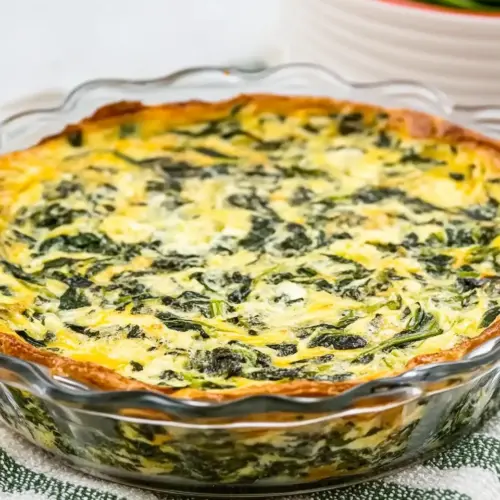
Crustless Spinach Quiche
Crustless Spinach Quiche is a creamy savory egg dish studded with spinach and melted Swiss cheese, offering a golden top and tender, custardy interior. This easy weeknight or brunch option is rich yet straightforward to prepare, perfect for make ahead meals and reheating. Try it for a cozy, satisfying meal that pleases a crowd and keeps well for lunches.
Equipment
- 9-inch pie dish
- Colander
- Mixing Bowl
- Whisk
- Kitchen Towel
Ingredients
- one 12 oz. package frozen spinach, thawed and drained well (see notes) Provide a mild, earthy base and bright green color; thawed and drained thoroughly to avoid excess water that would make the quiche soggy. Fold into the egg mixture to distribute vegetables evenly and enhance volume and nutrition in the crustless quiche.
- 8 eggs (see notes) Bind the filling and create a custardy texture when whisked and baked; beat until smooth to incorporate air for a tender crumb. Season lightly and combine with dairy and spinach so the mixture sets uniformly without being rubbery.
- 1/3 cup heavy cream (see notes) Enrich the custard with creamy mouthfeel and help produce a silky, tender set in the baked quiche. Whisk into the eggs to mellow flavors and add richness that balances the savory cheese and spinach.
- 1/2 teaspoon minced garlic Introduce a subtle aromatic kick and savory depth; mince finely so it disperses evenly without overwhelming the custard. Sauté briefly or stir directly into the mixture for bright garlic flavor that complements the cheese and greens.
- salt and fresh-ground black pepper to taste Season to taste to enhance and balance the overall flavors; add incrementally while tasting before baking. Use coarse or fine salt and freshly ground pepper to lift the spinach, eggs, and cheese without masking their natural flavors.
- 1/8 tsp . ground nutmeg (optional) Add warm, aromatic complexity in small amounts to lift the custard’s flavor profile; include sparingly if desired to avoid overpowering. Stir into the egg mixture for a subtle nutty note that pairs well with Swiss cheese and spinach.
- 2 cup s grated Swiss cheese (see notes) Provide nutty, tangy richness and help the custard set with melted, stretchy texture; grate finely for smooth melting throughout the quiche. Mix thoroughly with the egg and cream base so the cheese distributes evenly and browns slightly on top.
Instructions
- Preheat oven to 350 F/176 C and spray a 9 inch pie dish with non-stick spray. (If you're using a 12 oz. package of frozen spinach, it's important to use a baking dish that's at least this large!): When the oven reaches 350 F/176 C you want to notice a gentle warmth that will coax the custard to set evenly, not rush it. The sound of the oven clicking off and a faint rising heat are good signals the environment is right. Spraying the pie dish prevents sticking and helps the edges release cleanly, which is particularly useful without a crust. A common mistake is to skip warming the oven fully, which can cause uneven baking and soggy centers, so wait for the preheat indicator.
- Thaw frozen spinach overnight in the fridge or in the microwave, then drain well in a colander placed in the sink. (If the spinach still seems wet, I would squeeze out the water by putting it inside a kitchen towel and twisting the towel over the sink.): Properly thawed spinach should feel cool and supple, without icy crystals. Draining in a colander lets water run away, and you should hear a slight trickle as excess moisture escapes. I often press the leaves gently with the back of a spoon to encourage drainage. If you skip this step or do a poor job, the quiche can become watery and take longer to bake, so resist the urge to hurry.
- Whisk together eggs, cream, minced garlic, salt, fresh-ground black pepper, and ground nutmeg (if using.): When you squeeze the towel the sound is a soft wringing, and you can feel the resistance as liquid is expelled, leaving the leaves drier and more concentrated. This step improves texture dramatically because overly wet greens dilute the custard and make the quiche limp. One pitfall is squeezing too hard and losing all the leafy body, so aim for firm but not bone dry.
- Then stir in the drained spinach and combine well.: As you whisk, you should see a uniform pale yellow mixture form, with tiny bubbles that smooth out as you rest the bowl. The aroma will turn gently savory with the addition of garlic and warming from nutmeg . Whisking evenly ensures the eggs and cream integrate for a consistent set. A common error is under seasoning, so always taste a small amount of the raw mixture for salt and pepper balance, remembering safety practices around tasting raw eggs.
- Add the grated Swiss cheese and gently combine with egg mixture.: When the spinach is added you will notice the color darken and the mixture gain body, with pockets of green throughout. Stir gently until you see the leaves evenly distributed, but avoid overworking, which can break them into indistinct shreds. If the greens clump, they can create uneven pockets in the quiche, so aim for an even fold.
- Put the mixture into the prepared 9 inch baking dish.: The grated Swiss cheese will begin to cling to the custard, and when mixed, you will sense a heavier, slightly grainy texture as the shreds disperse. The aroma becomes nuttier and richer. Combine until the cheese is folded evenly; uneven distribution can leave some slices with too much cheese and others with too little, so take a moment to ensure evenness.
- Bake 40-50 minutes, or until the quiche is firm and the top is lightly browned.: As you transfer the mixture, notice how it levels itself in the dish and the surface smooths into a shallow pool that will rise slightly as it bakes. The dish should not be overfilled; leave a small rim to prevent spillage. A common mishap is using a dish that is too small, causing overflow and longer bake times, so check size ahead of time.
- Serve hot. This will stay good in the refrigerator for about a week and it reheats well.: During baking you will hear a quiet settling and see the surface transform from glossy to matte, with tiny bubbles releasing steam. The edges will turn a delicate golden tone, and a gentle jiggle in the center is normal until it finishes setting. Insert a knife near the center; if it comes out mostly clean the quiche is done. Avoid opening the oven frequently, as sudden temperature loss can cause sinking.
- I know some people do freeze quiche and egg casseroles, but personally I don't recommend freezing for this type of dish, especially if you use the heavy cream.: A freshly baked slice will have a warm, slightly steamy interior and a tender, cohesive texture. The aromas of cheese and cooked spinach will be most pronounced right away. If reheating later, a short time in a moderate oven preserves texture better than microwaving, which can become rubbery. One mistake people make is cutting too early when the center is still very loose, so allow a brief resting period to let carryover heat finish the set.
- This will stay good in the refrigerator for about a week and it reheats well: Stored in an airtight container, the quiche keeps its flavor and structure for several days. When you reheat, look for a gentle warmth and restored aroma; this indicates the custard has been revived without drying out. Freezing is not recommended by the author for this variation, particularly because the heavy cream can separate when frozen and thawed, affecting texture.
Notes
- Boost the herbs Add a tablespoon of fresh chopped herbs such as parsley or chives folded into the egg mixture just before baking for a brighter herbal note.
- Change the cheese profile Substitute part of the Swiss cheese with another melting cheese for different flavor notes while keeping the same volume to maintain texture.
- Adjust the cream For a lighter version, use a lower fat cream or reduce the amount slightly, noting that this will yield a firmer set and a less rich mouthfeel.
- Make individual portions Use a muffin tin to bake smaller quiches for portable servings, adjusting baking time down and checking for a clean knife test.
- Pre roast the garlic Slow roasting a head of garlic first will mellow the flavor and add a sweet, caramelized depth when mixed into the custard.