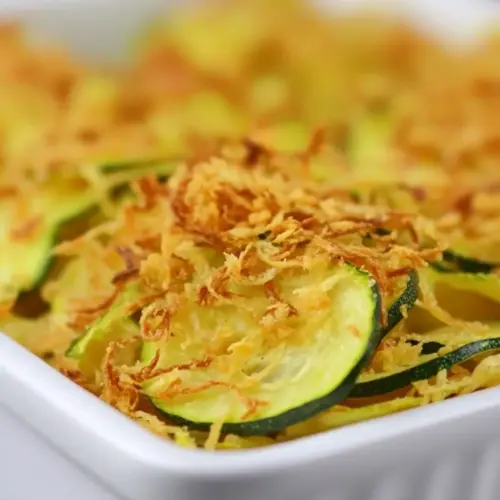
Crunchy Zucchini Topping
Crunchy Zucchini Topping delivers crisp, golden zucchini strings with nutty parmesan notes and a light olive oil sheen. This easy, savory garnish is perfect for salads, soups, and grain bowls, making it an ideal easy weeknight addition that adds texture and flavor. Try it to elevate simple meals with minimal effort and a big payoff.
Equipment
- Julienne peeler
- Mixing Bowl
- Baking Sheet
- Parchment Paper
Ingredients
- 1 medium zucchini, peeled Provide moisture and mild vegetal flavor while contributing a tender texture when cooked; peeled to ensure a smoother mouthfeel and to allow other ingredients to crisp or brown against the surface.
- 1 teaspoon kosher or sea salt Enhance overall seasoning balance by drawing out excess moisture from the zucchini and amplifying savory notes; use measured amounts to avoid oversalting and to help with texture contrast.
- 1 tablespoon extra virgin olive oil Coat and promote even browning while adding a fruity, peppery richness; drizzle and toss to help crisp the zucchini edges and bind the topping components together during cooking.
- 1/4 cup freshly grated parmesan cheese Add a nutty, savory finish and help create a golden, crunchy crust; grate freshly to maximize melting, flavor intensity, and a pleasant granular texture in the topping.
Instructions
- Use a Julienne Vegetable Peeler and cut zucchini into thin strings.: At this stage you will notice the soft, green flesh transforming into slender threads that feel cool and slightly moist in your hands. As you peel, listen for the faint whisper of the peeler across the skin, and enjoy the visual of uniform strings piling in the bowl. Thin strings dry and crisp more predictably than thick slices, which is why the julienne action matters. If your strings are thick the topping will be chewier rather than crisp, so take a bit more time to aim for uniform thickness. A common mistake here is rushing and producing uneven pieces, which bake at different rates. Keep the strings similar in size so they finish together.
- Add strings to a mixing bowl and sprinkle with salt, gently tossing to combine. Place double paper towels on a large baking sheet, spread out strings, and let set for 15 minutes. This will remove some of the excess water.: As the salt touches the strands, you will see tiny beads of moisture form, and there is a faint briny scent that signals water release. Gently tossing prevents bruising while ensuring all surfaces contact the salt. Spreading the strings on paper towels lets gravity and absorbent cloth pull moisture away, so after 15 minutes they will look less glossy and feel drier to the touch. This step is critical because retained water prevents crisping in the oven. One pitfall is skipping the rest or crowding the strings, which traps moisture and produces limp results. Change the towels if they become very wet to keep the drying effective.
- Preheat oven to 375 degrees.: Preheating brings the oven to an even, reliable temperature so the strings start crisping immediately once they go in. You should feel a warm wave of air when you open the oven and, as it heats, the oven will smell neutral or faintly warm. A stable temperature is important because a cold oven will dry the strands slowly, making them rubbery before they brown, while an oven set too high can brown too quickly without fully drying. One common mistake is not allowing the oven enough time to reach the correct temperature, which affects texture and timing.
- Return strings to mixing bowl, drizzle with olive oil, and toss to coat. Spread strings evenly over a nonstick or parchment-lined baking sheet. Stir every 10 minutes and continue to bake until crispy, approximately 30 minutes.: After tossing with extra virgin olive oil the strands will take on a subtle sheen, and as they heat the oil will sizzle softly and carry the scent of toasted green vegetable. Spreading the strands in a single layer ensures hot air can circulate and evaporate moisture, so use a wide sheet and avoid clumping. Stirring every 10 minutes helps the strings brown evenly and prevents sticking, revealing golden edges and a light crisp. The sound of gentle crackling as moisture leaves the strands is a satisfying cue they are drying. Watch closely in the final minutes because thin edges can go from golden to overly brown quickly. A typical error is piling the strings too close together, which traps steam and prevents the crisp texture you want.
- Sprinkle parmesan cheese over strings and bake 1-2 more minutes. Discard any strings that are overly brown. Allow to cool at room temperature. Store in an airtight container or ziplock bag.: Sprinkling the parmesan cheese near the end lets it toast without burning, producing a nutty, savory scent that deepens the overall aroma. In the oven the cheese will melt slightly and then firm into crisp, irregular bits that cling to the strands. The visual cue to stop baking is golden edges and lightly toasted cheese, with no active bubbling. If some strings look too dark, remove them to prevent bitterness, then let the rest cool on a rack or paper towel so steam does not make them soggy. Cooling fully ensures they retain crispness, and storing in an airtight container keeps them crunchy for several days. A common mistake is packing them away while still warm, which creates condensation and ruins the texture.
- Enjoy as a snack or add to salads and soups.: These final crunchy strands provide an immediate sensory lift when you sprinkle them on a bowl. They add a satisfying crackle and a savory note that complements leafy greens and brothy soups, and when you bite into them the contrast is lovely. I often test a few as they cool, enjoying the toasty aroma and crisp mouthfeel. One mistake to avoid is adding them too far in advance to wet dishes, because they will soften; add them right before serving for maximum crunch.
Notes
- Drying is everything: Make sure the zucchini strings lose their surface moisture on paper towels before baking, or they will steam rather than crisp.
- Uniform strands: Use a julienne peeler or mandoline to create consistent thickness so all strands bake evenly and finish at the same time.
- Oil sparingly: Toss with just enough extra virgin olive oil to coat, too much oil prevents crisping and can make the strands greasy.
- Parmesan timing: Add the parmesan cheese near the end so it toasts gently without burning, giving a nutty flavor and crunchy flecks.
- Watch the oven: Stir every 10 minutes and monitor closely in the final minutes, because thin edges can go from golden to burned very quickly.
- Storage care: Cool fully and store in a sealed container at room temperature; refrigerating can introduce moisture and soften the topping.