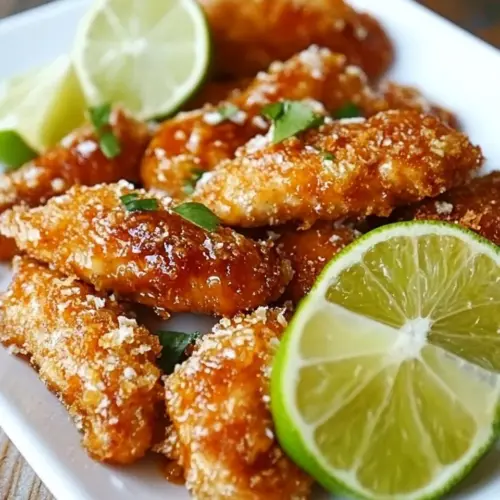
Crunchy Honey Lime Chicken
Crunchy Honey Lime Chicken delivers crispy chicken tenders with a bright finish of lime and a glossy drizzle of honey. This easy weeknight dinner balances sweet, tart, and crunchy textures, perfect for family meals or casual entertaining. Quick to prepare and adaptable to stovetop or oven methods, it is a reliable crowd pleaser worth making tonight.
Equipment
- Stainless steel skillet
- Tongs
- Wire Rack
- Rimmed Baking Sheet
Ingredients
- 1/4 cup all purpose flour Coat lightly to create a thin barrier that helps dredged chicken achieve an even, golden crust when fried or baked, while also aiding adhesion for egg wash and breadcrumbs.
- 1 teaspoon chili powder Add warmth and mild heat to seasonings, enhancing overall flavor complexity and complementing the lime and honey for a balanced sweet-spicy profile.
- 3/4 teaspoon kosher salt Season generously to bring out the natural flavors of the chicken and other ingredients, while helping to tenderize slightly and ensure a well-rounded savory base.
- 1/2 teaspoon freshly ground black pepper Provide sharp, aromatic heat that brightens the dish and adds subtle complexity to the savory-sweet balance, enhancing the final bite without overpowering.
- 1/4 teaspoon cayenne pepper Contribute concentrated spicy heat to build a layered kick, allowing precise control over the overall spiciness of the finished chicken.
- 1 large egg Bind coatings by creating a sticky surface for breadcrumbs to adhere to, while adding a touch of richness that improves mouthfeel and helps crust formation.
- 2 tablespoons milk Thin the egg wash for a smoother, more even coating that promotes breadcrumb adhesion and can slightly tenderize the surface of the chicken.
- 1 pound boneless skinless chicken tenders Serve as the main protein, offering tender texture and a mild flavor that soaks up the honey-lime glaze and crispy breadcrumb coating effectively.
- 1 1/2 cups panko breadcrumbs, toasted if desired Provide a crunchy, golden coating that contrasts with the tender chicken; toasting deepens flavor and adds extra crunch for a satisfying texture.
- 2 tablespoons (or more) olive oil (for stovetop cooking) Facilitate shallow frying in a skillet to help the breadcrumb crust crisp evenly and develop a rich, savory flavor through controlled browning.
- 2 large limes, cut into wedges Add bright, acidic citrus to finish the dish, cutting through richness and balancing sweetness while providing fresh aroma and a zesty finish.
- 1/4 cup honey Sweeten and glaze the chicken, creating a sticky, glossy coating that pairs with lime to form a balanced sweet-tart finishing sauce.
Instructions
- In a medium bowl, whisk together the flour, chili powder, salt, pepper and cayenne. Add the egg and milk and whisk until smooth. Add the chicken tenders to the flour mixture and stir to coat well.: The moment you start whisking you will notice the spices bloom in the flour , releasing a warm, fragrant aroma that hints at the final flavor. As the egg and milk emulsify with the dry mix, you will see a slightly thickened batter form, smooth and glossy. When you add the chicken tenders, press them into the mixture so the coating adheres evenly; this step matters because uneven coating leads to bare spots after cooking. A common mistake is to overcrowd the bowl, which prevents proper contact and causes clumping. If that happens, work in smaller batches so each tender is fully covered. Visually you want an even pale coat, with no big globs of batter, and the texture should feel tacky to the touch but not dripping.
- Place the panko in a medium sized bowl. Set a plate next to the panko. Using your fingers or a set of tongs, dip and thoroughly coat each piece of chicken in the panko crumbs. Set the crumb coated chicken strips on the plate.: When the panko breadcrumbs meet the tacky surface of the coated chicken , they should cling immediately, producing a textured, feathery crust. You will hear a faint rustling as you press the crumbs on, and the visual cue is a uniformly covered strip with a dry looking exterior. Press gently but firmly so the panko nests into the batter rather than sitting loosely on top. A frequent error is not shaking off excess crumbs, which can burn in the pan and create an uneven crust; tap lightly to remove loose crumbs. If your panko seems soggy, spread it on a sheet and toast it lightly to restore crispness before coating.
- STOVE TOP DIRECTIONS: Warm the oil in a large stainless steel skillet over medium high heat. When the oil is shimmering, use the tongs to carefully and quickly place half of the chicken in the skillet in a single layer. Let the chicken cook undisturbed for about 2 minutes, until it has lightly browned, then flip it over and cook the second side for 2 minutes (or until cooked through).: Warm the oil in a large stainless steel skillet over medium high heat. When the oil is shimmering, use the tongs to carefully and quickly place half of the chicken in the skillet in a single layer. Let the chicken cook undisturbed for about 2 minutes, until it has lightly browned, then flip it over and cook the second side for 2 minutes (or until cooked through). : As the olive oil warms you will see a shimmering surface and smell a faint fruity scent, which signals the pan is ready. Adding the strips should create an immediate sizzle, and that sound is your best indicator that a golden crust is forming. Letting the pieces cook undisturbed is crucial for developing even browning; nudging them too soon tears the crust and causes sticking. When you flip, the underside should be a warm golden brown with a crisp edge. A common mistake is crowding the skillet, which drops the oil temperature and leads to soggy crusts, so cook in batches. Use a meat thermometer if unsure; the chicken is safely done at 165 degrees F.
- OVEN DIRECTIONS: Preheat the oven to 425 degrees F. Set a wire rack over a rimmed baking sheet. Lightly grease the rack with oil. Place the crumb coated chicken strips on the wire rack. Spray liberally with olive oil spray. Bake for 10 minutes, or until the chicken is cooked through.: Preheat the oven to 425 degrees F. Set a wire rack over a rimmed baking sheet. Lightly grease the rack with oil. Place the crumb coated chicken strips on the wire rack. Spray liberally with olive oil spray. Bake for 10 minutes, or until the chicken is cooked through. : When you use the oven method, the high heat encourages rapid browning and an evenly crisp exterior because air circulates beneath the pieces on the wire rack. You will see the crumbs change from pale to golden as the sugars in the crumbs toast, and the sound is a gentle crackle as moisture escapes. Spraying with oil ensures the surface gets evenly crisp without soaking the panko. A typical pitfall is skipping the wire rack, which leads to steaming and a limp crust; the rack is essential for air flow. Keep an eye on color rather than time alone, and verify internal temperature to ensure juicy results.
- Set a plate out while the chicken finishes cooking. Transfer the finished chicken to the plate.: Moving cooked chicken to a waiting plate lets residual heat redistribute and prevents the crust from becoming soggy on a hot baking sheet. You will notice a subtle hiss as the hot pieces hit the plate, and the crust should remain crisp to the touch. Resting briefly helps the juices settle so the interior stays moist. A mistake here is stacking the strips too tightly which traps steam and softens the crust, so give them a bit of space. Visually, the crust should look golden and dry, not glossy from oil; that indicates proper crisping.
- Squeeze the lime wedges over the chicken and drizzle with the honey just before serving.: The finishing squeeze of lime releases a bright citrus perfume and a tart zip that cuts through the richness, while the honey adds a warm, floral sweetness and a glossy sheen. When you drizzle the honey at the end, it stays on the surface rather than sinking in, creating small sticky pockets that contrast the crisp crumb. A common error is adding both too early, which softens the crust; timing is everything. Look for a balance of shine and a light tack on the surface, and taste a piece to adjust acidity or sweetness if needed.
Notes
- Prep a coating station: Set bowls for the flour mixture, panko, and a plate for the coated tenders so you can work efficiently and avoid sticky hands slowing you down.
- Check oil temperature: The oil should shimmer but not smoke; if it smokes the crust will darken too quickly while the center remains undercooked.
- Use room temperature chicken: Let tenders sit briefly at room temperature so they cook evenly, reducing the chance of an overcooked exterior and cold center.
- Toast panko when possible: Gently toasting the breadcrumbs on the stove or in the oven builds a nuttier flavor and makes the crust more resilient to moisture.
- Finish with fresh lime: Squeezing lime at the end brightens the dish without breaking down the crust, so hold off until serving.