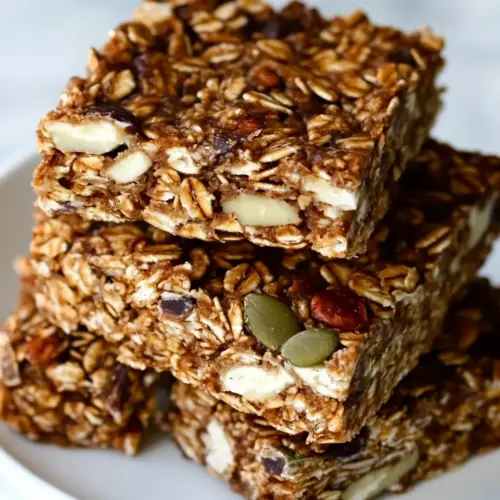
Crunchy Good for You Granola Bars
Crunchy Good for You Granola Bars are a crispy and wholesome snack that combines toasted puffed grains, rolled oats, seeds and dried fruit bound with almond butter and honey. These easy bars are perfect for busy mornings or an afternoon energy boost, offering satisfying texture and real ingredients. Make a batch to have a travel friendly, nutritious option ready when you need it most.
Equipment
- 8 or 9 inch square pan
- Parchment Paper
- Large Bowl
- Small Saucepan
- Measuring Cup
- Wooden Spoon
- Cutting Board
Ingredients
- 1 1/2 cup s (279 g) puffed kamut, or puffed rice or puffed wheat Provides light, airy crunch and a toasty flavor while keeping bars low in density; helps create an open, crispy texture that contrasts with chewier components and absorbs binder for structure. Works well to add volume without excess heaviness, complementing whole-grain oats and seeds for a satisfying bite.
- 1 1/2 cup s (121.5 g) traditional rolled oats, not the quick-cook kind Adds hearty chew, nutty flavor, and body to the bars while contributing whole-grain nutrition and soluble fiber. Helps bind with sticky sweeteners to create cohesive bars and balances crisp elements for a more satisfying texture and mouthfeel.
- 1/2 cup (58 g) Grape-Nuts cereal Contributes compact crunch and a slightly malty, dense texture that contrasts with puffed grains and oats while adding a nostalgic cereal element. Enhances structural integrity and provides extra bite and resistant starch for texture variety.
- 1/3 cup (40.4 g) dried cranberries or chopped dried apricot, or mix of both Offers bursts of concentrated fruity sweetness and chew that balance the savory seeds and grains; delivers natural sugars and a tart note if cranberries are used. Adds color and pleasant sticky pockets that help the bars cling together when pressed into the pan.
- 1/3 cup (44.67 g) salted sunflower seeds Supplies crunchy, salty contrast and a rich, nutty flavor with healthy unsaturated fats and protein to boost satiety. Helps create textural interest and delivers a savory counterpoint to sweet binders, improving overall flavor complexity.
- 1/4 cup (16 g) raw pumpkin seeds Provides firm crunch and a subtle nutty flavor along with magnesium, zinc, and healthy fats to increase nutritional value. Contributes to chew and stability in the bars, preventing them from becoming overly brittle while adding visual variety.
- Dash of cinnamon Imparts warm, aromatic spice that complements sweetness and brings depth to the flavor profile; enhances perception of sweetness without adding sugar. Works in small amounts to round out flavors and tie together fruity, nutty, and grain components.
- 3 1/2 tablespoon s (3.5 tablespoons) almond butter, can substitute soy butter or peanut butter, creamy or chunky Acts as a creamy binder that coats dry ingredients, adds a rich nutty flavor, and supplies healthy fats and protein for cohesion and tenderness. Helps hold clusters together when mixed with syrups and honey, and can be substituted with other nut or seed butters for dietary needs.
- 3 1/2 tablespoon s (3.5 tablespoons) brown rice syrup Functions as a viscous, sticky sweetener that binds dry ingredients and forms chewy clusters while contributing a mild malty sweetness and chew. Helps set the bars without hardening like some syrups, producing a pliable texture that slices well once cooled.
- 3 tablespoons honey Adds natural sweetness, moisture, and a floral, distinctive flavor while helping bind ingredients together for chew and cohesiveness. Promotes browning and enhances aroma, balancing the texture between crisp and chewy when combined with syrups and nut butter.
- 1 tablespoon light brown sugar Provides concentrated molasses flavor and subtle caramel notes, contributing sweetness and helping to adjust stickiness for better binding. Enhances depth of flavor and works with other sweeteners to achieve the desired sweetness level without overpowering.
- 1 teaspoon vanilla Delivers fragrant sweet-vanilla aroma that lifts and rounds overall flavor, tying together nuts, grains, and fruits. Small amounts enhance perceived sweetness and complexity, improving the final sensory profile of the bars.
Instructions
- Preheat oven to 325 degrees F. Line an 8- or 9-inch square pan with a long sheet of parchment paper (so ends extend over edges of pan).: As you heat the oven you will start to smell warmth in the kitchen, a faint toasty note that signals the grains will brown. This moderate temperature lets the bars toast evenly without burning; rushing with a hotter oven risks a burnt exterior and undercooked interior. A common mistake is not preheating long enough, which can alter the bake time and texture.
- Mix the puffed kamut, oats, Grape-Nuts, dried fruit, sunflower seeds, pumpkin seeds and cinnamon in a large bowl.: The clean lift comes from proper lining, so the parchment extending over the edges becomes your handle. Smooth paper prevents sticky corners, and pressing it into the pan helps maintain even thickness. Avoid skimping on parchment length, or you may struggle to lift the set bars out later.
- In a small saucepan over low heat, warm the almond butter, brown rice syrup, honey, brown sugar and vanilla until sugar has melted and the almond butter has thinned.: When you stir the dry mix you should hear a light rustle and see the ingredients blend into a harmonious, grainy landscape. Mixing thoroughly ensures each bite has a balance of seeds fruit and grain. One trap is under mixing, which leads to pockets with too much binder or dry clumps that do not hold together.
- Pour the liquid mixture on top of the dry ingredients, mixing well. When everything is equally coated, spread the mixture into the pan. Press the mixture down with the bottom of a measuring cup or the back of a wooden spoon. Bake for about 25 minutes, or until golden brown.: As the mixture warms the aroma becomes sweet and nutty, and the liquids combine into a glossy, pourable syrup. Doing this over low heat keeps the almond butter smooth and prevents scorching; if it gets too hot the sugars can crystallize. Stir constantly and remove as soon as the sugar dissolves to avoid a scorched flavor.
- When you remove the pan from the oven, again use the back of a wooden spoon to press the bars flat. Allow to cool completely before touching them again.: After you pour the warm syrup you will feel a satisfying tack when stirring, and the dry components will begin to glisten. This coating step ensures even binding and flavor distribution. A frequent mistake is pouring while the syrup is too cool, which results in uneven coverage and loose bars.
- When totally cooled and hard, lift the ends of the parchment and put onto a cutting board and cut into bars or squares. I wrapped the individual bars in foil and stored them in a ziploc bag at room temperature.: Pressing the mixture into the pan compresses air pockets and creates compact bars that slice cleanly. Use the bottom of a measuring cup or the back of a wooden spoon to exert steady, even pressure; you should hear a soft compressing sound and see a uniform surface. If you press unevenly you get fragile edges that crumble when cut.
- Press the mixture down with the bottom of a measuring cup or the back of a wooden spoon: The second press after baking compresses and seals the grains so the bars set firmly. A solid press makes the texture cohesive rather than crumbly. Avoid light, fluttery taps which leave the center loose and prone to falling apart.
- Bake for about 25 minutes or until golden brown: While baking you will notice the kitchen filling with toasty, nutty aromatics and the surface deepening to a satisfying golden hue. That color is your cue for readiness; baking too long will dry the bars excessively, and too short leaves them loose. Check the edges for a deeper caramel color as an indicator, and rotate the pan if your oven has hot spots.
- When you remove the pan from the oven again use the back of a wooden spoon to press the bars flat: The bars continue to set as they cool, and pressing immediately after baking compacts the structure while it is still malleable. You should feel a firm give, not a sloppy mush, and the surface will cool to a matte finish. Waiting too long to press makes the bars brittle and harder to compress evenly.
- Allow to cool completely before touching them again: Cooling is when the binders firm up, creating bars that slice without crumbling. The aroma mellows during this phase and the texture shifts from warm tacky to stable and crisp. Cutting prematurely often results in mangled pieces and excess crumbs.
- When totally cooled and hard lift the ends of the parchment and put onto a cutting board and cut into bars or squares: The final cut reveals the layers inside, and a clean knife swipe should produce neat edges and a crisp sound. Wrapping individually preserves texture and makes them portable. If the bars are still soft after cooling, refrigerate briefly; cutting too early leads to misshapen bars and excess breakage.
- I wrapped the individual bars in foil and stored them in a ziploc bag at room temperature: Proper storage maintains crunch and prevents stale flavors, and you will appreciate how well they travel when sealed. Keep away from heat and humidity, because moisture is the enemy of crispness. Leaving them exposed causes sogginess and faster spoilage.
Notes
- Swap the puffed grain Use puffed rice or puffed wheat if you cannot find puffed kamut, the texture shifts slightly but the bars remain light and crunchy.
- Change the nut butter Try peanut or soy butter if you need a different flavor profile, note that creaminess affects how easily the binder mixes in.
- Mix dried fruits Combine cranberries and chopped apricots for complexity, chopping larger fruits ensures even distribution.
- Adjust sweetness Slightly reduce the honey by a teaspoon if you prefer a milder sweetness, but keep enough to act as binder.
- Add spice A pinch more cinnamon or a touch of ginger powder can warm the flavor, add gradually and taste as you go.