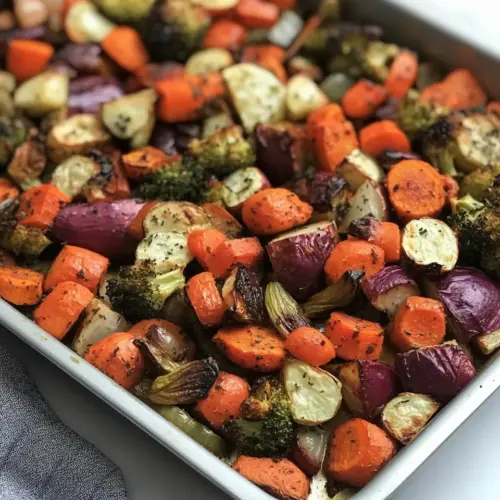
Crowd Pleasing Roasted Vegetables
Crowd Pleasing Roasted Vegetables deliver caramelized edges, tender centers, and a warm spice profile that makes them an easy weeknight dinner favorite. This colorful tray combines crispy broccoli, sweet potato, peppers, and squash tossed in olive oil and aromatic spices for a simple, flavorful side that scales for gatherings. Make it when you want low fuss and high reward.
Equipment
- Oven
- Baking Sheet
- Mixing Bowl
- Tongs
Ingredients
- 2 medium crowns broccoli chopped into florets Chopped into florets to provide bulk, texture, and a slightly bitter green contrast; roasts to tender crispness while holding shape. Adds vitamins, fiber, and visual height to the vegetable medley, allowing for varied roasting times when sized properly.
- 1 medium red onion sliced into wedges Sliced into wedges to contribute sweet, caramelized layers and sharpness when roasted; maintains structure and releases natural sugars under high heat. Balances earthier vegetables and adds a pop of color and mild pungency to the dish.
- 1 medium sweet potato diced Diced to create sweet, starchy pockets that caramelize at the edges and become tender in the center; offers body and a hearty mouthfeel. Temperatures that allow for even cooking will render these pieces soft and slightly caramelized.
- 1 red bell pepper cored and chopped Cored and chopped to supply bright, sweet notes and crisp roasted flesh that softens while retaining some bite. Enhances color contrast and adds a fresh, summery flavor that complements root vegetables.
- 1 pasilla pepper cored and chopped Cored and chopped to bring mild heat and smoky flavor when roasted; softens and blends with other peppers for complexity. Contributes a deeper, earthy pepper profile and additional color variation to the mix.
- 1 large yellow squash chopped Chopped to add mild, watery sweetness and tender texture after roasting; cooks quickly and soaks up seasoning and oil. Provides a delicate counterpoint to denser roots and helps balance the overall palate.
- 2 large carrots peeled and chopped Peeled and chopped to supply sweetness, firmness, and a slightly fibrous texture that holds up under roasting; becomes tender and caramelized. Adds color, nutrition, and natural sweetness that deepens as cooking progresses.
- 1/4 cup olive oil divided Divided to allow for initial coating and finishing drizzle; provides necessary fat for even roasting and helps seasonings adhere. Using part of the oil up front and keeping some reserved helps control browning and final gloss.
- 2 teaspoons sea salt to taste To taste for seasoning and to enhance natural flavors while controlling sodium; used both during tossing and possibly adjusted after roasting. Ensures overall balance and brings out the sweetness and savory notes of the vegetables.
- 2 teaspoons dried oregano Dried to add earthy, herbal undertones and Mediterranean character; sprinkles evenly across vegetables to infuse during roasting. Compliments roasted aromas and helps tie together the varied flavors in the pan.
- 1 teaspoon paprika Adds a warm, smoky note and depth when sprinkled over vegetables; enhances roasted flavor and color when combined with oil. Works especially well with root vegetables to impart a subtle warming background.
- 1 teaspoon garlic powder Provides concentrated savory garlic flavor in dry form that evenly seasons all pieces; blends easily with other spices and oil. Offers convenient, consistent garlic presence without introducing extra moisture.
- 1 teaspoon ground cumin Brings warm, slightly nutty and earthy spice to the blend; pairs with paprika and oregano to create a rounded, aromatic profile. Adds complexity and a subtle hint of warmth that complements the natural sweetness of roasted vegetables.
Instructions
- Preheat the oven to 425 degrees F.: You will notice the oven humming as it reaches temperature, and a properly preheated oven ensures the vegetables start sizzling immediately, which encourages crisp edges. The high heat promotes Maillard reactions that create that desirable golden brown color and nutty aroma. A common mistake is putting vegetables into a cool oven, which leads to steaming and limp results, so wait until the oven fully reaches 425 degrees F . Use an oven thermometer if your oven runs hot or cool, because inconsistent heat will change the roasting time and texture.
- Divide all of the vegetables between two baking sheets. Drizzle half the olive oil and sprinkle half the salt and spices over each baking sheet. Use your hands to toss everything together until the vegetables are all coated with spices and oil.: At this point you will hear the light scrape of veggies on the pan and feel the slight resistance when arranging them in a single layer. Spreading them out prevents overcrowding, which otherwise causes steaming instead of browning. Visually aim for space between pieces so hot air circulates; crowded pans yield soggy pieces. One pitfall is piling too many vegetables on one tray to save time, which sacrifices crispness, so if needed use a third sheet instead of overlapping.
- Place both baking sheets in the oven (aim for the center racks) and roast 25 minutes without touching. Remove the vegetables from the oven, give each tray a quick stir or shake, and place them back in the oven. Roast 10 minutes more, or until vegetables are golden-brown and have reached desired done-ness.: When the oil and spices hit the vegetables you will see them glisten and smell the herbs wake up, especially the oregano and paprika. Dividing the oil and seasoning ensures even coating across both trays, which matters because uneven seasoning leads to some bites that are bland and others that are oversalted. A frequent error is to pour all the oil on one tray, thinking a quick toss will fix it; instead distribute evenly so every piece benefits from the coating.
- Serve alongside your favorite entree!: Working by hand gives you tactile feedback, letting you feel if any pieces remain dry or clumped. The gentle massage helps the oil and spices adhere, and you should notice a light sheen on each piece and an aromatic lift from the spices. Avoid using a fork that can bruise softer pieces, and wash hands well afterward. Overhandling can cause delicate squash to fall apart, so toss with confidence but modest pressure.
- Place both baking sheets in the oven aim for the center racks and roast 25 minutes without touching.: As the trays heat, you will hear faint sizzling, and a savory steam will start to rise as moisture begins to evaporate. Letting them roast undisturbed allows a crust to form and deep browning to develop; opening the oven too often drops temperature and slows caramelization, so resist frequent peeks. A typical mistake is checking repeatedly early on, which can extend cook time and prevent proper browning.
- Remove the vegetables from the oven give each tray a quick stir or shake and place them back in the oven.: When you pull the trays out you will immediately see increased aroma and spots of golden brown color. A quick stir redistributes pieces so edges that were facing down can brown evenly, and shaking loosens any bits that might have stuck. Be mindful of steam when opening the oven and use oven mitts, because impatient stirring can lead to uneven doneness; if some pieces are much larger, remove them and return smaller ones for additional time.
- Roast 10 minutes more or until vegetables are golden brown and have reached desired done-ness.: In the final stage you should watch for deep golden patches and tender centers, testing a cube of sweet potato or a carrot piece with a fork for a slight bite. The last minutes intensify flavor as sugars concentrate and edges crisp, giving a smoky sweetness and satisfying chew. Avoid overcooking which causes mushy textures and loss of color; if you prefer firmer vegetables, check sooner and remove trays when desired doneness is met.
- Serve alongside your favorite entree!: This is the moment the scent fills the room and plates come together, with bright colors and caramelized edges making a welcoming presentation. Serve warm so the contrast between crispy bits and tender centers is at its best, and consider a final light sprinkle of sea salt for finishing. A common oversight is letting the vegetables sit uncovered too long which cools them and softens crispness, so time the serving so they remain warm and textured.
Notes
- Swap vegetables Replace any listed vegetable with a similarly textured vegetable you have available, keeping size uniform so cooking time stays consistent.
- Boost herbiness Add a handful of fresh herbs after roasting for brightness, sprinkling them on while the vegetables are still warm so the herbs wilt slightly.
- Add a finishing acid A squeeze of citrus or a splash of vinegar before serving brightens flavors and balances the roasted sweetness.
- Make it spicy Stir in a pinch of cayenne or red pepper flakes to the oil if you want a gentle heat that deepens with roasting.
- Make ahead Roast the vegetables fully, cool, and store in an airtight container for up to three days, then reheat quickly on a sheet pan to revive crisp edges.