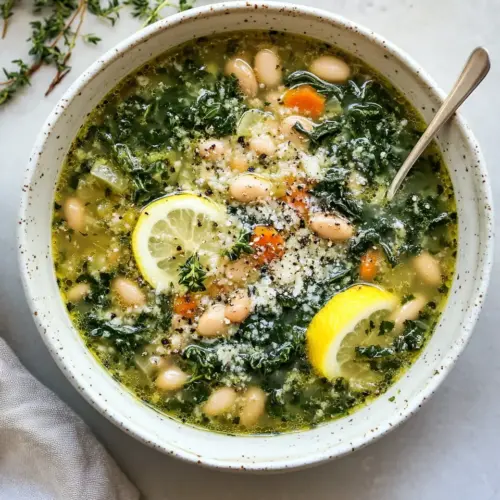
Crockpot Tuscan White Bean and Lemon Soup
Crockpot Tuscan White Bean and Lemon Soup is a creamy, bright, and comforting slow cooked bowl with tender cannelloni beans, nutty quinoa, and a lively lemon finish. Ideal for an easy weeknight dinner, this soup blends savory parmesan depth with fresh citrus and hearty greens, making it satisfying yet light. Make it when you want a hands off meal that still feels thoughtful and nourishing.
Equipment
- Crockpot
- Ladle
- Cutting Board
- Knife
Ingredients
- 6 cups low-sodium chicken or veggie stock Provide a savory, well-seasoned liquid base that simmers the soup ingredients and imparts depth; use low-sodium to control overall saltiness and allow other components to shine.
- 1/2 cup uncooked quinoa Absorb cooking liquid and gently thicken the soup while adding light nuttiness and protein; rinse if desired and add early so it cooks tender and fluffy.
- 1 small sweet onion, chopped Offer sweet aromatic foundation and mild onion flavor when chopped and sautéed or softened in the crockpot, contributing subtle sweetness and body to the broth.
- 2 carrots, chopped Contribute natural sweetness, texture, and earthy flavor when chopped and cooked until tender, balancing savory and bright elements in the finished soup.
- 1/4 cup basil pesto Introduce concentrated herbal richness and umami from basil, garlic, and oil that disperses through the soup to create a vibrant Italian flavor profile.
- 1/2 teaspoon crushed red pepper flakes Add measured heat and a touch of smoky spice to lift and balance the soup; crushed flakes provide controlled warmth without overwhelming.
- 4 sage leaves Deliver an earthy, slightly peppery aroma and a warm savory note; whole leaves can be added for infusion and removed before serving if desired.
- kosher salt and pepper Season and adjust taste to preference, enhancing flavors and bringing balance; kosher salt and freshly ground pepper finish and elevate the soup components.
- 1 parmesan rind Contribute deep savory, nutty umami and richness as it slowly melts into the broth, adding layers of flavor without additional solids.
- 3 tablespoons lemon juice + 1 tablespoon lemon zest Provide bright acidity and fresh citrus fragrance to cut through richness and brighten flavors; juice and zest added near the end preserve brightness.
- 2 cups roughly torn Tuscan kale Add hearty, leafy texture and slight bitterness that softens with cooking, contributing color, nutrients, and a rustic Tuscan character to the soup.
- 2 cans (14 ounces) cannelloni beans, drained Supply creamy, earthy body and protein while thickening the soup; drained cans mean ready-to-use beans that blend well with the broth and vegetables.
- grated parmesan, for serving Offer salty, nutty finishing garnish that enhances umami and provides a savory, slightly granular texture when grated over each bowl.
Instructions
- In the bowl of your crockpot, combine the chicken stock, quinoa, onion, carrots, pesto, red pepper flakes, sage, and a pinch each of salt and pepper. Add the parmesan rind. Cover and cook on low for 4-5 hours or high for 2-3 hours. About 30 minutes before serving, stir in the lemon juice and zest, kale, and beans. Divide the soup among bowls and top with parmesan. Serve with a hunk of bread.: As these ingredients begin to warm you will notice the aroma of onion and pesto becoming more pronounced, the basil lifting gently from the oil and herbs. This stage creates the foundational scent profile, a savory and herbaceous base that permeates the kitchen, signaling that flavors are marrying. The sound is subtle, mostly quiet bubbling after an hour or two, and visually the vegetables will lose their raw sheen and look softer. The reason this matters is that starting everything together lets the starch from the quinoa and the sweetness from the carrots infuse the broth slowly, creating a cohesive mouthfeel. A common mistake is using stock that is too salty; because everything reduces slightly, you'll want to start with low-sodium stock to keep final seasoning flexible.
- Add the parmesan rind: When the parmesan rind warms in the crockpot it releases concentrated umami that transforms the broth from simple to complex, imparting savory, almost meaty notes without adding meat. Visually, the rind will sit like a small piece of firm cheese that softens at the edges; the aroma deepens into a savory, almost nutty profile. The why here is crucial, the rind melts slowly and provides body and depth, rounding the flavors in a way that salt alone cannot. Troubleshoot by ensuring the rind is fully submerged so it can infuse evenly; if it sits dry the extraction will be uneven.
- Cover and cook on low for 4 to 5 hours or high for 2 to 3 hours: As the soup cooks slowly the broth will concentrate, and the quinoa will plump, releasing its nutty essence and thickening the liquid slightly. Smell for mellowed onion sweetness and a savory backbone from the rind; the kitchen will carry a warm, homey scent. The texture evolves from thin to gently substantial as starches and proteins mingle. This long, gentle cooking prevents abrupt breakdown of ingredients and allows flavors to develop fully. A common misstep is lifting the lid too often, which lets heat out and extends cooking, so resist checking unless necessary.
- About 30 minutes before serving, stir in the lemon juice and zest, kale, and beans: At this moment you will notice an immediate brightening of the pot as the citrus oils from the lemon zest perfume the steam, and the lemon juice adds a clean acidity that balances the savory broth. Tearing the Tuscan kale into rough pieces before stirring in preserves its texture; you should see the leaves go from dark and stiff to glossy and slightly tender in the hot liquid. The cannelloni beans should warm through, their creaminess contrasting the tender greens. The why is that adding these last preserves fresh aromatics and prevents overcooking the kale and beans. Avoid adding them too early or they will lose color and become mushy.
- Divide the soup among bowls and top with parmesan: When you ladle the soup, watch how the steam rises carrying citrus and herb notes, and how a dusting of grated parmesan melts into a silky finish on the surface. The final seasoning should be adjusted now, tasting for salt and brightness. The sensory cue is a balanced aroma and a spoonful that feels both creamy and lively. This plating step matters because a final sprinkle of cheese adds immediate richness and a pleasing sheen. A common error is not tasting before serving, which can lead to under seasoned bowls.
- Serve with a hunk of bread: A crusty piece of bread soaks up the savory broth and gives a contrasting texture to the spoonfuls of beans and kale. The bread will soften but still provide chew, and when dipped you get concentrated bits of flavor on the crust. This pairing enhances the meal, creating an interactive element for diners. Avoid using bread that is too soft, as it will disintegrate quickly when dunked.
Notes
- Start with low-sodium stock so you have full control over the final seasoning, and avoid an overly salty pot. This gives you room to adjust with salt at the end without risking a ruined batch.
- Rinse your quinoa under cold water to remove any bitterness from the outer coating, which leads to a cleaner, nuttier taste once it has cooked.
- Add citrus late to maintain the bright, fresh character of the lemon zest and juice; early addition will mute the citrus over long cooking times.
- Stir kale in toward the end to keep its color and texture appealing, avoiding long stewing that makes it limp and dull.
- Warm grated parmesan at the table so it melts pleasantly into each bowl, delivering a silky finish and a little extra savory punch.