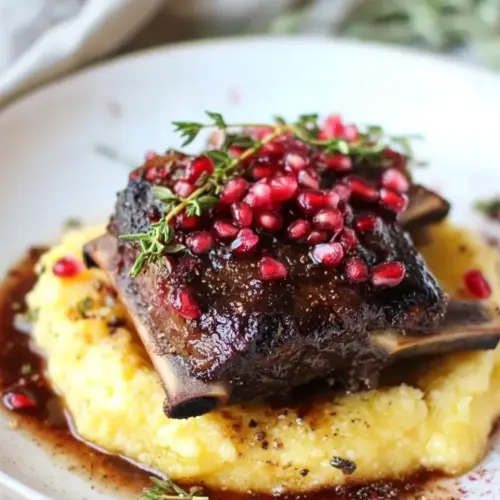
Crockpot Sweet and Sour Pomegranate Short Ribs with Creamy Polenta
Crockpot Sweet and Sour Pomegranate Short Ribs with Creamy Polenta is a cozy, creamy and savory dish that combines tender slow cooked beef with a bright pomegranate glaze and silky mascarpone polenta, perfect for an easy weeknight dinner or a winter gathering. The sweet and sour sauce and soft polenta create a comforting, impressive plate that is worth making whenever you want a show stopping meal.
Equipment
- Skillet
- Crockpot
- Saucepan
- Whisk
Ingredients
- 3 pounds beef short ribs or more if the ribs do not look meaty Brown and render to develop deep, savory flavor and a rich base for the sauce; select meaty short ribs to ensure tender, fall-off-the-bone texture after slow cooking.
- 2 tablespoons olive oil Heat to sear the short ribs and build a caramelized crust, preventing sticking and adding a toasty, savory note to the dish.
- good pinch of salt and pepper Season generously to enhance overall flavor balance, helping to bring out the natural beefy and aromatic elements during searing and slow cooking.
- 1 large onion sliced very thin Slice thinly to sweat and caramelize, contributing sweet, savory layers and body to the braising liquid while softening into the sauce.
- 4 cloves garlic minced or grated Mince finely to release pungent, aromatic oils that provide depth and brightness in the sauce and pair well with the braised beef.
- 4 carrots chopped (peel if desired) Chop and add for earthy sweetness and texture; carrots offer body and natural sugars that enrich the braising liquid as they soften.
- 1/4 cup + 2 tablespoons brown sugar divided Dissolve partially into the braising liquid to amplify sweetness and assist in creating a glossy, balanced sweet-and-sour sauce when combined with acid.
- 1 1/2 cups pomegranate juice Reduce gently or use as-is to supply bright, fruity acidity and sweetness that defines the pomegranate-forward sweet-and-sour flavor profile.
- 1/3 cups soy sauce Mix in to contribute salty, umami richness that balances the sweetness of pomegranate and brown sugar while deepening the sauce's savory character.
- 1 tablespoon fresh thyme Strip and add fresh to infuse subtle, aromatic herbal notes that complement the meat and brighten the overall flavor of the braise.
- 1 tablespoon fresh rosemary Chop and include to introduce resinous, piney undertones that pair well with beef and herbs during the slow cooking process.
- 1/4 teaspoon cayenne pepper Sprinkle sparingly to introduce heat and a faint smoky spice that contrasts the sweetness and enhances complexity in the sauce.
- 1/4 cup fresh parsley Chiffonade or roughly chop to stir in at the end for a pop of fresh, herbaceous brightness and color over the finished dish.
- the arils from one pomegranate plus more for garnish, here is how to [deseed a pomegranate | https://www.halfbakedharvest.com/deseed-pomegranate-pictures/] Deseed and scatter arils to contribute bursts of tangy-sweet juiciness and a jewel-like garnish that reinforces the pomegranate theme.
- 2 cups chicken broth Pour in as part of the braising liquid to add savory depth and dilute concentrated flavors while contributing a gentle umami backbone.
- 2 cups milk Warm gently and use for cooking the polenta, adding creaminess and a mild dairy sweetness that helps create a smooth texture.
- 1 cup polenta I used Bob's Red Mill Whisk in slowly while cooking the grits to form the polenta base; cornmeal provides structure and a comforting, slightly nutty flavor.
- 4 ounces mascarpone cheese Stir in at the end to lend a silky, tangy richness that elevates the polenta's creaminess and harmonizes with savory short ribs.
- 1/4 teaspoon salt Measure carefully and add to the polenta to control seasoning, ensuring the creamy base is properly salted to taste.
- 1/4 teaspoon pepper Season polenta or finishing elements to taste, reinforcing overall seasoning balance without overpowering other flavors.
- 2 -4 tablespoons butter your preference Whisk in or dot on top to enrich texture and mouthfeel in the polenta; butter also adds a glossy finish and rounded flavor.
Instructions
- The night before or the morning of, heat a large heavy bottom skillet over medium high-heat and add the olive oil. Add the ribs to the skillet and sprinkle with salt, pepper and 2 tablespoons brown sugar. Sear the ribs on all sides for about 1 minute per side. Remove the ribs and place them in the crockpot bowl.: You will notice the oil shimmer when it s ready, and adding the meat to a properly hot skillet is what creates a deep, savory crust. The sizzling sound and the smell of caramelizing meat are your cues that the Maillard reaction is happening, which builds flavor that cannot be achieved in a wet braise alone. If the pan is not hot enough the ribs will release moisture and steam rather than brown, yielding less flavorful sauce. To avoid this, pat the ribs dry and give the skillet a full minute to heat after adding the oil. Expect a quick 1 minute sear per side, with edges turning a rich chestnut color.
- To the bowl add the onion, garlic and carrots. Sprinkle the brown sugar over everything and then add the pomegranate juice, soy sauce, thyme, rosemary, cayenne and parsley. Sprinkle the pomegranate arils over top. Cover and cook for about 8 hours on low (5-6 on high), or until meat is falling off the bone. If you can, rotate short ribs once or twice during cooking. During the last 30 minutes of cooking remove the lid and crank the crockpot to high to let the sauce thicken up a bit.: As the brown sugar hits the hot meat it will start to melt and caramelize, creating glossy, slightly sweet notes on the surface. You will smell a toasted sugar aroma combined with beef, which signals good browning. Be careful not to leave the ribs unattended, because sugar can go from caramelized to bitter quickly. If you see black bits forming, lower the heat and move the ribs around to prevent burning. This step is key for depth in the final sauce.
- Meanwhile, make the polenta. Pour the chicken broth and milk into a medium size saucepan and bring to a boil. Lower the heat to medium and slowly whisk in the polenta. Cook, stirring frequently, until the polenta is soft and thick, about 15 to 20 minutes. Keep warm and then just before serving, stir in the mascarpone cheese and butter, season with salt and pepper. If the polenta seems a little thick you can add a tablespoon of butter or extra milk.: You should see golden to deep brown patches, and the texture will firm up slightly as the exterior crust forms. The sear not only adds flavor but also helps the ribs keep their shape during the long cook. Avoid overcrowding the pan, because that causes steaming and prevents browning. If the skillet feels crowded, sear in batches so each piece gets direct heat.
- Serve the ribs atop a bed of polenta and spoon the sauce overtop the ribs. Garnish with fresh pomegranate seeds.: The residual fond left in the skillet contains concentrated flavor, so do not discard it. When you transfer the ribs into the crockpot, position them so they sit with some contact to each other, which helps the sauce coat them evenly. A mistake here is dropping hot ribs into a cold liquid and shocking them, which can cause the meat to tighten. Letting them rest briefly helps retain juices.
- To the bowl add the onion, garlic and carrots: As these aromatics soften during the long cook they release natural sugars and body, which help thicken the braising liquid and create complexity. You will notice the onion becoming translucent and the garlic mellowing into a savory base rather than tasting sharp. A common error is chopping ingredients too finely, which can make them disintegrate; aim for a texture that becomes tender but still offers presence in the sauce.
- Sprinkle the brown sugar over everything and then add the pomegranate juice, soy sauce, thyme, rosemary, cayenne and parsley: When the liquids hit the pan the aroma will shift to fruity and herbal, and you should gently stir to combine flavors. The soy sauce brings umami that balances the sweetness, while the herbs infuse subtle floral notes. Avoid adding too much cayenne, which can overwhelm; start modest and adjust later. Stirring ensures the sugar dissolves and the flavors begin to marry.
- Sprinkle the pomegranate arils over top: These fresh seeds give bursts of juicy texture and a bright pop in the finished dish. As they slow cook they will release tiny pockets of flavor that punctuate the sauce, but they will not vanish. Be mindful that adding them too early can cause them to soften excessively, so placing them on top helps distribute their flavor without becoming mushy.
- Cover and cook for about 8 hours on low (5 to 6 on high), or until meat is falling off the bone: During this gentle braise the connective tissue breaks down into gelatin, making the meat tender and the sauce luscious. You will smell a deep, concentrated aroma as the liquid reduces and melds with the herbs. A common mistake is lifting the lid too often, which lengthens cooking time and slows reduction. If possible, rotate the short ribs once or twice to ensure even cooking, and look for meat that easily pulls away from the bone.
- If you can, rotate short ribs once or twice during cooking: Rotating ensures even exposure to heat and helps all pieces develop similar tenderness. When you turn them, you will see how the sauce clings and thickens on the surface. Avoid aggressively stirring, which can shred the ribs; gentle movement is enough. If some pieces finish early, tuck them into the warmest section of the crockpot to stay juicy.
- During the last 30 minutes of cooking remove the lid and crank the crockpot to high to let the sauce thicken up a bit: The uncovered heat concentrates the sauce, turning it into a glossy glaze that coats the ribs. As moisture evaporates you will hear subtle bubbling and see the liquid darken and cling to the meat, a visual cue that the sauce is nearly done. A typical pitfall is not allowing enough time for reduction, leaving a watery sauce; give it the full 30 minutes uncovered, and stir minimally to preserve texture.
- Meanwhile, make the polenta: The aroma of cornmeal toasting lightly in warm liquid is nostalgic and reassuring. Pour the chicken broth and milk into a saucepan and bring to a boil, then lower the heat and whisk in the polenta . When you whisk slowly the polenta integrates smoothly without lumps. If you add polenta too quickly you risk clumping, so patience here pays off. Expect a steady, gentle simmer while you stir frequently to prevent sticking.
- Pour the chicken broth and milk into a medium size saucepan and bring to a boil: You'll see small bubbles at the edges as the liquid reaches boil, and the steam will smell of savory warmth. Reducing to medium before adding the polenta prevents scorching. A usual mistake is leaving the heat too high, which causes the polenta to thicken rapidly and stick, so keep a watchful eye and lower as needed.
- Lower the heat to medium and slowly whisk in the polenta: The texture will transform from grainy to creamy as you whisk. Listen for a gentle, steady simmer and watch for the polenta to swell and thicken, signaling that the starches are releasing. Stirring frequently prevents lumps and keeps the grains suspended in liquid. If you see splattering or burning at the bottom, reduce heat and stir more vigorously to rescue the batch.
- Cook, stirring frequently, until the polenta is soft and thick, about 15 to 20 minutes: During this time the polenta will become glossy and tender. The aroma becomes richer, and the spoon will leave a trail when you drag it through the surface, indicating body. Overcooking can make polenta gluey, so test for a smooth but not gummy consistency. If it feels too firm, add a splash of milk or a pat of butter to loosen it.
- Keep warm and then just before serving, stir in the mascarpone cheese and butter, season with salt and pepper: The mascarpone cheese melts into the polenta, creating a lusciously silky mouthfeel and subtle tang. The butter adds shine and richness, and a final seasoning adjustment ties the flavors. Avoid adding cheese too early, which can separate; fold it in at the end for a silky finish.
- If the polenta seems a little thick you can add a tablespoon of butter or extra milk: Adjusting texture at the end helps achieve the perfect spoonable consistency. The polenta should coat the back of a spoon and feel velvety on the palate. A pitfall is adding too much liquid at once, which can make the polenta runny; add small increments until you reach the desired creaminess.
- Serve the ribs atop a bed of polenta and spoon the sauce overtop the ribs: The moment of plating is sensory rich, with glossy sauce dripping over the warm, creamy polenta and the smell of herbs rising. The visual contrast of deep sauce and pale polenta is satisfying, and each bite combines silky corn and tender meat, making the dish cohesive. Be careful not to drown the polenta with excess liquid; ladle just enough sauce to complement.
- Garnish with fresh pomegranate seeds: The fresh seeds bring texture, brightness, and a festive look to the plate. Their pop contrasts the tender meat and creamy polenta, offering a lively finish. Avoid using them too early or they will lose their texture; add right before serving for the best visual and textural impact.
Notes
- Adjust sweetness carefully When your pomegranate juice tastes sweeter than expected, reduce the additional brown sugar by a tablespoon or two and taste the braise early in the cook, you can always add more later.
- Control the spice If you prefer less heat, cut the cayenne to an eighth of a teaspoon, add it later in cooking, and taste so the warmth complements rather than dominates.
- Polenta texture tuning For creamier polenta, use more milk than broth by half a cup, and finish with an extra tablespoon of butter, stirring gently until glossy and smooth.
- Reheating leftovers Rewarm gently on low in a covered pan, adding a splash of milk to revive the polenta, and simmer the ribs in the sauce until hot, avoid microwaving which can dry the meat.
- Herb timing Add delicate herbs like parsley at the end to retain brightness, and add sturdier herbs like rosemary early to infuse the sauce during the long cook.