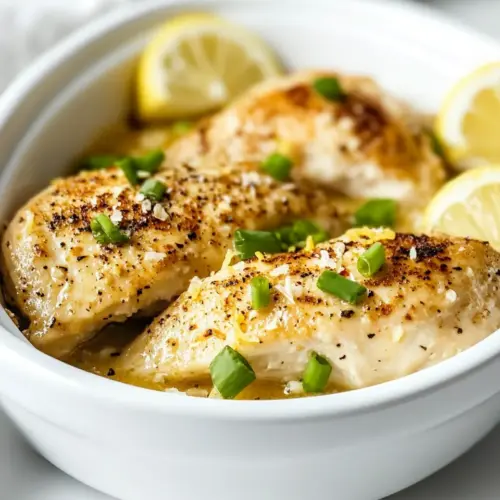
Crockpot Skinny Lemon Chicken
Crockpot Skinny Lemon Chicken is a bright, easy weeknight dinner with tender chicken bathed in a glossy honey lemon sauce. The slow cooker makes the meat shreddable and juicy, while a quick finish thickens the sauce for clingy texture. Fresh lemon and a touch of honey create balanced sweet and tart notes, perfect for simple family meals and small gatherings.
Equipment
- Skillet
- Crockpot
- Whisk
Ingredients
- 3 tablespoons coconut oil Melted to provide a neutral, slightly sweet cooking fat that helps brown and prevent the chicken from sticking in the crockpot; contributes subtle coconut aroma while keeping the dish lighter than butter-based alternatives.
- 4 boneless and skinless chicken breasts cubed Cubed to ensure even cooking and quicker heat penetration while allowing the lemon sauce to coat more surface area; supplies the primary lean protein and soaks up flavors from the broth and seasonings.
- 2 garlic cloves finely chopped Minced to infuse the dish with aromatic garlic flavor distributed throughout the sauce; enhances savory depth and complements the citrus and honey notes without overpowering the chicken.
- 1 teaspoon ea salt Added to season and balance flavors, helping to enhance the natural taste of the chicken and lemon; used sparingly so the citrus and sweet elements remain prominent while maintaining proper seasoning.
- 2 cups vegetable broth Poured in to create a flavorful cooking liquid that keeps the chicken moist and forms the base of the lemony sauce; contributes savory umami and dilutes concentrated ingredients for balanced cooking.
- 3 lemons juiced and zested Squeezed and zested to provide bright, acidic freshness and concentrated citrus oils that lift the entire dish; the juice adds tanginess while the zest intensifies lemon aroma and flavor.
- 1 tablespoon lite soy sauce Braggs aminos or coconut aminos for substitutes Stirred in as a salty, umami-rich seasoning that deepens savory notes and adds complexity; suggested substitutes maintain similar salty profiles for those avoiding soy.
- 1 tablespoon cornstarch Mixed with a small amount of cold water to create a slurry and then whisked in to thicken the sauce gently without altering flavor; allows the lemon-broth mixture to achieve a glossy, clingy consistency.
- 4 tablespoons honey Drizzled to introduce natural sweetness and a sticky glaze that balances the tart lemon and savory elements; also helps the sauce caramelize slightly and adds a hint of floral complexity.
- 1/2 teaspoon poppy seeds Sprinkled to contribute light texture and a subtle nutty flavor, offering tiny bursts of interest against the tender chicken; also enhances visual appeal with speckled contrast in the finished dish.
- 1/2 teaspoon sesame seeds Added for mild crunch and to impart a toasted, slightly nutty note that complements the poppy seeds; provides an aromatic finish and visual contrast in the plated dish.
- 1/4 cup green onions diced Chopped and scattered to deliver fresh, oniony brightness and mild pungency that contrasts the sweet and sour elements; used as a final garnish to add color and a crisp bite.
Instructions
- Melt coconut oil in a large skillet over high heat. Add chicken and brown quickly--you don't need to cook each piece through, just add a little color to the outside.: The scent of warm coconut oil is faintly sweet and tropical as it liquefies, and the pan should shimmer before you add the chicken . High heat encourages a fast browning reaction, producing small toasted bits that give savory depth to the final sauce. Listen for a quick sizzle as the first pieces touch the pan, and watch for a golden edge forming within a minute or two. If the oil smokes excessively, lower the heat slightly to avoid a burnt flavor. A common mistake is overcrowding the pan, which traps steam and prevents browning; work in batches if needed.
- Place in a crockpot. Sprinkle with chopped garlic, salt, and drizzle 1 1/4 cups of vegetable broth over the chicken. Cover and cook on low for 4-6 hours, or until very tender.: As the chicken hits the skillet you will hear a lively sizzle and see edges turning to a pale gold, signaling Maillard development. This browning gives the meat visual appeal and a nutty, savory note that makes the sauce feel richer even though the recipe is light. You only need surface color, not full doneness, because the crockpot will finish cooking. If pieces stick, resist the urge to drag them; wait until a crust forms so they release cleanly. Avoid cooking through or the meat will risk drying when finished in the crockpot.
- 40 minutes before serving, whisk together remaining vegetable broth, lemon juice and zest, soy sauce, cornstarch, and honey. Pour this mixture into the crockpot, stir to coat. Turn crockpot to high and cook for 30 minutes, or until the sauce thickens.: When the seared chicken goes into the crockpot, it will hiss slightly as residual heat meets the cooking vessel, then settle into a gentle simmer when the broth is added. Layering the browned pieces gives the slow cooker even exposure to heat and flavor. Ensuring pieces are distributed rather than clumped helps even cooking and sauce absorption. A frequent oversight is packing the crockpot too tightly, which can lengthen cooking time and prevent tenderization.
- Sprinkle with poppy seeds, sesame seeds and green onions. Serve and enjoy!: The honest aroma of fresh garlic is sharp at first, then becomes mellow as it gently infuses the liquid. Salt draws out natural juices from the chicken , enhancing overall succulence, and the initial portion of vegetable broth begins the slow braise. Pouring over the meat helps distribute flavor evenly rather than pooling in one spot. Stirring at this stage is unnecessary and can disturb the seared texture. Commonly, people add all the broth at once which can dilute flavors, so reserving some for later preserves intensity.
- Cover and cook on low for 4 to 6 hours, or until very tender: As the crockpot hums, the kitchen fills with an understated, warming aroma that hints at comfort. Low, steady heat breaks down connective tissue in the chicken , producing fork tender pieces that pull apart gently. The long, slow process encourages flavors to meld deeply into the meat. You should avoid frequently lifting the lid because heat loss extends cooking time and can disrupt the gentle simmer. A typical mistake is undercooking; if pieces are still firm at the 4 hour mark, give them extra time until they are soft and yielding.
- 40 minutes before serving, whisk together remaining vegetable broth, lemon juice and zest, soy sauce, cornstarch, and honey: At this point the air is filled with a savory base, and adding the lemon juice brings a burst of citrus perfume that brightens everything. Whisking cornstarch into cool or room temperature broth prevents lumps, creating a smooth slurry that will thicken the sauce evenly. Honey adds glossy sheen and a rounded sweetness that tempers the acid. Ensure the slurry is free of clumps by whisking vigorously, because lumpy sauce is both unattractive and texturally off putting. Avoid adding hot liquid directly to cornstarch, as it can create gelatinized clumps.
- Pour this mixture into the crockpot, stir to coat: When the citrus mixture hits the warm crockpot, you will hear a soft bubbling and smell an immediate lift in aroma as lemon oils mingle with the simmering broth. Stirring ensures each piece of chicken is bathed in sauce so the flavors permeate. The visual change is immediate, with the sauce going from thin and translucent to a more unified, saucy coating when the thickener activates. One misstep is insufficient stirring, which can leave some pieces under sauced and others oversauced; a gentle but thorough fold is best.
- Turn crockpot to high and cook for 30 minutes, or until the sauce thickens: Increasing to high temperatures wakes the sauce into gentle bubbling, which activates the cornstarch and concentrates flavors as liquid reduces. You will notice the sauce transform from runny to glossy and slightly clingy within the thirty minutes window. The aroma becomes more concentrated and slightly sweet, and the surface will shimmer when ready. Watch closely near the end because overcooking can make the sauce too thick or sticky. A common error is leaving it on high for much longer than needed, which can over reduce the sauce and alter its balance.
- Sprinkle with poppy seeds, sesame seeds and green onions: The final garnishes add immediate contrast, with tiny pops from the poppy seeds , toasty warmth from the sesame seeds , and a bright, oniony finish from the green onions . These fresh elements lift the visual appeal and introduce textural variety against the silky sauce and tender meat. Scatter them just before serving to keep their color and crunch intact. If added too early, they can wilt or lose their delicate textures, diminishing the final impact.
- Serve and enjoy!: When plated, the sauce should cling to the chicken and glisten, and the aroma will be a pleasant blend of citrus and sweet notes. Pair with a neutral base so the sauce remains the star. Resist over-salting at the table because the slow reduction may have concentrated flavors already. A frequent mistake is serving too soon; letting the dish rest for a couple minutes off heat allows the sauce to settle and thicken slightly for a more composed presentation.
Notes
- Adjust the sweetness Start with three tablespoons of honey if you prefer less sweet, then taste the sauce after thickening and add the remaining amount if you want more balance between sweet and tart.
- Swap amino sauce mindfully If you use Bragg's aminos or coconut aminos in place of lite soy sauce, reduce added salt and taste before seasoning further because these alternatives vary in sodium intensity.
- Make it gluten free Use gluten free cornstarch and ensure any aminos you choose are labeled gluten free to keep the dish accessible without sacrificing texture in the sauce.
- Boost the citrus Add a teaspoon of extra lemon zest if you want a more pronounced citrus perfume, sprinkling it at the end preserves the volatile oils for maximum aroma.
- Scale easily This recipe multiplies well, just maintain the same ratio of liquid to thickener when increasing the volume to ensure consistent sauce texture.
- Finish with fresh herbs If you want a green note, toss a small handful of finely chopped fresh herbs with the green onions at the end for added brightness.