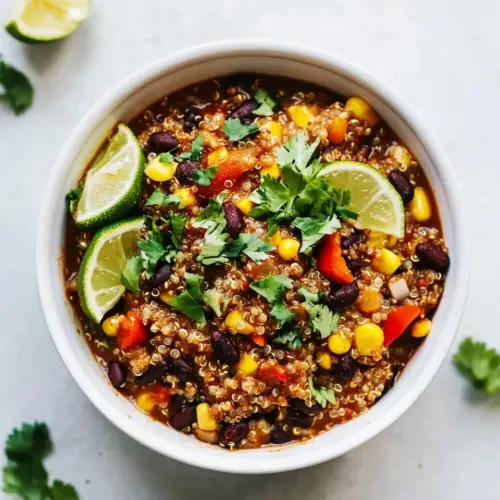
Crockpot Quinoa Chili
Crockpot Quinoa Chili blends nutty quinoa, tender chicken, and beans in a cozy, slightly smoky tomato broth. This easy weeknight dinner is creamy in texture yet light on the belly, perfect for cold evenings or meal prep. Slow cooking lets the spices meld beautifully, delivering a bowl that is both comforting and wholesome, a must make for simple satisfying meals.
Equipment
- 6-quart Crock-Pot
- 6-quart
Ingredients
- 3/4 cup white quinoa Measure precisely to ensure proper quinoa-to-liquid ratio; rinsing first removes bitterness and improves texture before cooking.
- 1 (15-ounce) can black beans drained and rinsed Drain and rinse to remove packing liquid and excess sodium; provides protein and creamy texture while blending with chili flavors.
- 1/2 pound boneless, skinless chicken breast 8 ounces Trim and halve or cube for even cooking; adds lean protein and body as it shreds or dices in the crockpot.
- 1 tablespoon chili powder Add to deepen flavor and provide smoky, warming heat; balances other spices and gives chili its characteristic taste.
- 1 teaspoon ground cumin Sprinkle in to contribute earthy, warm notes that complement chili powder and enhance overall savory depth.
- 1/4 teaspoon cayenne pepper Use sparingly to introduce bright, sharp heat; elevates the spice profile without overwhelming other seasonings.
- 1/2 teaspoon onion powder Incorporate to supply gentle onion flavor without fresh chopping; helps round out the seasoning blend.
- 1/2 teaspoon garlic powder Include to provide concentrated garlic aroma and savory backbone when fresh garlic isn’t used.
- 1/2 teaspoon paprika Stir in to add mild smokiness and color; works with paprika’s sweetness to enrich the chili’s flavor profile.
- 3/4 teaspoon salt Add to season the chili evenly; helps bring out flavors while controlling overall saltiness.
- 1/4 teaspoon pepper Season lightly to provide subtle peppery bite; balances richer and sweeter elements in the chili.
- 2 -1/4 cups chicken stock salted/seasoned, can use chicken broth Pour in as the cooking liquid to cook quinoa and infuse the chili; contributes savory depth and can be seasoned.
- 1 cup frozen corn Fold in frozen corn to add sweet bursts, texture contrast, and visual color throughout the chili.
- 1 (15-ounce) can chili beans in mild sauce see note 1 Stir in for hearty texture and bean-forward flavor; mild sauce contributes thickness and additional seasoning.
- 1 (14.5-ounce) can fire-roasted diced tomatoes Muir Glen recommended Add for bright, roasted tomato flavor and acidity; enhances depth and provides aromatic roasted notes.
- Optional toppings see note 2 Offer as optional finishes like cheese, sour cream, cilantro, or avocado to customize texture and flavor per serving.
Instructions
- Line the slow cooker with a plastic liner or coat with cooking spray. Thoroughly rinse the quinoa in a fine mesh sieve to remove the bitter saponin coating. Drain and rinse the black beans. Cut the chicken breast into 2 to 3 inch-long, 1-inch-thick pieces.: The first thing you will notice is the clean, slightly earthy scent of rinsed quinoa once the rinse water runs clear, and that faint grainy texture becomes pleasantly light as it hydrates later. Rinsing removes the natural coating that can taste bitter, so make a habit of this step for a bright final flavor. When you drain the canned beans, they lose metallic and starchy packing liquid, which keeps the broth from tasting flat. Cutting the chicken into uniform pieces helps it cook evenly, and you can feel confident the pieces will become tender and shred easily after slow cooking. Common mistake to avoid is skipping the rinse or leaving chicken pieces wildly different sizes, which can cause uneven cooking where some bits dry out while others finish perfectly.
- Add the quinoa, black beans, chicken, chili powder, cumin, cayenne pepper, onion powder, garlic powder, paprika, salt, pepper, chicken stock, frozen corn, (undrained/unrinsed) chili beans, and (undrained) diced tomatoes to a large 6-quart slow cooker. Cover and cook on high for 2.5 to 4 hours. (Mine is always done right at 3 hours.) Check and stir occasionally if around.: As you layer these ingredients into the cooker, notice the bright red of the diced tomatoes contrasted with the pale quinoa and white corn. The room will fill with a complex, dusty aroma as the dry spices meet the moist ingredients, hinting at the depth to come. Using the stocked liquid and undrained canned beans preserves chili flavor, while the spices begin melding even before heat is applied. I find the texture interplay between whole beans, corn, and grains gives the chili body as it cooks. Avoid the mistake of overfilling the cooker, which can prevent proper circulation and uneven cooking; leave space for bubbling and expansion.
- Once the liquid is mostly absorbed, remove the slow cooker insert from the heat. Season to taste with any additional salt/pepper as needed or any additional seasoning. I like to add a few tablespoons of lime juice. Shred the chicken in a separate bowl with two forks (or chop it coarsely with a knife) and add back to the pot.: Once the lid is sealed, the first auditory cue is a gentle simmer and occasional soft bubbling, signaling that the flavors are marrying. Over the next hours, the quinoa will swell and take on a fluffy bite while the chicken relaxes into tender shreds. The aroma will shift from raw spice to a rounded, tomato forward scent with savory undertones from the stock and beans. Cooking time may vary based on your slow cooker model and how cold the ingredients were going in, so I usually check around the 2.5 hour mark for liquid absorption and tenderness. A frequent error is opening the lid too often, which releases heat and lengthens cooking; only peek if you need to stir or check doneness.
- Top individual bowls with favorite toppings. I love a good handful of freshly shredded sharp Cheddar cheese, another squeeze of lime, a good spoonful of sour cream, and some chopped cilantro. Don’t forget the toppings; they make this chili!: Stirring midway helps distribute heat and prevents quinoa from settling or sticking at the bottom, and it reveals visual signs such as the broth reducing and the quinoa becoming translucent at the edges. You will hear a softer bubble and see the surface thicken as starches release from the beans and quinoa . When stirring, use a gentle lift and fold motion so you don’t break up the beans too much. A common slip is vigorous stirring which can turn the texture mushy; be gentle to retain pleasant contrasts.
- Once the liquid is mostly absorbed, remove the slow cooker insert from the heat: At this stage you will notice the steam scent intensify with concentrated tomato and spice notes. The residual heat continues to carry cooking, so resting off the base heat prevents overcooking. The surface should look thick rather than soupy, with quinoa plump and visible. Leaving the insert on a hot base too long can dry the chili; move it to a heat safe surface to stop aggressive simmering.
- Season to taste with any additional salt/pepper as needed or any additional seasoning: Tasting now is critical because flavors concentrate as liquid reduces. The right balance lets the spices sing without one element dominating. Add small increments, tasting between adjustments, since canned ingredients may have added sodium. A common misstep is over salting early; correct by adding acid like lime later rather than more salt.
- I like to add a few tablespoons of lime juice: The citrus brightens the entire pot, cutting through richness and lifting the spice profile. You will notice the aroma clean up and freshen, and the finish on the palate becomes livelier. Adding acid at the end preserves its brightness; adding it too early can mellow the effect during long cooking.
- Shred the chicken in a separate bowl with two forks (or chop it coarsely with a knife) and add back to the pot: Shredding reveals tender strands that soak up sauce, and the bowl will steam slightly as you pull the meat apart, releasing savory juices. Adding the shredded chicken back allows those juices to reincorporate, enriching the chili. Avoid shredding while the meat is too hot to handle safely, and use two forks to achieve an even texture without turning it into mush.
- Top individual bowls with favorite toppings: When serving, the contrast of cool and warm elements is immediate; a dollop of sour cream or a handful of shredded Cheddar adds creamy, rich counterpoints to the smoky, tangy base. Fresh cilantro and a squeeze of lime bring herbal and bright notes. A common oversight is skipping toppings, which can make the bowl feel flat; take a moment to personalize each serving for the best experience.
Notes
- Swap beans thoughtfully: If you prefer a different bean texture, try pinto or kidney beans instead of black beans. They will alter the color and mouthfeel, but the seasoned chili sauce will still bind everything. Rinse canned beans to reduce extra sodium.
- Mild or smoky heat adjustment: To emphasize smokiness, increase paprika slightly and keep cayenne modest. For a gentler bowl, reduce cayenne and rely on chili powder for flavor depth. Add heat in small amounts and taste before adding more.
- Make it vegetarian friendly: Omit the chicken and increase beans or add a firm vegetable to keep body. Use vegetable stock in place of chicken stock to preserve a rich tasting base without meat.
- Boost texture with roasted vegetables: Roast diced sweet potato or bell pepper and stir them in at the end to add roasted caramel notes and heartiness. Roasted pieces maintain shape better than steaming additions.
- Finish with acid and herbs: Always brighten bowls with a squeeze of lime and a handful of chopped cilantro at the end. The acids wake up the spices and make the dish taste fresher and more layered.