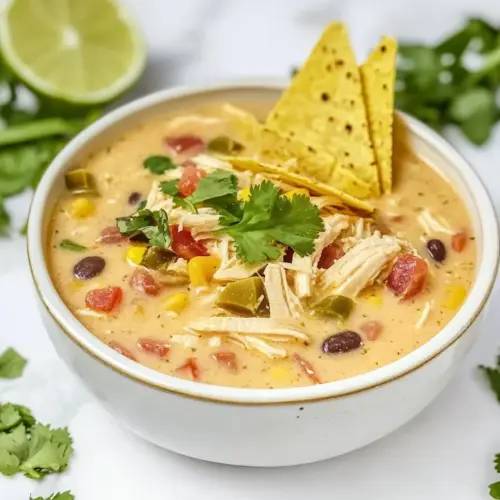
Crockpot Chicken Tortilla Soup
Crockpot Chicken Tortilla Soup is a creamy, comforting slow cooker soup loaded with tender chicken, black beans, corn, and tomatoes. This easy weeknight dinner delivers bold taco inspired flavors, a silky finish from heavy cream and melted Mexican cheese, plus crunchy tortilla strips for contrast. Make it for family meals or casual gatherings, it warms the table and disappears fast.
Equipment
- Slow Cooker
- Two forks
- Air Fryer
Ingredients
- 2 boneless skinless chicken breasts Poach to provide a tender, lean protein base that shreds easily into the soup and absorbs the savory flavors from the broth and spices.
- 1/4 cup taco seasoning (or one taco seasoning packet) Season to deliver concentrated Mexican-inspired flavor; sprinkle or dissolve into the broth to create a balanced, mildly spicy profile throughout the soup.
- 4 ounces can diced green chiles (mild or hot) Add for a subtle smoky, tangy heat that complements the tomatoes and broth; stir in with juices to distribute gentle chili flavor and texture.
- 15.5 ounces can black beans (drained and rinsed) Rinse and drain to contribute creamy texture, protein and fiber; fold into the soup near the end to preserve bean shape and a slight bite.
- 14.5 ounces can diced tomatoes (juices included) Pour with juices to supply bright tomato acidity and body; helps build the soup’s tomato base and adds savory liquid and texture.
- 15.25 ounces can whole kernel corn (drained) Drain and add to impart sweet, crisp kernels that contrast the soft beans and shredded chicken while adding color and texture.
- 4 cups chicken broth Simmer as the primary liquid to meld all the flavors together; use to poach the chicken and create a well-seasoned, comforting broth.
- 2 cups grated Mexican cheese Grate and sprinkle to introduce a gooey, melty element that enriches the soup with creamy, salty, slightly sharp dairy notes when stirred in.
- 1 cup heavy cream Stir in to lend richness and smoothness, creating a silkier mouthfeel and mellowing acidic or spicy components for a creamier final soup.
- Tortilla chips (or 6 corn tortillas, cut into strips either air-fried or oven baked to crisp them up) Crunch or crisp to provide a textural contrast and authentic tortilla flavor; scatter on top or mix in for crunchy, salty bites that enhance each spoonful.
- Cilantro (one bunch for garnish) Garnish fresh to brighten the final dish with herbaceous, citrusy notes; chop and sprinkle over bowls for aroma, color, and a fresh finish.
Instructions
- Place the frozen OR thawed chicken breasts in the bottom of the slow cooker.: As you lower the chicken into the slow cooker you will notice a cool, slightly slick surface that soon gives way to a gentle steam aura once the cooker warms. The reason I layer the chicken at the bottom is practical, it sits in the hottest zone so the fibers break down evenly and shred easily. When the cooker begins to heat you may hear a faint settling sound, and within an hour you will smell the first hints of savory meat and seasoning rising. A common mistake is crowding the cooker too tightly, which can slow down even cooking; give the breasts a little space so heat circulates around them.
- Sprinkle the taco seasoning over the top of the chicken breasts.: The moment you sprinkle the taco seasoning you will sense an immediate pop of aroma from the cumin and chili. This dry spice layer helps season the meat from the inside out as it steams, infusing those classic southwestern notes. Be mindful to distribute the seasoning evenly so one part of the chicken does not become overly spiced. A typical error is adding all seasoning at the end, which can result in less integrated flavor.
- Spread green chiles, black beans, tomatoes, and corn over the chicken.: When you layer these canned ingredients, the cooker fills visually with color and texture, from the bright red of the tomatoes to the yellow kernels of corn . Spreading them over the chicken helps the juices mingle directly with the meat. You will hear a soft splash and see juices settling; this contact helps tenderize and flavor the chicken . Don’t stir aggressively now, or you will compress the layers and reduce that gradual melding of flavors.
- Slowly pour in the chicken broth.: Pouring the chicken broth will loosen the layers and create a fragrant steam as it warms. The broth is the vessel that absorbs the spice and tomato notes, turning into a rich, savory base. Pour slowly so you maintain some separation of layers initially, which helps prevent starchy cloudiness. If the broth is very salty, dilute slightly with water to keep the final soup balanced.
- Cook on HIGH for 3 to 4 hours.: During the cook on HIGH the cooker will emit a steady, cozy hum and the aroma will deepen from bright tomato to layered savory notes. The chicken fibers will soften and the beans and corn will plump and blend into the broth. The reason this timeframe works is it gives the proteins and canned veggies time to harmonize without over breaking down. A common pitfall is leaving it on HIGH all day which can dry out the chicken in some models, so check at the earlier end of the window.
- Remove chicken breasts from the soup and shred them with two forks.: When you lift the chicken out you will notice it gives easily to the forks, producing tender ribbons rather than chunks. Shredding creates bite sized pieces that disperse throughout the soup, delivering protein in every spoonful. Use two forks and pull gently to keep strands intact, which yields a nicer mouthfeel than overly mashed shreds. Avoid shredding while still extremely hot and falling apart, or you might pull out stringy fibers instead of pretty shreds.
- Return the chicken to the soup and add the cheese and heavy cream.: As you stir the shredded chicken back in and add the Mexican cheese and heavy cream , the simmer will slow and the soup will take on an indulgent sheen. The melting cheese integrates with the cream to thicken and enrich the broth, creating a velvety texture. Stir gently to incorporate evenly; rough handling can cause clumps. A frequent mistake is overheating right after adding dairy which can cause separation, so keep the heat moderate.
- Cook for an additional 30 minutes to 1 hour, stirring occasionally until the cheese is fully melted and combined and the soup is thickened slightly.: During this finishing stage you will see the broth turn silkier and hear occasional soft bubbling. The extra time allows the flavors to marry and the soup to reach a slightly thicker consistency as the cheese melts fully. Stirring occasionally prevents sticking at the edges and keeps the texture uniform. Overstirring or leaving too long can make the soup overly thick or curdled, so watch for a glossy, cohesive appearance as your cue to stop.
- You can add the tortilla chips directly to the soup along with the cheese and cream and cook for the final 30 to 60 minutes or crisp the corn tortillas in the air fryer or oven. To crisp the tortilla chips in the air fryer, spray liberally with non-stick cooking spray and bake at 400°F for approximately 5 minutes, shaking the basket halfway through cooking.: If you add chips into the cooker they will soften and lend body, creating a homestyle thickening effect, and you will notice a corn aroma infusing the broth. Crisping strips separately yields crunchier garnish and prevents sogginess. For air fryer crisping, spray tortillas with non stick spray and air fry at 400°F for approximately 5 minutes, shaking halfway through, listening for a light crackle to know they are done. A common error is not checking frequently which can lead to burnt, bitter strips.
- Serve soup with additional chopped cilantro, tortilla strips/chips, and avocado, if desired.: The final assembly is about contrast and brightness. Chopping fresh cilantro releases a bright herbal scent that lifts the bowl, while tortilla strips add crispness and avocado provides cool creaminess. Arrange toppings at the table so everyone can personalize. A mistake people make is adding delicate toppings too early, which causes them to wilt or sog out; add just before serving for best texture.
Notes
- Swap dairy timing Add the heavy cream and Mexican cheese only in the last 30 minutes for a silkier, more controlled melt and to reduce the chance of separation.
- Heat control If your slow cooker runs hot, cook on LOW for a slightly longer timeframe to keep the chicken extra tender without drying.
- Chip method Crisp tortillas in an air fryer or oven at 400°F for a few minutes for bright, crunchy strips that won’t go soggy immediately when added to bowls.
- Bean prep Rinse the black beans thoroughly to remove excess sodium and any preservative taste that can mask subtler flavors in the soup.
- Broth balance Taste the chicken broth before adding other salt; you can always boost seasoning later but it is hard to correct an overly salty base.