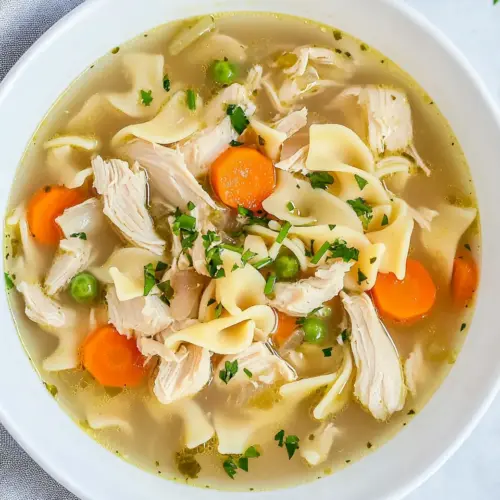
Crockpot Chicken Noodle Soup
Crockpot Chicken Noodle Soup is a cozy, savory bowl of slow cooked chicken, tender egg noodles, and aromatic vegetables, perfect for an easy weeknight dinner. The low sodium broth soaks up the flavors for a rich, comforting finish, and a squeeze of lemon brightens every spoonful. Make it for chilly evenings or when you need a soothing, crowd pleasing meal.
Equipment
- Crockpot
Ingredients
- 1 1/2 pounds boneless, skinless chicken breasts Trimmed and boneless, provide lean protein and body to the soup; poach gently in the broth until tender then shred or cube for a hearty texture and satisfying mouthfeel.
- 1/2 teaspoon kosher salt Measured and added sparingly, enhances the soup's overall seasoning balance; dissolve into the broth to amplify savory notes without overpowering delicate flavors.
- 1/4 teaspoon ground black pepper Ground to a fine consistency, contributes subtle heat and depth; stir into the cooking liquid to brighten other aromatics and add mild pungency.
- 8 cups low sodium chicken broth Low-sodium variety supplies the primary cooking liquid and base flavor; allows control over final saltiness while infusing the soup with rich chicken essence.
- 1 onion chopped Chopped and aromatic, builds foundational flavor when sautéed or simmered; releases natural sweetness and savory compounds that deepen the broth's complexity.
- 3 carrots peeled and sliced into 1/4-inch slices Peeled and sliced uniformly, lend natural sweetness and tender bite; cook until just soft to provide texture contrast and vegetal undertones.
- 2 ribs celery chopped Chopped into even pieces, offers a crisp, slightly bitter counterpoint; softens during simmering and contributes aromatic freshness and texture to each spoonful.
- 4 cloves garlic minced Minced finely, adds pungent warmth and savory depth; release into the pot early to infuse the broth with garlicky aroma and complexity.
- 1/2 teaspoon dried thyme Dried and measured, imparts earthy, slightly floral notes; sprinkle into the simmering broth to support poultry flavors and aromatic balance.
- 1/2 teaspoon dried oregano Dried and aromatic, brings a warm, slightly peppery herbal character; incorporate with other herbs to round out the soup's seasoning profile.
- 1 bay leaf Whole and fragrant, introduces subtle herbal complexity; remove before serving after it has steeped to infuse the broth without leaving tough texture.
- 1/2 lemon juiced Juiced and bright, provides a touch of acidity to balance richness; squeeze into the finished soup to lift flavors and add a gentle citrus tang.
- 8 ounces egg noodles 2/3 standard package Egg noodles in this portion supply tender, comforting body; cook separately or in the broth until al dente to absorb flavor while maintaining slightly chewy texture.
- Fresh parsley for garnish Freshly chopped garnish, adds visual color and a bright, herbaceous finish; sprinkle over individual bowls to enhance aroma and provide a fresh contrast.
Instructions
- Place the chicken in the bottom of the crockpot and season with salt and pepper.: The scent at this stage is subtle but promising, a hint of raw poultry brightened by the salt and the pepper's peppery edge. This initial seasoning forms the base of the soup, allowing the chicken to already begin releasing savory juices into the pot as it warms. The texture of the meat will change from firm to yielding as it slowly cooks, and that conversion is what creates shreddable strands later. One mistake to avoid is overcrowding the crockpot, which can lead to uneven cooking; give the breasts some space so heat circulates. I find patting the seasoning onto the meat helps it adhere and infuse more evenly.
- Add the broth, onion, carrots, celery, garlic, thyme, oregano, and bay leaf.: As you pour in the chicken broth , aromas lift instantly, and the combined vegetables begin a gentle stew. The garlic and onion will dissolve into sweetness as they soften, while the herbs slowly release their earthy notes. You can already imagine the broth turning richer and deeper in color as it simmers. A common slip is adding too much liquid at this stage if you plan to cook for extra time; consider that noodles will later absorb broth. Stir gently to distribute ingredients so nothing clings to the pot sides where it can brown unevenly.
- Cover and cook for 3-4 hours on low.: During this low slow cook, the kitchen fills with a mellow, savory fragrance, and the chicken gradually breaks down to impart body to the stock. The low setting ensures the meat remains tender and shreddable rather than tough. Listen for a barely audible simmer, a calm bubble here and there, which signals even, gentle cooking. The main error to watch for is switching to high to hurry the process, which risks drying the meat; patience pays off for texture and flavor complexity.
- Transfer the chicken to a bowl and shred it with two forks. Remove and discard the bay leaf.: The chicken will be fragrant and soft, making shredding effortless, with moist strands that will soak up broth. Shredding on a plate or shallow bowl helps you control texture, creating uneven strands that feel more rustic and satisfying. Removing the bay leaf prevents any leathery pieces from surprising a diner. A frequent misstep is shredding while the meat is too hot to handle; let it rest briefly so you can shred without scalding your fingers.
- Return the chicken to the slow cooker and add the lemon juice.: The bright, citrus aroma will lift the entire pot when the lemon hits the warm broth, cutting some of the richness and sharpening flavors. Stir gently to distribute the acidity, which wakes up the herbs and balances the savory notes. Adding citrus now preserves its fresh character, rather than letting it cook away. Overdoing the lemon can make the soup tart, so add a little, taste, then adjust to your liking.
- Now add egg noodles, then season with salt and pepper to taste. Cover and cook on low for an additional 20-30 minutes, until the noodles are al dente.: As the egg noodles enter the hot broth they begin to swell and soften, releasing a comforting starchy scent that thickens the liquid slightly. The noodles should be added toward the end so they reach al dente and provide pleasant chew without falling apart. After a few minutes in the broth, taste and tweak the seasoning; the noodles can mute saltiness, so rebalancing is important. Avoid leaving the noodles to cook too long, which will yield a mushy texture and cloudy broth.
- Cover and cook on low for an additional 20 to 30 minutes, until the noodles are al dente: During this final stretch, the kitchen fills with the satisfying sound of a gentle simmer and the visual cue of noodles plumping and becoming translucent. The broth should look slightly more cohesive as starch integrates, and the overall aroma should be round and inviting. Check the noodles at the earlier end of the timing to prevent overcooking, and remove the lid briefly if you need to check texture. A frequent oversight is assuming more time will improve the noodles, when it usually softens them past the ideal point.
Notes
- Substitute cooked chicken: Use leftover rotisserie chicken by shredding and adding it during the final noodle stage to warm through without overcooking the meat.
- Sear for depth: Lightly sear the chicken before adding to the crockpot to introduce caramelized notes, then transfer the browned pieces and all juices into the pot for richer broth.
- Use homemade broth: If available, homemade chicken broth enhances flavor complexity; reduce added salt since homemade stocks can vary in concentration.
- Make it creamy: Stir in 1/2 cup of heavy cream at the end for a silkier mouthfeel, adding it off heat and warming gently to avoid curdling.
- Adjust noodle type: Swap in gluten free pasta if needed, and add it later to avoid mush because different pastas have different cooking behaviors.
- Spice it up: Add red chili flakes or a pinch of cayenne for heat, but start small and taste as you go to maintain balance with the broth.