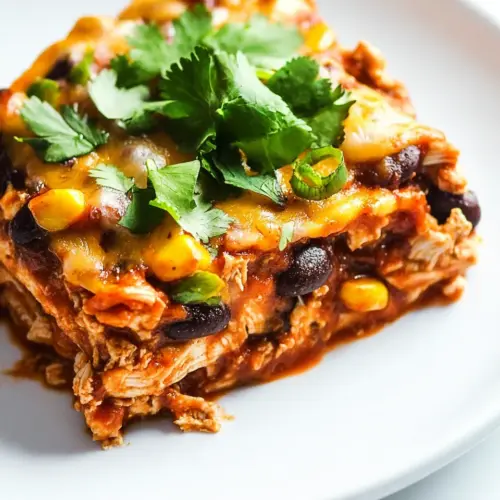
Crockpot Chicken Enchilada Casserole
Crockpot Chicken Enchilada Casserole is a creamy, cheesy, and easy weeknight dinner that fills the house with warm spices and savory aroma. Tender shredded chicken melds with red enchilada sauce, black beans, and corn, topped with melted sharp Cheddar for comforting layers. Perfect for busy evenings or casual gatherings, this casserole is a crowd pleaser and worth making again and again.
Equipment
- 6-quart Crock-Pot
- Large Skillet
Ingredients
- 1 -1/2 tablespoons olive oil Sauté gently to release flavor and serve as the cooking fat that helps soften aromatics and brown chicken.
- 1 cup finely diced yellow onion Finely dice to provide a sweet, savory base and add moisture and texture when cooked down in the crockpot.
- 1 tablespoon minced garlic Mince thoroughly to infuse the dish with a sharp, aromatic garlicky note that complements the spices.
- 1 pound boneless skinless chicken thighs Cook slowly to become tender and shred easily; contributes rich, savory protein and hearty texture to the casserole.
- 1 teaspoon ground cumin Season sparingly to add warm, earthy notes and enhance the overall depth of the enchilada flavor profile.
- 1 teaspoon paprika Sprinkle evenly to contribute a smoky, mildly sweet character and deepen the roasted flavor of the dish.
- 1 teaspoon chili powder Add for a touch of heat and authentic Mexican-inspired flavor that balances the other seasonings.
- 1 teaspoon onion powder Incorporate to reinforce savory onion undertones and round out the flavor of the spice blend.
- 1 teaspoon garlic powder Dust over to boost overall garlic presence and layer additional savory complexity without added moisture.
- 3/4 teaspoons salt Season gently to bring out flavors, manage overall saltiness, and balance the acidity from the enchilada sauce.
- 1 (15-ounce) can black beans drained and rinsed Drain and rinse before adding to provide creamy, hearty bites and increase protein and fiber in the casserole.
- 1 cup frozen corn Fold in frozen to add bursts of sweet corn flavor and texture that contrast with the beans and chicken.
- 2 (10-ounce) cans red enchilada sauce Pour over layers to create a saucy, cohesive base with tangy, spiced tomato flavor that binds the casserole.
- 4 corn tortillas cut into strips, then slice strips in half Cut into strips and halve to create layered pockets that soak up sauce and add a soft, tortilla texture.
- 1 packed cup freshly shredded sharp Cheddar cheese plus more as desired Shred freshly to melt into gooey, sharp pockets; contributes richness, saltiness, and a creamy finish when baked.
- 1/4 cup sour cream Swirl in to impart a tangy creaminess that smooths the sauce and brightens the final dish.
- Rice for serving, optional Serve optionally to make the meal more filling; pairs with the casserole to absorb sauce and provide a neutral base.
- Toppings as desired Garnish liberally to add fresh contrast, extra flavor, and textural variety such as herbs, avocado, or hot sauce.
Instructions
- Heat oil in a skillet over medium heat. Add onion and garlic, stirring frequently, until softened (about 5 minutes). Transfer to the slow cooker.: As the olive oil warms you will hear a soft sizzle, and the surface will shimmer. Add the diced yellow onion and minced garlic , then stir frequently so they soften evenly and do not brown too quickly. After about five minutes the onion will turn translucent and release a sweet, savory aroma, while the garlic will become fragrant without turning bitter. This step blooms the aromatics, creating a flavor base that the sauce and chicken will build on. If the pan begins to smoke, your heat is too high, so lower it to prevent burnt flavors. Transfer everything into the crockpot while the mixture is still warm so the residual heat helps meld the subsequent ingredients.
- Add all remaining 'Add First' ingredients to the slow cooker. Stir well, ensuring the chicken thighs are in an even layer with the smooth side facing down.: When you add the spices, canned items, and chicken , you should notice the sauce coating each piece, and the spice aroma will become more pronounced. Use a spoon to stir gently so the seasonings distribute evenly, taking care to arrange the chicken thighs in one uniform layer with the smooth side down, which promotes even cooking and makes shredding easier later. The even layer ensures consistent heat contact, so no pieces finish drastically before others. A pitfall here is crowding the pot unevenly, which can produce dry or underdone spots, so take a moment to level everything.
- Cover and cook on high for 2 1/2–3 1/2 hours or low for 3–5 hours, until the chicken is tender and shreds easily.: As the crockpot warms up, you will first smell the living aromatics, then the sauce will begin to deepen, emitting a rich, tomato forward fragrance with smoky spice notes. Cooking low gives more time for flavors to develop and often yields more tender chicken , while high shortens the wait. Check for doneness by nudging a thigh with tongs; it should pull apart with minimal resistance and appear moist throughout. Avoid removing the lid often, which drops temperature and increases cook time. If you press and the meat still feels firm, give it more time rather than increasing heat aggressively.
- Remove the chicken and set it aside.: When the thighs are tender, lift them out; the meat should feel soft and nearly falling apart. Set them on a cutting board or in a bowl to cool slightly so you can shred or dice them safely. While the chicken rests, you will notice the sauce bubbling gently and concentrating, and this resting moment helps retain juices in the meat when you shred it. A common error is shredding while too hot to handle, which can be unsafe and messy; let it cool just enough to shred comfortably with forks.
- Stir in the tortilla strips, then mix in the sour cream. Add the cheese a handful at a time, stirring gently in between each addition until melted. Cover and let cook while you shred or dice the chicken.: As you fold in the cut corn tortillas , they will start to absorb sauce and soften, losing some structure while still offering gentle texture. Stirring in the sour cream will make the sauce silkier and slightly tangy, rounding acidity from the enchilada base. Gradually add the shredded Cheddar cheese so it melts smoothly into the warm sauce, creating ribbons of gooey richness. Keep the pot covered while shredding the chicken so the tortillas and cheese continue to meld; this resting helps the flavors integrate. Avoid over stirring which can turn the tortillas into a paste rather than leaving pleasing pieces.
- Return the shredded chicken to the slow cooker. If desired, stir in lime juice and cilantro. Serve as is or over rice. Top with additional cheese, sour cream, avocado, or tortilla chips.: When you fold the shredded chicken back in, the casserole should look cohesive, with sauce clinging to strands of meat and pockets of softened tortilla. Stir gently to distribute the meat without breaking it into mush. If you add lime juice and cilantro, the aroma will brighten, cutting through the richness and adding a fresh note. Serve immediately over hot rice or on its own, and finish with toppings that add creamy, cool, or crunchy contrasts. A final tip is to taste before plating and adjust salt or toppings, since flavors concentrate during cooking; avoid adding extra salt without tasting first.
Notes
- Trim with intention Use the guidance about trimming chicken sparingly. Leaving a little fat on the chicken thighs adds flavor during long cooking, while trimming large pieces of gristle keeps the texture pleasant. I usually remove obvious gristle but leave some fat for richness.
- Choose your sauce wisely The flavor of the enchilada sauce dominates this recipe, so pick one you enjoy. If you prefer mild heat, select a mild red enchilada sauce, and if you like more zip, pick a medium or hot variety. I recommend tasting a spoonful of the sauce before adding to gauge its spice and adjust seasoning accordingly.
- Brighten at the end A splash of lime juice and a handful of finely chopped cilantro stirred in at the end lift the whole dish. The citrus cuts through the savory richness and adds an aromatic freshness, so add it sparingly and taste as you go.
- Layer cheese strategically Add most of the shredded Cheddar cheese toward the end so it melts into ribbons, and save some to sprinkle on top when serving. This gives you both integrated creaminess and an attractive melted topping that guests love.
- Storing and reheating Keep leftovers in an airtight container in the fridge for up to four days. Reheat gently in a saucepan with a splash of sauce or broth to loosen the casserole, or microwave in short bursts, stirring between intervals so it reheats evenly without drying.