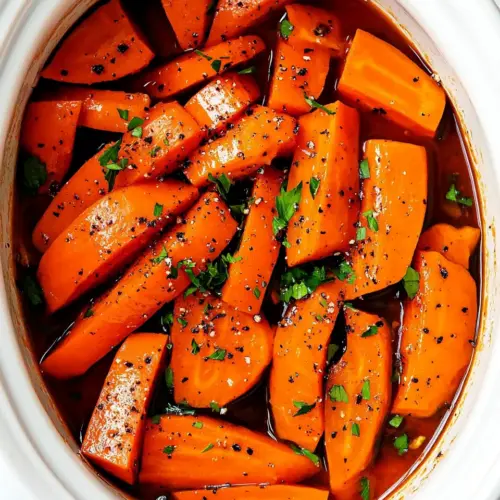
Crockpot Carrots
Crockpot Carrots deliver tender, honey glazed carrots with buttery richness and a hint of garlic, perfect as an easy weeknight side or holiday favorite. This simple, slow cooked method produces silky texture and concentrated natural sweetness, making it a crowd pleaser for family dinners and potlucks. Try it for a fuss free dish that consistently impresses.
Equipment
- 4 quart crockpot
Ingredients
- 2 pounds whole carrots Provide body and natural sweetness while offering a tender texture when slow-cooked; carrots absorb surrounding flavors and become mellow and caramelized in a crockpot. Serve whole for a rustic presentation or slice after cooking to release more surface area for seasonings to cling.
- 1/2 cup unsalted butter, cubed Enrich the dish with creamy fat and promote browning of the carrots as it melts; butter adds a smooth mouthfeel and carries aromatic compounds. Cut into cubes so it distributes evenly throughout the crockpot and helps create a glossy finish on the vegetables.
- 3 tablespoons honey Introduce gentle sweetness and help balance savory elements; honey contributes a sticky glaze and can encourage light caramelization during slow cooking. Add gradually to control overall sweetness and melds with butter to create a cohesive sauce.
- 2 teaspoons minced garlic Deliver pungent aromatic depth and savory complexity; minced garlic infuses the carrots with its characteristic warmth over long cooking times. Use finely minced pieces so flavor disperses evenly without leaving large bites of raw garlic.
- 1 teaspoon chopped parsley, plus more for garnish Provide fresh herbal brightness and a slightly grassy finish that lifts the richness; chopped parsley contrasts the sweet and buttery notes. Reserve a bit for garnish to add color and a hint of freshness at serving.
- 1/2 teaspoon salt Enhance and amplify the inherent flavors while balancing sweetness; salt is essential to bring out natural carrot sugars and seasoning in the dish. Dissolve into the butter-honey mixture to ensure even distribution throughout the crockpot.
- 2 -3 cracks freshly ground black pepper Add subtle heat and aromatic bite to finish the flavor profile; freshly ground black pepper contributes complexity and a slight piquancy. Crack directly over the carrots to taste so the coarser texture remains perceptible and aromatic.
Instructions
- Peel and cut the 2 pounds whole carrots into 1-1 1/2 inch pieces and place them in the bottom of a 4-quart crockpot.: As soon as you begin peeling, you will notice the clean, vegetal scent of fresh carrots , bright and slightly sweet. Cutting them into uniform 1 to 1 1/2 inch pieces ensures they cook at the same rate, which prevents some pieces from becoming mushy while others remain firm. Place them snugly in the bottom so they sit in their own steam rather than piled too high, this promotes even softening. A common mistake is cutting unevenly, which leads to mixed textures, so take a moment to match sizes. The sound of the knife on the cutting board is steady and grounding, and the visual of neat orange rounds lined up signals good mise en place. Pay attention to any very thick pieces and halve them lengthwise so everything finishes together.
- Add 1/2 cup unsalted butter, 3 tablespoons honey, 2 teaspoons minced garlic, 1 teaspoon chopped parsley, 1/2 teaspoon salt, and 2-3 cracks freshly ground black pepper on top.: When you drop the cubed butter and drizzle the honey over the carrots , a glossy sheen begins to form even before the heat. The minced garlic smells sharp and aromatic, and the chopped parsley provides a fresh herbaceous note that cuts through the sweetness. I like to scatter the ingredients so every carrot piece will get contact with the butter and honey, which encourages caramelization as they cook. A typical issue here is adding ingredients unevenly, which can leave some pieces underseasoned, so take a moment to distribute everything evenly. As the butter melts, it will make a fragrant, buttery steam with a hint of honeyed sweetness that fills the kitchen.
- Cook on HIGH for 90 minutes, or on LOW for 150-180 minutes, or until the carrots are fork tender. Top with a little more chopped parsley before serving.: The crockpot will steadily build gentle heat, and as the carrots cook you will notice an intensified sweet aroma mingled with roasted garlic and butter. On HIGH the textures arrive sooner with slightly more active bubbling, while LOW provides a slower, more even breakdown leading to a silkier mouthfeel. The key visual cue is the fork tender test, when a paring fork slides through with minimal resistance, the dish is done. Avoid overcooking on HIGH if you prefer some bite, as the carrots can become very soft. Listen for a steady, low simmering sound and watch for a light glaze forming on the pieces, that gloss and slight concentration of juices are what you want.
- Top with a little more chopped parsley before serving: The final addition of fresh chopped parsley brightens the plate and introduces a clean herbal scent that balances the overall sweetness. As you sprinkle it, the green flecks provide visual contrast, making the dish look finished and intentional. One thing to watch for is adding the parsley too early, which can cause wilting and loss of color, so reserve it for the end. The last tactile action of tossing or gently stirring to distribute the garnish creates a pleasing, restaurant like finish and releases a last wave of aroma that invites everyone to the table.
Notes
- Even Sizing Matters Cut your carrots into similar sized pieces so they soften at the same rate, this prevents some pieces from being overdone while others remain undercooked and ensures a uniform texture across the dish.
- Distribute Fats and Sweeteners Scatter the cubed butter and drizzle the honey evenly rather than piling them in one spot, this helps every piece develop a light glaze and encourages even caramelization as the sugars concentrate.
- Low Versus High Choose LOW for a silkier, more even texture and HIGH if you need a faster result, but be aware HIGH can produce a slightly more broken down bite, adjust based on your timing needs.
- Season Gradually Start with the stated salt and pepper, taste at the end if possible, then adjust; tiny additions at the finish are safer than trying to fix an over salted batch.
- Fresh Parsley for Brightness Add the chopped parsley right before serving to preserve its color and fresh herbal aroma, it creates a lively contrast to the glazed carrots.