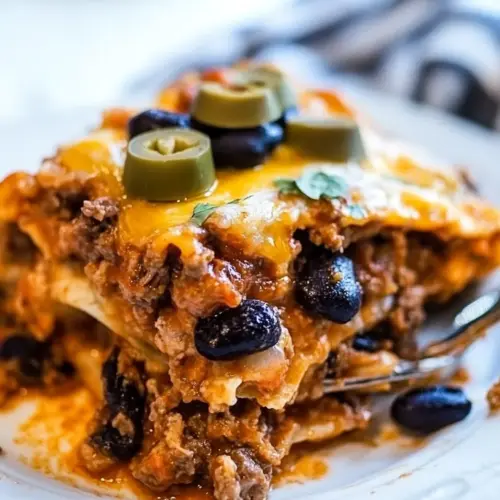
Crockpot Beef Enchilada Casserole
Crockpot Beef Enchilada Casserole is a comforting, saucy, and cheesy slow cooked dinner that combines tender beef, corn tortillas, and melted cheddar. This easy weeknight dinner yields rich savory flavors and layered textures, perfect for feeding a crowd or saving as tasty leftovers. Make it when you want a fuss free, crowd pleasing meal that warms the whole family.
Equipment
- Crockpot
- Spoon
- Shredder
Ingredients
- 2 pounds lean ground beef, (the leaner the better!) Brown and crumble to develop savory depth and provide the meaty base that anchors the casserole; lean beef keeps the dish lower in fat while still offering rich beef flavor. Drain excess fat if desired to prevent greasiness and ensure the sauce coats the meat evenly.
- 2 tablespoons taco seasoning, (1 packet) Season generously to infuse Mexican-inspired flavors and tie together the beef and enchilada sauce; the concentrated spice blend adds cumin, chili, and garlic notes. Adjust quantity to control heat and salt level for balanced overall seasoning.
- 28 ounce can red enchilada sauce, (1 large can) Pour liberally to create a moist, saucy casserole that melds layers and prevents dryness; red enchilada sauce provides tangy tomato and chili flavor. Use the can to coat meat and tortillas so the final bake stays cohesive and well-flavored.
- 8 ounces diced green chiles, (1 large can) Fold in for mild heat and green-chile brightness that complements the enchilada sauce; diced green chiles add subtle acidity and a vegetal contrast. Drain if preferred to avoid excess liquid while still distributing chile pieces throughout the casserole.
- 8 corn tortillas Layer whole to form the starchy structure and absorb sauce while offering tender, slightly chewy bites; corn tortillas add authentic texture and a corn-forward flavor. Warm or briefly fry before layering if you want softer tortillas that meld into the casserole.
- 2 cups shredded cheddar cheese Sprinkle generously between and atop layers to provide creamy, salty, melty richness and a sharp cheddar tang; cheese helps bind the casserole and creates an appealing golden crust. Use freshly shredded cheese for best melting and smooth mouthfeel.
- 1/4 cups sliced black olives Garnish sparingly to introduce briny, slightly bitter pops of flavor and visual contrast; sliced black olives add a Mediterranean-sounding saltiness that complements the other savory components. Rinse if desired to reduce excess salt and distribute evenly across the finished dish.
Instructions
- Crumble the ground beef and place in the bottom of the crockpot. Sprinkle with taco seasoning then pour the green chilis and enchilada sauce over the beef.: The aroma of searing meat is the first promise of comfort, a deep, savory smell that fills the kitchen as juices begin to release. You should hear a soft sizzle as the beef hits any residual heat, and visually you want the meat to start breaking apart into bite sized crumbles, not clumped into one mass. This texture helps sauce penetrate individual pieces, so the casserole tastes cohesive rather than just saucy. A common mistake is packing the meat too densely into the pot, which prevents even cooking and leaves cold pockets. If your beef looks pale and watery, stir gently to separate pieces and allow a moment for heat to redistribute.
- Cover and cook on high for 2.5-3 hours, or low for 3-3.5 hours.: The moment you add seasoning the air changes, releasing warm notes of cumin and chili that tell you flavors are aligning. When the enchilada sauce hits the meat, it should coat rather than immediately pool; a glossy sheen on the beef indicates proper mixing. The diced green chiles bring pops of color and a hint of vegetal brightness that cuts through richness. This step is about marrying flavors, so stir briefly to distribute the sauce evenly. Avoid over stirring which can mash the meat and release excess moisture, making the final texture flat.
- Once done, stir to combine, breaking up meat with your spoon or spatula. Then tear the tortillas in pieces and mix into the saucy beef.: During the cook the kitchen fills with a deep, melded scent as acids round out and spices deepen, a reliable sign that collagen in the meat is softening. You want gentle bubbling at most, not a rolling boil, and the edges of the sauce should thicken slightly. Allowing the dish to cook low and slow results in more tender meat and a richer sauce as flavors concentrate. A frequent error is lifting the lid often to check, which lets heat escape and extends cooking time; resist peeking unless necessary.
- Top with cheddar cheese and replace the lid. Let sit for 15-30 minutes, or until the tortillas have absorbed the sauce and the cheese is melted. Garnish with sliced black olives.: When you lift the lid after cooking, the aroma is more cohesive, with tomato tang and savory meatnotes blended together. Use a sturdy spoon to break apart any remaining clumps of beef , ensuring each bite will be saucy and uniform. The sound is a gentle stirring, and you should see a thickened sauce clinging to meat. If pieces still seem dense, pressing lightly with the spoon helps separate them. One thing to watch for is over mixing which can become pasty if the tortillas are already in; at this stage you only want even distribution.
- Then tear the tortillas in pieces and mix into the saucy beef: As you add torn corn tortillas , they should instantly begin to absorb the sauce, their edges softening while centers remain intact enough to give structure. The texture will change to a pleasing mash of tender tortilla and juicy meat, and the sound is muted, just the soft rip of tearing. This absorption step is crucial because it determines the final mouthfeel; if you add tortillas too early they can dissolve, and if you add too late they will stay too dry. Avoid large chunks that do not integrate, since that will lead to uneven bites.
- Top with cheddar cheese and replace the lid: Adding the shredded cheddar cheese brings an immediate visual payoff, a bright golden blanket that will melt into pools of savory richness. When you replace the lid the residual heat completes the melt, and after a few minutes the cheese should be glossy and slightly stretchy at the edges. This topping balances the tomato acidity with creamy fat, creating the classic finishing note. A mistake to avoid is using cold, dense blocks of cheese that do not melt quickly; shred and distribute evenly for best results.
- Let sit for 15 to 30 minutes, or until the tortillas have absorbed the sauce and the cheese is melted: Patience here pays off, the waiting allows flavors to settle and for the dish to firm up so you can serve neat portions. You should notice a quieter aroma that feels rounded rather than sharp, and a visual cohesion where sauce, tortillas, and meat hold together. Texture checks by a spoon should reveal a tacky, sliceable consistency rather than loose soup. A common misstep is rushing to serve while still too hot, which leads to sloppy portions and a risk of burns.
- Garnish with sliced black olives: The final touch of sliced black olives gives a salty, briny contrast and a silky mouthfeel that cuts through the casserole's richness. The visual pop of dark rounds against melted cheddar cheese looks attractive on the plate, and the first bite you take should have a lively counterpoint to the warm, saucy base. Be careful to add these just before serving, because prolonged heat can dry them out and mute their bright flavor.
Notes
- Choose lean ground beef: Leaner meat reduces excess grease in the crockpot, keeping the final casserole pleasant rather than oily. If you only have fattier beef, briefly drain the rendered fat before adding sauce to maintain texture.
- Even seasoning distribution: Sprinkle the taco seasoning while the beef is still loose so it coats each piece. This prevents pockets of over seasoned or bland meat and helps the enchilada sauce taste balanced across the casserole.
- Mind tortilla timing: Add the torn corn tortillas only after the meat has cooked and released its juices, so they absorb flavor without disintegrating. If tortillas go in too early they can become a paste rather than a distinct layer.
- Optimal cooking setting: Cook on low if you have the time for a tender result, but high is fine when you need dinner sooner. Low develops depth, while high shortens the wait, choose based on your schedule.
- Shred cheese fresh: Freshly shredded cheddar cheese melts smoother and more evenly than pre shredded cheese. It gives better visual and textural results on top of the casserole.