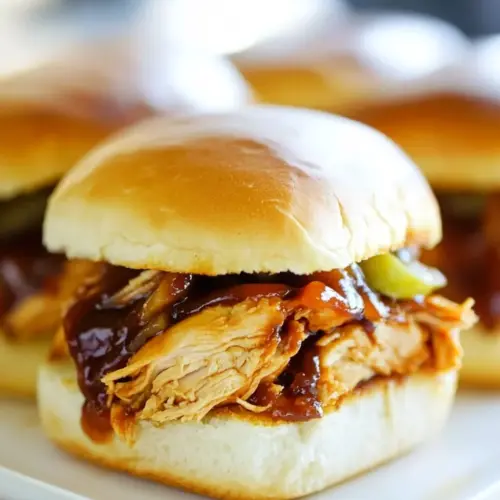
Crockpot BBQ Chicken Sliders
Crockpot BBQ Chicken Sliders are a crowd pleasing, saucy, and easy weeknight dinner option that results in tender shredded chicken, smoky bottled BBQ sauce, and melty cheddar cheese on soft slider rolls. Perfect for game day or casual parties, these sliders offer crispy pickle contrast and minimal hands on time, making them a must make when you want flavorful comfort with almost no fuss.
Equipment
- Crockpot
- Baking Sheet
- Two forks
Ingredients
- 2 lbs Boneless Skinless Chicken white meat such as breasts or tenders Provide lean white meat that shreds easily after slow cooking; ensures tender, juicy protein for the sliders and soaks up the BBQ sauce flavors during the crockpot process.
- 28 oz Favorite Bottled BBQ Sauce I use whatever is on sale; KC Masterpiece this time Add bold, sweet-savory flavor and moisture to the dish; acts as the primary sauce that coats the shredded chicken and creates the signature BBQ taste.
- Salt & Pepper to taste Season to enhance overall flavor balance; used before or after cooking to adjust saltiness and bring out the natural tastes of the meat and sauce.
- 1 cup grated sharp cheddar cheese Contribute sharp, melty richness and a creamy contrast when sprinkled over the hot chicken; adds savory depth and a pleasant texture to each slider.
- 16 slider rolls Provide soft, handheld bases to assemble the sliders; chosen in small size to create party-friendly portions and hold the sauced chicken and toppings together.
- dill pickle chips optional, except not really Offer bright, tangy crunch as an optional topping; contrasts the sweet BBQ and creamy cheese while adding acidity to cut through richness.
Instructions
- Place chicken pieces into the bottom of a cold crockpot. Sprinkle with salt, pepper and 1/3 of the BBQ sauce. Stir to coat and cover with lid. Turn crockpot to high and cook 3-4 hours or until chicken is cooked thoroughly.: The aroma as the chicken begins to warm is subtle at first, then deeper and more savory as the juices release. You will notice faint steam and a gentle bubbling when the crockpot heats, which means connective tissue is breaking down to create tender shreds. This slow start helps the meat stay juicy rather than drying out. Avoid adding frozen pieces straight from the freezer, because that can raise the crockpot temperature and extend cooking time unpredictably.
- Remove chicken from crockpot to a large, shallow dish and shred meat with two forks. Stir in 1/3 of the BBQ sauce and any extra cooking liquid to get the saucy consistency you'd like.: When you season and add the first portion of BBQ sauce , it will hiss softly as it meets warm meat and start to coat the surface. Rubbing the seasonings into the pieces encourages even distribution, and adding only a portion of the sauce ensures the meat cooks without burning the sugars. A common pitfall is adding all the sauce at once, which can make the bottom scorch or become overly sweet.
- Open 16 slider rolls and place the bottoms onto a baking sheet. Top with about 1/4 cup shredded BBQ Chicken and 1 tablespoon of grated cheddar cheese. Broil 30 seconds to 1 minute or until completely melted. Top with dill pickle chips and slider roll tops. Serve immediately.: After stirring, you should see every piece glistening with a thin film of sauce. The lid traps steam and builds gentle pressure, which helps the chicken fibers relax and absorb flavor. Expect a soft sizzling sound as the liquid circulates. Keep the lid closed for full effect, because lifting it repeatedly causes temperature drops and extends the cooking window.
- Turn crockpot to high and cook 3-4 hours or until chicken is cooked thoroughly: Over time you will notice the developing smell of cooked chicken and caramelized sauce. On high, liquids will bubble more actively, producing a comforting simmer. The goal is tender meat that pulls apart easily; test by prodding a piece with a fork after three hours. A frequent error is relying solely on time instead of testing for doneness, so always check texture before proceeding.
- Remove chicken from crockpot to a large, shallow dish and shred meat with two forks: Shredding releases a warm, savory steam and exposes the strands that will soak up the remaining sauce. The shallow dish helps the meat cool slightly and makes it easier to shred uniformly. If you shred while meat is too hot to handle, you risk small uneven chunks; let it rest a few minutes so the strands separate cleanly.
- Stir in 1/3 of the BBQ sauce and any extra cooking liquid to get the saucy consistency you'd like: As you mix, observe the glossy coating forming on the shreds and the little ribbons of sauce that cling to the meat. Adjusting with reserved cooking liquid balances thickness so the sliders are moist but not dripping. A common mistake is adding too much liquid and creating a soupy filling, so aim for saucy rather than watery.
- Open 16 slider rolls and place the bottoms onto a baking sheet: Laying out the slider bottoms on a baking sheet readies them for an even finish under heat. You'll notice the rolls are soft, and a brief toasting will crisp the crumb slightly to resist sogginess. If you skip this step, the rolls can become overwhelmed by moisture and fall apart when picked up.
- Top with about 1/4 cup shredded BBQ Chicken and 1 tablespoon of grated cheddar cheese: Piling a measured portion of the warm filling onto each roll creates consistent sliders that cook evenly. The contrast of warm, saucy chicken and cool roll is part of the appeal, and the cheese will form glossy pools as it melts. Avoid overstuffing, because excess filling can spill and make the bottom roll soggy.
- Broil 30 seconds to 1 minute or until completely melted: Under the broiler the cheese will bubble and smooth into golden spots, releasing a toasty, fatty aroma that signals readiness. Watch closely, because the transition from melty to burnt is fast; you want just a touch of color. A typical error is leaving them too long under intense heat, which can char the cheese and dry the filling.
- Top with dill pickle chips and slider roll tops: Adding a dill pickle chip introduces a bright, acidic crunch that snaps against the soft, saucy interior. The final sandwich will have layered textures and complementary flavors that sing together. Serve immediately to enjoy the contrast between warm filling and cool pickles; letting them sit too long will soften the pickles and reduce the bite.
Notes
- Use thicker or thinner sauce, depending on your preference; if the bottled BBQ sauce is very thick, stir in a bit of reserved cooking liquid to loosen it and improve coverage, otherwise the meat can clump instead of distributing.
- Add more cheese for gooey indulgence, layering a little extra grated cheddar cheese before broiling for intense melt and flavor, just watch the time so it does not overbrown.
- Make slider bars by arranging rolls close together on the baking sheet so they toast uniformly under the broiler and allow guests to pull apart portions easily when serving.
- Prep ahead by cooking the chicken a day early and refrigerating the shredded meat in sauce; reheat gently with a splash of reserved liquid to restore moisture before assembling.
- Control spice if you want a little heat, stir in a small amount of hot sauce into the reserved BBQ sauce while mixing with the shredded chicken, tasting as you go so it stays balanced.
- Use different cheese if you prefer a milder or sharper finish; swap cheddar cheese for a similar melting cheese but keep the quantity consistent for proper coverage.
- Serve family style by placing assembled slider halves on a large platter so guests can grab and go, keeping extra sauce in a bowl for topping.