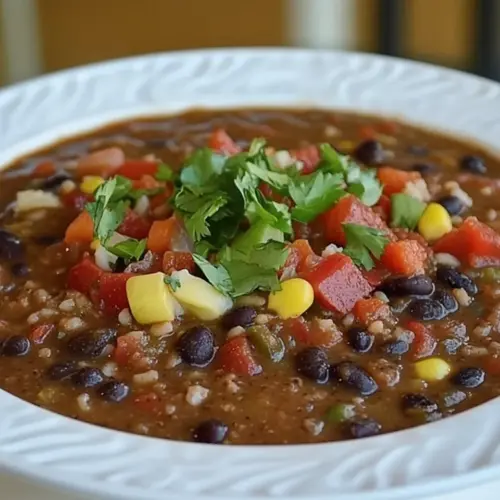
Crock Pot Vegan Black Bean and Brown Rice Soup
Crock Pot Vegan Black Bean and Brown Rice Soup is a creamy, comforting, and easy weeknight dinner that blends earthy black beans with hearty brown rice and bright finishes. Slow cooked for deep flavor, it offers rich texture and warming spices that develop over time. Make it for cozy family meals or batch cooking, because it reheats beautifully and feeds a crowd with minimal effort.
Equipment
- Crock Pot
- Large saute pan
- Immersion Blender
- Countertop blender
Ingredients
- 4 15-ounce cans black beans (drained but not rinsed (reserve one can for the end of the process)) Drain but do not rinse to retain flavorful liquid and starches that help thicken the soup; reserve one can to add at the end for texture and brightness.
- 1 tablespoon olive oil Add for a light, fruity fat that helps sauté aromatics and carry flavors without overpowering the dish; use sparingly to keep the soup vegan and heart-healthy.
- 1 cup diced yellow onion (about half a medium onion) Provide a sweet, aromatic base when diced and sautéed; soften until translucent to build depth and balance the earthy beans and spices.
- 1 cup diced carrot (about 2 medium carrots) Contribute natural sweetness, body, and slight earthiness when diced and cooked; help round out the soup’s flavor and add subtle texture.
- 1 medium jalapeno pepper (seeds removed and finely diced (about 1/4 cup)) Bring bright heat and a vegetal, peppery note once seeds are removed and finely diced; adjust quantity to control spiciness and aromatic complexity.
- 1 tablespoon minced garlic (2 - 3 medium cloves) Deliver pungent, savory aroma and depth when minced and sautéed briefly; help meld with spices to enhance the overall savory profile.
- 1 teaspoon chili powder Impart warm, smoky heat and an earthy backbone that complements beans and rice; stir in early to bloom its flavors in the oil.
- 1 teaspoon cumin Add warm, slightly citrusy earthiness that partners with chili powder and beans; toast briefly to release essential oils for fuller flavor.
- 1 teaspoon dried oregano Provide herbal, slightly bitter notes that lift and brighten the savory components; include dried oregano to echo traditional Latin-inspired profiles.
- 1/2 teaspoon kosher salt plus more to taste if desired Season to enhance and balance flavors, using kosher salt to bring out sweetness and savory notes; add more at the end to taste.
- 1/4 teaspoon freshly ground black pepper Introduce a sharp, pungent edge to balance richness and sweetness; freshly ground black pepper adds subtle heat and complexity.
- 4 cups vegetable broth Create a savory, umami-rich cooking liquid that infuses beans and rice; use vegetable broth to keep the soup vegan and flavorful.
- 2 tablespoons tomato paste Concentrate tomato flavor and add body; stir in tomato paste to give depth and a subtle acidity that anchors the dish.
- 10 dashes Tabasco sauce (or to taste) Provide a vinegary, concentrated hot sauce kick; add to taste for layered heat and tang that brightens the soup.
- 2 cups cooked brown rice Supply hearty texture and nutty flavor while absorbing broth; fold in cooked brown rice toward the end to prevent over-softening.
- Fresh lime wedges Offer bright acidity when squeezed over bowls; use fresh lime wedges to finish and awaken the flavors just before serving.
- Diced tomatoes (cilantro leaves, diced scallions, avocado, sour cream (if you eat dairy) for topping, if desired) Add fresh, colorful garnish options like diced tomatoes, cilantro leaves, scallions, avocado, and optional sour cream for creaminess and contrast.
Instructions
- Add three cans of black beans to a 3-quart or larger Crock Pot.: The scent of canned black beans is subtle and slightly earthy; as you pour them in you should notice a faint bean aroma. This step establishes the soup's foundation and ensures enough volume for the slow cook. A common mistake is using a too small pot which can cause bubbling over, so choose a Crock Pot that leaves room for expansion and stirring later.
- Add the olive oil to a large saute pan over medium heat. Add onion and carrots; saute for about five minutes until the onion softens and begins to turn translucent. Add jalapeno pepper, garlic, chili powder, cumin, oregano, salt, and pepper and saute, stirring, for another minute. Add tomato paste, vegetable broth, and Tabasco sauce, stirring until tomato paste is dissolved. Pour into Crock Pot over beans.: When the olive oil warms it should shimmer gently and release a fruity fragrance. Warming the oil prepares it to carry and amplify the aromatics. Watch closely so the oil does not smoke, which would impart bitterness; if it starts to smoke, lower the heat immediately.
- Cook on low 6 - 8 hours.: You will hear a soft sizzle as the onion and carrot hit the pan. After several minutes the onion becomes translucent and emits a sweet, savory aroma while the carrot softens yet retains some structure. This gentle browning creates layers of flavor; avoid high heat that would brown them too fast and risk a slightly bitter taste.
- Remove cover and allow to cool a bit, until safe to handle. Using an immersion blender or working in batches with a blender, puree soup. Return soup to the Crock Pot and add the last can of beans and the rice. Cook on medium for another half hour.: As you add the spices and minced garlic , the pan will fill with a warm, complex scent. Stirring for about a minute releases aromatic oils and toasts the spices just enough to enhance their flavor. The mistake to avoid here is overcooking the garlic , which can turn bitter if it browns, so keep the heat moderate and stir frequently.
- Taste and adjust seasonings if desired - add more salt and pepper if you like, a little more Tabasco if you want.: The tomato paste will dissolve into the hot liquid and deepen the color to a rich, reddish brown while the vegetable broth smooths everything into a cohesive liquid. The little pops of vinegar from the Tabasco sauce brighten the mixture. If the tomato paste clumps, use a bit of broth to loosen it; unresolved paste can create uneven pockets of intense flavor.
- Scoop into individual bowls and squeeze a lime wedge over the top of each. Add toppings if desired.: When you pour the seasoned broth over the beans you should see the surface glisten and the aroma lift into the air. This transfer brings together the softened vegetables and spices with the beans so flavors can slowly marry. A common oversight is not scraping the saute pan clean, which wastes flavor; use a spatula to transfer every last bit.
- Keeps refrigerated in an airtight container for three or four days. The soup can thicken over time, so thin with additional vegetable broth before serving leftovers, if desired.: As the soup simmers slowly the scent will deepen from bright and sharp to round and integrated. The long, gentle heat allows the beans to release starches that thicken the broth and lets the spices mellow. Avoid switching to high heat mid cycle, which can make the texture uneven and the flavors less harmonious.
- Remove cover and allow to cool a bit, until safe to handle: Cooling slightly reduces steam and makes the next step safer and more effective. You should see the surface calm and hear less bubbling. A mistake here is blending while the liquid is too hot, which can cause steam pressure in countertop blenders; always let it cool enough to handle.
- Using an immersion blender or working in batches with a blender, puree soup: The sound changes as you blend, from bubbling to a smoother hum, and the soup’s texture will become silkier and more cohesive. Pureeing concentrates flavors and creates a creamy mouthfeel even without dairy. If using a regular blender, fill jars only halfway and vent the lid slightly to avoid pressure buildup; overfilling or blending too hot can create messy, and potentially dangerous, splatters.
- Return soup to the Crock Pot and add the last can of beans and the rice: Adding reserved whole black beans and the cooked brown rice reintroduces textural contrast against the pureed base. You will notice a pleasing thickness and chew immediately. The common error is adding uncooked rice, which would remain hard, so ensure the rice is cooked before adding.
- Cook on medium for another half hour: This short cook lets the flavors integrate with the added ingredients while warming the rice through. The aroma will become rounder and the soup’s body more unified. Avoid leaving it too long at higher heat which can dry out the surface and concentrate saltiness.
- Taste and adjust seasonings if desired: At this point the bowl should smell layered with bright acid, warmth from spices, and a savory backbone. Tasting now lets you balance salt, pepper, and heat; add small increments and re-taste. One pitfall is over salting; salt concentrates as it reduces, so adjust carefully.
- Scoop into individual bowls and squeeze a lime wedge over the top of each: The fresh citrus lifts every spoonful, adding a crisp top note that contrasts with the soup’s depth. Garnishes also add texture and color. A common mistake is skipping the lime, which leaves the bowl tasting flatter, missing that final bright chord.
- Add toppings if desired: Toppings like diced tomatoes , cilantro leaves , or avocado add freshness, herbal lift, and creaminess. These finishing touches create variety in each bite. Overloading with too many heavy toppings can mask the soup’s base, so choose one or two to complement rather than crowd the flavors.
- Keeps refrigerated in an airtight container for three or four days: When cooled and stored properly the soup will last several days, and the flavors often improve. Reheat gently with a splash of vegetable broth if it thickens. Reheating too vigorously can break texture and concentrate salt, so warm slowly and stir to restore the right consistency.
- The soup can thicken over time, so thin with additional vegetable broth before serving leftovers, if desired: Leftovers often become denser as the starches absorb liquid. Adding warm vegetable broth loosens the texture and restores the initial mouthfeel, while a quick stir will reincorporate flavors. A common misstep is adding cold water which dulls the bowl; always use warm liquid when thinning.
Notes
- Reserve one can for texture - Holding back a can of black beans and adding them at the end gives your soup a pleasing contrast between creamy pureed base and whole beans, which keeps each spoonful interesting.
- Saute aromatics first - Sautéing the onion, carrot, and garlic in olive oil blooms their flavors and removes raw edges, resulting in a rounder, sweeter broth after the slow cook.
- Use warm broth to dissolve tomato paste - Dissolving the tomato paste into warm vegetable broth avoids clumps and ensures an even distribution of concentrated flavor, preventing bitter pockets of undissolved paste.
- Blend safely - If using a countertop blender, cool the soup slightly and fill containers no more than halfway, venting the lid to let steam escape; this prevents pressure build up and messy splatters.
- Adjust heat at the end - Add Tabasco sauce and extra jalapeno pepper gradually after the main cook so you can control the final spiciness without overpowering the soup.
- Thin leftovers with warm broth - If the soup thickens in the fridge, warm it gently with a splash of hot vegetable broth and stir; this restores the original silky texture without diluting flavor.