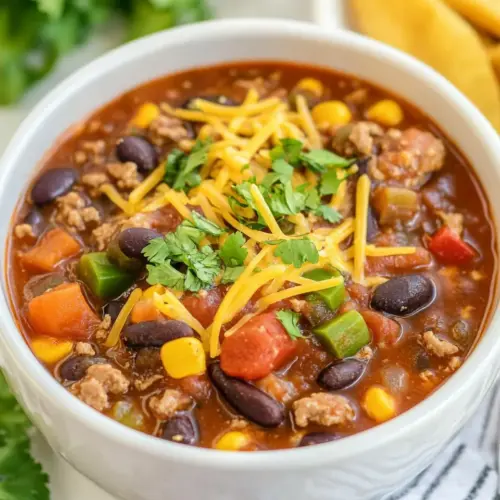
Crock Pot Turkey Chili
Crock Pot Turkey Chili is a cozy, flavorful bowl that blends lean turkey, two types of beans, and warming spices for an easy weeknight dinner. The slow cook method yields a deep, savory aroma and a thick, hearty texture that feels indulgent yet wholesome, perfect for feeding a crowd or meal prepping for the week.
Equipment
- Crock Pot
Ingredients
- 1 tbsp vegetable oil Heat and coat the pot to prevent sticking and carry flavors; helps brown turkey or sauté aromatics before slow cooking. Adds a neutral fat that distributes spices and softens vegetables during the long simmer.
- 1 lb ground turkey or 2 cups chopped turkey Provide a lean protein base that will crumble and absorb chili seasonings; can be swapped for chopped turkey for a chunkier texture. Releases juices as it cooks slowly, enriching the broth and giving hearty body to the chili.
- 1 can diced tomatoes Contribute acidity, moisture, and savory tomato flavor to build the chili sauce; diced form adds pleasant texture. Balances spices and helps create a cohesive, saucy base that melds with beans and turkey over time.
- 1 can corn Add sweet pop, texture, and additional liquid to the chili; drained or with liquid adjusts final consistency. Compliments the savory and spicy elements while increasing volume and nutritional variety.
- 1 can diced green chilies Introduce mild heat and tang, enhancing overall chili complexity; green chilies blend seamlessly into the sauce. Provide a subtle Southwestern flavor that lifts the dish without overpowering other spices.
- 1 (15 oz) can great northern beans drained Bring creamy texture and tender bite while adding protein and fiber; draining prevents excess liquid. Great northern beans soak up flavors and help thicken the chili for a satisfying mouthfeel.
- 1 (15 oz) can black beans drained Offer a contrasting color and slightly firmer texture along with protein and fiber; draining reduces broth dilution. Black beans contribute earthy notes that complement the turkey and spices.
- 3/4 c water Supply additional liquid to control final thickness; helps dissolve and distribute dry spices evenly during slow cooking. Adjusts consistency depending on desired stewiness and aids in simmering flavors together.
- 1 tbsp chili powder Deliver earthy, smoky warmth to the chili base; measurement controls heat level precisely. Binds other seasonings and deepens overall flavor profile when allowed to cook slowly.
- 1/2 tsp garlic powder Impart a mellow garlic aroma and depth without fresh cloves; convenient for consistent seasoning. Helps round savory flavors and supports the meaty and tomato components subtly.
- 1/2 tbsp ground cumin Add warm, slightly citrusy earthiness that anchors Southwestern and Mexican-style flavors; measured to avoid overpowering. Works with chili powder and cumin to create a classic chili spice backbone.
- 1 pinch ground black pepper Provide a subtle sharpness that enhances other spices and cleanses the palate; used sparingly for balance. Helps tie together savory notes without adding noticeable heat.
- 1 pinch ground allspice Contribute a warm, slightly sweet background note that complements cumin and chili powder; just a pinch prevents clashing flavors. Adds complexity and a hint of warmth that supports the overall spice blend.
- 1 tsp red pepper flakes optional Provide concentrated heat and visual flecks of spice when used; optional to control spiciness for diners. Sprinkle in carefully to elevate the chili without overwhelming the other seasonings.
- garlic salt (with parsley flakes) Season with savory, slightly salty herbaceous notes while adjusting final salt level; parsley flakes add a touch of color and freshness. Use sparingly to enhance flavor balance and finish the dish.
Instructions
- Using a skillet over medium heat add olive oil and turkey. Cook until evenly browned. Drain excess oil.: From the first sizzle you will notice the kitchen aroma shift toward roasted meat and warm spices, which is a good sign the Maillard reaction is happening and flavor is building. As the turkey browns, listen for a steady moderate sizzle, and watch the color change from pink to golden flecks, with juices running clear. Browning creates small browned bits on the pan, these are flavor gold and will deepen the chili when transferred. If the pan smokes or the oil darkens, reduce the heat to avoid bitterness. A common mistake is overcrowding the skillet, which causes steaming instead of searing; brown in batches if necessary to keep pieces separate. After browning, tilt the pan slightly and spoon off pooled fat, leaving just enough to carry flavor, especially if the turkey is not very lean.
- Spray the crock pot with cooking spray and add the browned turkey, tomatoes, beans, corn and green chilies. Stir in the water and seasonings.: When you assemble the pot, the aromas combine and you should notice the bright tomato scent mingling with toasted spice notes. Stirring ensures the chili powder and ground cumin disperse evenly through the liquid, preventing clumps and creating a consistent color and flavor. The visual cue to aim for is an even distribution of beans, meat and vegetables in a slightly saucy matrix, not a dry pile. If some ingredients float, gently press them down so they are immersed for even cooking. A frequent error is adding too little liquid, which can cause scorching on the sides; the specified 3 quarter cup of water keeps things saucy without diluting flavor. Taste is not yet final, but check that the seasonings look blended and the mixture moves freely when you tilt the pot.
- Cover and cook on Low for 8 hours or High for 4 hours.: As the crock pot works, the kitchen will gradually fill with a rich, slowcooked perfume, and the chili will take on a deep, melded flavor. On Low , you will notice subtle bubbling and a gentle steam, signaling a long, slow integration of flavors that yields a tender texture and richer complexity. On High , the bubbling is more vigorous and the finish will be ready sooner, though the flavor may be slightly less rounded. A good visual test is that the beans are tender without collapsing, and the sauce has thickened to coat a spoon. One pitfall is removing the lid too often, which releases heat and lengthens cooking time, so resist peeking unless necessary. If you find the chili too thin at the end, remove the lid and cook on High for a short period to reduce; if too thick, stir in a splash of hot water. Make sure to use oven mitts when handling the pot, as surfaces and steam will be hot.
Notes
- Smoky Twist Swap the standard chili powder for a smoked variety or add a pinch of smoked paprika to introduce a warm smoky layer, which plays well with the natural mildness of turkey.
- Chunky Veg Boost Add extra canned vegetables like diced tomatoes with green chiles for more texture, which also stretches the recipe further for larger crowds.
- Spice Level Control Use the optional red pepper flakes sparingly at first, since heat intensifies over time; you can always stir in more at the end if needed.
- Bean Mix Variation Keep the two types of beans but switch proportions to favor black beans for a deeper color and earthier bite, maintaining balance with the great northern beans for creaminess.
- Finish with Freshness Stir in a small sprinkle of garlic salt with parsley flakes right before serving for a bright, herby lift that contrasts the slowcooked depth.