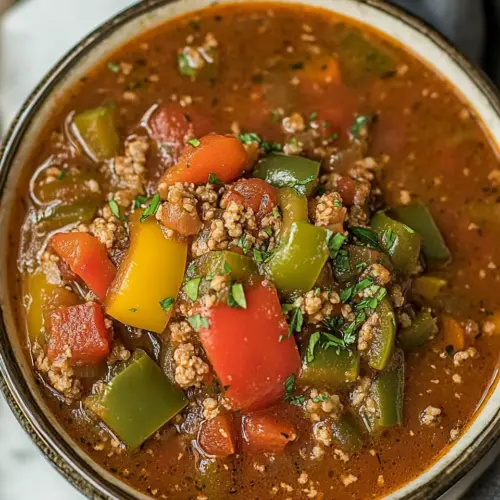
Crock Pot Stuffed Pepper Soup
Crock Pot Stuffed Pepper Soup is a creamy, savory slow cooked soup that tastes like classic stuffed peppers in a bowl. With tender ground beef, sweet bell peppers, and tomato rich broth, it makes an easy weeknight dinner or make ahead comfort meal. The slow simmer brings depth and leaves you with leftovers that reheat beautifully, a perfect reason to make it tonight.
Equipment
- Skillet
- Crock Pot
- Spatula
Ingredients
- 1 tbsp avocado oil Sauté in a hot pan to provide a neutral, high-heat cooking fat that helps brown the beef and soften aromatics while adding a subtle, buttery richness to the soup.
- 1 small yellow onion finely chopped Finely chop to release natural sweetness and savory depth; cook until translucent to form the aromatic base and build layered flavor in the broth.
- 1 lb ground beef Brown thoroughly to develop savory umami and hearty texture; rendered fat from the meat enriches the soup while the beef provides protein and a classic stuffed-pepper flavor profile.
- 4 cloves garlic minced Mince and add near the beginning of cooking to contribute bright, pungent aromatics and enhance overall savory complexity without overpowering other flavors.
- 3 bell peppers of any color, chopped Chop into bite-sized pieces to add crisp, vegetal sweetness and vibrant color; cook until tender to replicate the classic stuffed pepper experience within the soup.
- 1/2 cup brown rice or white rice Rinse if desired and add to simmering soup to absorb liquid and provide comforting body and chew; brown rice adds nuttiness while white rice cooks faster and gives creamier texture.
- 1 (28-oz) can crushed tomatoes Pour in to supply concentrated tomato flavor, acidity, and body; crushed tomatoes create a robust, slightly chunky base that marries with the beef and peppers.
- 4 cups chicken broth Pour as the primary liquid to build the soup’s broth, provide depth and seasoning potential, and allow the rice to cook through while blending flavors over slow heat.
- 2 tbsp tomato paste Stir in to intensify tomato richness and thicken the broth slightly; tomato paste deepens color and adds a concentrated, savory-sweet backbone to the soup.
- 1 tbsp pure maple syrup optional Drizzle optionally to introduce a touch of sweetness and balance tomato acidity; maple syrup can round flavors without making the soup noticeably sweet.
- 1 tsp dried parsley Sprinkle dried to add mild herbaceousness and a subtle green note that complements tomatoes and peppers while blending seamlessly into the slow-cooked broth.
- 1 tsp sea salt to taste Season to taste to enhance overall flavor, drawing out savory notes and balancing acidity; adjust at the end to avoid over-salting as broth may contain sodium.
- 1/4 tsp black pepper to taste Grind freshly and add to taste to provide warm, slightly sharp heat that brightens flavors and balances richness; adjust sparingly to maintain harmony.
Instructions
- Heat the avocado oil in a large skillet over medium heat. Add the onion and sauté, stirring occasionally, until the onion has softened, about 5 to 8 minutes.: As the oil warms you should see a slight shimmer and smell a neutral, almost buttery scent, which signals the pan is ready. Use a pan large enough so the onion and ground beef can cook without crowding, otherwise they will steam instead of browning. If the oil starts to smoke, lower the heat to avoid a burnt taste. A common error is adding ingredients to a cold pan, which leads to uneven caramelization and a flat flavor. The reason this matters is that properly heated avocado oil creates an ideal surface for the Maillard reaction when the ground beef hits the pan. That reaction builds the savory, meaty base that ultimately flavors the entire crock pot. You will hear a gentle sizzle when ingredients meet the oil, and that sound is a useful cue that the pan temperature is correct. If you are using a non stick skillet, be mindful of medium rather than higher heat to preserve the coating.
- Add the ground beef to the center of the skillet and brown for 2 minutes per side before breaking it into smaller pieces with a spatula. Stir in the garlic and cook until the ground beef is mostly cooked through.: You will notice the onion transition from opaque and firm to translucent and tender, with sweet aromas rising as natural sugars release. Stir occasionally to encourage even softening and to prevent browned bits from forming too quickly on one side. If you rush this step, the onion may retain a harsh, raw edge which can flatten the overall flavor. Softening the onion is important because it allows its fragrance to meld into the dish rather than standing apart. The gentle sizzling should slow as moisture evaporates, and visually the onion becomes glossy. If your pan seems dry, add a splash more avocado oil . Avoid over browning unless you want a deeper caramel note, in which case watch carefully to prevent burning.
- While the onion and beef is cooking, chop the bell peppers and transfer them to the crock pot along with the rice.: When the ground beef first hits the hot pan it should sizzle and begin to develop browned crusts on the exposed surfaces. After a couple of minutes, use a spatula to turn and press the meat, creating multiple contact points for browning. Breaking the meat later preserves those browned bits which add intense savory flavor. If you immediately shovel and stir too much, you lose those concentrated flavors. You will smell a deep, meaty aroma as the beef browns, and small caramelized bits will stick to the pan, which is desirable. If the beef releases a lot of fat, you can spoon off excess to avoid a greasy soup, but leaving some fat improves mouthfeel. A typical mistake is overcrowding the pan with too much meat, which causes steaming rather than browning. If that happens, cook in batches.
- Transfer the onion and beef mixture to the crock pot with the veggies.: The minute you add the garlic a fragrant, savory perfume will lift from the skillet, but it cooks quickly and can go from fragrant to bitter if left too long. Stir continuously for a short minute until the garlic and meat are integrated, and the meat shows no pink in most areas. Avoid high heat here because garlic burns faster than other aromatics. This step matters because briefly cooking the garlic releases its essential oils, marrying them with the beef. If you detect a bitter or acrid smell, the garlic has burned and you should rinse the pan and start over, because burnt garlic compromises the whole pot.
- Pour the crushed tomatoes, chicken broth, tomato paste, dried parsley, sea salt, and black pepper into the crock pot.: The crisp, vegetal scent of fresh bell peppers will contrast with the richer meat aroma, and chopping them uniformly helps them cook evenly. Placing them into the crock pot early allows their sugars to slowly dissolve into the broth. If you delay adding the peppers too long they may stay overly firm, while chopping them too small can make them disintegrate during the long cook. I like to spread the peppers in an even layer so the rice sits among them rather than lumping in one corner. The rice will hydrate in the long simmer, absorbing flavors and thickening the soup, so uniform distribution helps texture consistency. Beware of adding pre cooked rice here, because it will overcook and become mushy.
- Stir well and secure the lid on the crock pot. Cook on Low heat for 6 to 8 hours or High heat for 4 to 5 hours.: You will see the browned bits from the skillet join the vegetables, and a rich meaty aroma will radiate as everything comes together. Scrape the pan well to capture those browned morsels, because they carry concentrated flavor into the crock pot. If you skip scraping, you lose depth and the final broth will be less complex. This transfer matters because the concentrated fond in the skillet dissolves into the broth, enriching the overall profile. When moving ingredients take care not to splash hot liquids, and use a sturdy spatula or spoon to get every last bit. A common misstep is leaving flavorful residue in the pan, which dulls the finish of the soup.
- Serve with your choice of toppings, such as sour cream, grated cheese, or sliced avocado and enjoy! If you’re a cornbread lover like me, serve it up with Gluten-Free Cornbread.: As the liquid hits the vegetables and meat you will see the pot begin to take shape, shifting from dry ingredients to a simmer ready mixture. The aroma will brighten as the crushed tomatoes release acidity and the chicken broth carries savory notes. Stir well so the tomato paste disperses, avoiding pockets of concentrated paste which can taste dense. This step builds the cooking medium that allows flavors to marry, and measuring salt carefully here is key because the broth and canned tomatoes already contain sodium. If you add too much salt now, it will concentrate during slow cooking. A typical oversight is not mixing the paste thoroughly, which leaves uneven tomato flavor throughout the pot.
- Stir well and secure the lid on the crock pot. Cook on Low heat for 6 to 8 hours or High heat for 4 to 5 hours.: Once the lid is on you will notice the aroma mellow and deepen as the soup simmers slowly. On Low the flavors develop gently into complex, cohesive notes, and the rice absorbs liquid producing a thick, stew like texture. On High the process is faster but still effective, though textures may be slightly less integrated. Avoid lifting the lid repeatedly, because each opening releases heat and extends cooking time. The long cook is what turns separate ingredients into a unified dish, allowing starches to soften and for umami to blossom. If your rice seems undercooked at the end of the stated time, add a bit more broth and cook until tender. A common mistake is assuming the crock pot cooks everything at the same pace; rice varieties and pot models differ, so adjust gently.
- Serve with your choice of toppings, such as sour cream, grated cheese, or sliced avocado and enjoy!: When you ladle the soup into bowls the steam will rise carrying savory tomato and pepper aromas. I love the contrast of a cool dollop of sour cream or the creamy richness of sliced avocado , which balances acidity and adds texture. If you like a crunchy contrast, warm a piece of cornbread on the side and serve immediately. Finishing toppings personalize each bowl and add contrasting textures that make the meal feel complete. If you plan to store leftovers, keep toppings separate so they stay fresh. A frequent slip up is adding delicate toppings too early, which causes them to wilt or melt into the soup rather than brighten the finished dish.
Notes
- Swap rice type thoughtfully Use brown rice for nuttier texture and slightly longer cook time, or choose white rice for a creamier finish. If you switch to brown rice, expect a firmer bite and possibly add extra broth to ensure tenderness.
- Adjust meat fat content Choose 80 20 ground beef for richer mouthfeel, or leaner beef to reduce grease. If using leaner meat, you might add a touch more oil at the start to preserve richness in the final bowl.
- Make it vegetarian friendly Replace the ground beef with a plant based protein or extra beans, and swap chicken broth for vegetable broth to keep the savory depth without meat.
- Enhance tomato depth Stir in the tomato paste well and consider briefly blooming it in the skillet before adding liquids to unlock deeper, caramelized tomato flavor.
- Finish with fresh accents Add a sprinkle of chopped fresh herbs or a squeeze of citrus at the table to lift the long cooked flavors and brighten each bowl.