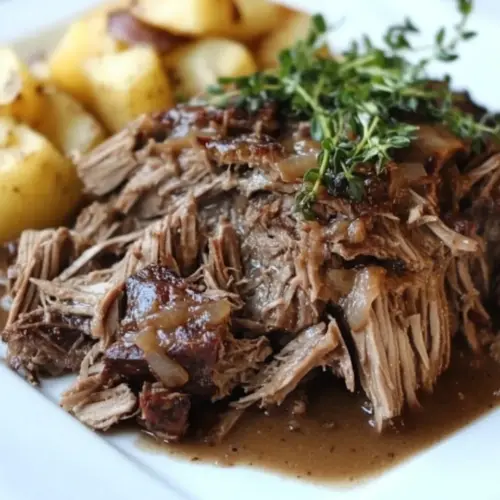
Crock Pot Pot Roast
Crock Pot Pot Roast is a comforting, easy weeknight dinner that yields fall apart beef with deep savory flavor. Using pantry dry mixes and a beef chuck roast, this slow cooked meal becomes tender and juicy with minimal hands on time, perfect for busy evenings or casual family gatherings. Make it for a no fuss hearty dinner that warms the whole house.
Equipment
- Crock Pot
- crock pot liners
- meat shredder claws
Ingredients
- 1 tablespoon brown gravy dry mix Enhances savory depth by contributing concentrated beef-flavored gravy powder that thickens and seasons the cooking liquid; dissolves into the slow-cooker juices to create a rich sauce. Adds a hint of caramelized sweetness and umami that complements the roast’s natural flavors and helps glaze the meat during long cooking.
- 1 tablespoon dry ranch mix Adds tangy, herby seasoning that brings savory, slightly tangy notes and a creamy ranch-style profile to the pot; dissolves into the liquid to season the meat and sauce evenly. Provides aromatic herbs and buttermilk-like flavors that contrast the beef richness and boost overall savory balance.
- 1 tablespoon Italian dressing dry mix Provides zesty Italian herb seasoning with garlic, oregano, and other spices to introduce bright, herby, and slightly acidic notes; helps layer flavors and seasons the cooking liquid and roast surface. Balances richness from gravy and ranch components while contributing aromatic complexity throughout slow cooking.
- 1 (2-3 pound) beef chuck roast Supplies the main protein and source of rich beef flavor and texture; slow cooking breaks down collagen into tender, fork-ready meat and imparts deep savory character to the sauce. Serves as the centerpiece that absorbs seasonings and releases juices, creating the foundation for the dish’s mouthfeel and flavor.
- 1/3 cup water Dilutes and activates dry seasoning mixes while creating the cooking liquid needed for slow, even heat transfer; helps rehydrate the mixes and generate gravy around the roast. Controls sauce consistency and prevents burning by maintaining moisture during the long crock-pot cook time.
Instructions
- In a small bowl, mix gravy and ranch and Italian dressing mixes.: Right away you will notice the fragrant dried herbs and the starchy powder of the brown gravy dry mix when you sift these packets together, a quick stir releases their aroma into the air. Use a spoon to break up any clumps so the seasoning dissolves uniformly during cooking, this helps ensure the sauce will be smooth not grainy. If the powders feel lumpy, press them through a fine sieve before combining, since undissolved bits can leave gritty spots on the finished meat. The tactile cue here is a uniform loose powder, and the smell should be pleasantly herby and savory, not sharp. Avoid adding liquid now, because the concentrated seasoning will hydrate evenly in the crock pot and mixing with water prematurely can make it paste like and harder to sprinkle.
- Place chuck roast in the slow cooker and pour water over it. Sprinkle dry mix all over the top.: As you set the beef chuck roast into the crock pot , its cool, slightly tacky surface will contrast with the warm kitchen air. Pour the water evenly around the roast so the bottom gets some moisture, then lightly dust the combined dry mixes across the top so they create a seasoned crust as the meat cooks. You should see the powders adhere to the meat rather than dissolve immediately, which is a good sign that flavor will concentrate on the exterior and then seep inward. A common mistake is over saturating the seasoning with too much water, which dilutes flavor, so stick to the measured 1/3 cup. The visual cue to watch for is the dry mix forming a thin coat; during cooking it will integrate into the pan juices and thicken into sauce.
- Cook on low for 7–8 hours, or until meat is tender and easy to shred.: During the long slow cook the kitchen will slowly fill with rich, meaty aromas as the connective tissue in the beef transforms to gelatin, and you may hear a gentle simmering sound as the liquid moves. The reason low heat matters is it lets the collagen break down without squeezing moisture out of the meat, resulting in tender, juicy texture, whereas higher heat can toughen the roast. A reliable way to check doneness is to insert a fork gently and twist, it should pull apart with minimal resistance; if it resists, it needs more time. One common pitfall is opening the lid too often, which drops the temperature and lengthens cooking time, so try to resist peeking. When it reaches the right point, the surface will look deeply browned and the juices will be glossy and slightly thickened, signaling it is ready to shred.
Notes
- Bulk seasoning. Combine 2 to 3 packets of each dry mix and store in an airtight container in the cupboard to save prep time. When you make the roast use 3 tablespoons of the blended mix, which ensures consistent flavor across batches and is perfect when you want a quick assembly for busy days.
- Vegetable option. Add hearty vegetables like diced potatoes, baby carrots, and onion wedges into the crock pot to cook alongside the roast for a full one pot meal. Place the vegetables under or around the roast so they absorb drippings and become deeply flavored without overcooking into mush.
- High versus low. For sliced roast cook on HIGH for 4 hours, which keeps texture intact for clean slices, while for fall apart fork tender roast cook on LOW heat for longer to break down connective tissue into silky gelatin that makes shredding effortless.
- Correct pot size. Use the correct size crock pot and don’t overfill it, aim for the ingredients to occupy between one half to two thirds of the crock pot so heat circulates efficiently. Overcrowding extends cook times and prevents even browning and texture development.
- Make gravy. Use the drippings from the crock pot to make pot roast gravy, thickening on the stovetop with a little roux or cornstarch slurry for a glossy sauce that ties the dish together beautifully.
- Leftover uses. Leftover roast makes a great filling for burritos, flautas, enchiladas, chimichangas, or empanadas, which helps the whole batch stretch across multiple meals and reduces waste.