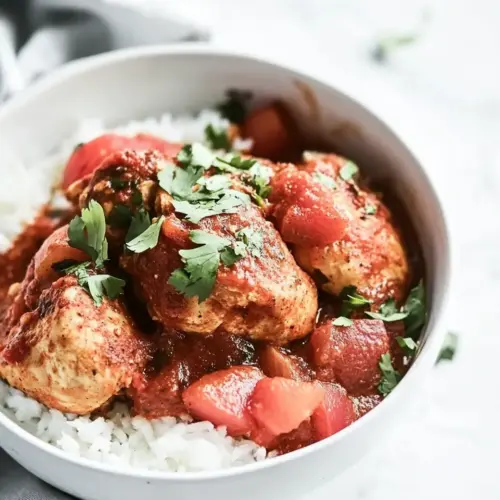
Crock Pot Moroccan Chicken
Crock Pot Moroccan Chicken is a slow cooked, spice kissed meal featuring tender chicken, hearty chickpeas, and a silky nut butter enriched sauce. This easy weeknight dinner fills the house with warm cinnamon and cumin aromatics and pairs perfectly with rice, quinoa, or couscous. Try it when you want a comforting, low effort meal that tastes like it simmered all day.
Equipment
- Slow Cooker
- Spoon
Ingredients
- 2 cans reduced sodium chickpeas (15 ounce cans), rinsed and drained Provide a hearty protein and fiber base for the stew and absorb flavors from spices and broth while maintaining a firm texture after slow cooking.
- 1 can whole tomatoes (28 ounces), drained and cut into 1-inch cubes Add a rich, slightly acidic tomato presence that breaks down into chunks to create body and a tangy backdrop for the sauce.
- 2 large bell peppers seeded and cut into 1-inch pieces Contribute crisp sweetness and vibrant color that softens into tender pieces, balancing savory and sweet elements in the finished dish.
- 1 medium red onion chopped Bring a mild pungency and subtle sweetness that caramelizes gently in the slow cooker, enhancing overall savory depth.
- 1/3 cup golden raisins Introduce concentrated bursts of sweetness and chewy texture that complement spices and create contrast with savory components.
- 2 tablespoons tomato paste Intensify tomato flavor and thicken the sauce, providing concentrated umami and a deeper, richer base for the Moroccan-inspired sauce.
- 2 tablespoons water Loosen the tomato paste slightly to help it incorporate evenly into the sauce and assist in creating a smoother consistency.
- 1 tablespoon ground cumin Provide warm, earthy, and slightly citrusy notes that underpin the spice profile and pair well with legumes and chicken.
- 2 teaspoons ground cinnamon Offer sweet, woody warmth that evokes traditional Moroccan flavors and pairs beautifully with cumin and paprika.
- 2 teaspoons paprika Deliver mild smoky sweetness and color that enhances savory notes and complements the cinnamon and cumin in the dish.
- 1/2 teaspoon kosher salt Season the dish to enhance and balance flavors while keeping sodium lower than regular table salt options.
- 1 1/4 pounds boneless skinless chicken thighs, cut into 1-inch cubes Serve as the main protein, becoming tender and absorbing the fragrant sauce while contributing richness and body to the stew.
- 3 tablespoons creamy unsalted peanut butter, almond butter, or other nut butter of choice (I used all natural peanut butter) Add creamy nuttiness and subtle richness that helps thicken the sauce and lends a smooth mouthfeel and depth of flavor.
- Prepared brown rice, quinoa, or whole wheat couscous, for serving Provide a hearty, whole-grain or grain-like base to serve the stew over, soaking up sauce and completing the meal with additional fiber.
Instructions
- In the bottom of a 4 to 6-quart slow cooker, stir together the chickpeas, tomatoes, bell peppers, onion, golden raisins, tomato paste, water, cumin, cinnamon, paprika, and salt.: The moment you mix these ingredients you will notice the bright tomato aroma and the warm spice perfume from the cumin and cinnamon , which helps you sense the dish is on the right track. Use a sturdy spoon to combine, making sure the tomato paste dissolves into the small amount of water , which prevents clumps and creates an even sauce. Visually, you want a mosaic of tomato pieces, pepper chunks, and pale chickpeas coated in a dusky spice mix. A common mistake is not draining the canned tomatoes enough, which can make the sauce excessively watery. If that happens, tilt the slow cooker lid slightly toward the end of cooking to reduce excess liquid slightly, or remove the lid for the last 20 minutes on HIGH to concentrate flavors.
- Scatter the chicken pieces over the top.: When you add the cubed chicken , arrange them in a single layer if possible so heat can distribute evenly around each piece as it slowly cooks. You will hear a soft settling sound as the meat nests into the vegetable and legume mixture, and soon the edges of the chicken will begin to take on the sauce color. The reason this placement matters is that the chicken will steam in the juices and absorb seasoning without becoming tough. Avoid crowding the slow cooker with oversized chunks, which can lead to uneven cooking where some pieces finish earlier than others. If your pieces are uneven in size, give the larger ones a slight chop so everything reaches tenderness at the same time.
- Cover and cook until the chicken is tender and cooked through, about 6-8 hours on LOW or 2-3 hours on HIGH.: As the dish cooks, your kitchen will be filled with a slow, sweet spice scent and the soft bubbling of the slow cooker. Low heat produces the most tender chicken , with connective tissues breaking down gradually so the meat becomes succulent. Cooking on HIGH shortens the time but may reduce some depth of flavor that long, gentle heat develops. A common pitfall is lifting the lid repeatedly to check progress, which lets heat escape and prolongs cooking; trust the time range and only peek near the end. Use a fork to test for tenderness near the end, looking for meat that pulls apart easily and juices that run clear.
- Stir in the nut butter.: When you fold in the creamy unsalted peanut butter or alternative nut butter, the sauce will immediately smooth and thicken, releasing a richer aroma. Swirl the nut butter into the hot mixture until it dissolves, creating a glossy coating that clings to the chicken and chickpeas . This step matters because the nut butter balances acidity and brings a rounded mouthfeel that transforms the sauce from brothy to silky. A mistake to avoid is adding too much; start with the indicated amount and taste, since overdoing it can push the sauce toward a pronounced nutty flavor. If the sauce seems too thick after adding the nut butter, stir in a tablespoon of warm water until you reach the desired consistency.
- Serve over rice, quinoa, or couscous, garnished with fresh cilantro.: Spoon the saucy mixture over your chosen base so the grains soak up the spiced sauce, and sprinkle fresh herb if you have it for a bright finishing note. You should notice a pleasing contrast of textures, with tender chicken , soft chickpeas , and plump golden raisins against the grain. The reason plating matters is that the base helps balance richness and stretches the meal for sharing. One common error is serving the dish straight from the slow cooker without briefly stirring, which can leave the sauce separated; give it a good stir to recombine solids and sauce so each serving is balanced.
Notes
- Choose the right cut: Opt for boneless skinless chicken thighs to keep the meat moist and flavorful during the long slow cooker time; breasts often dry out and lose texture.
- Control sweetness: If you prefer less sweetness from the golden raisins, reduce their quantity slightly or chop them so their sugar distributes more evenly through the sauce.
- Adjust spiciness: To increase warmth, add a pinch more paprika or a small amount of cayenne to make the profile more lively, but add cautiously to avoid overpowering the other spices.
- Manage sauce thickness: If the finished sauce is too thin, remove the lid and cook on HIGH for 20 to 30 minutes, stirring occasionally until reduced; if too thick, stir in a tablespoon of warm water at a time until desired consistency is reached.
- Swap nut butters thoughtfully: Use unsalted, creamy versions of nut butter so the texture becomes silky; natural varieties with oil separation should be stirred well before measuring to ensure consistent results.
- Make it ahead: The flavors mellow overnight, so refrigerate and reheat gently for an even more integrated taste; reheating slowly preserves texture and prevents overcooking the chicken.