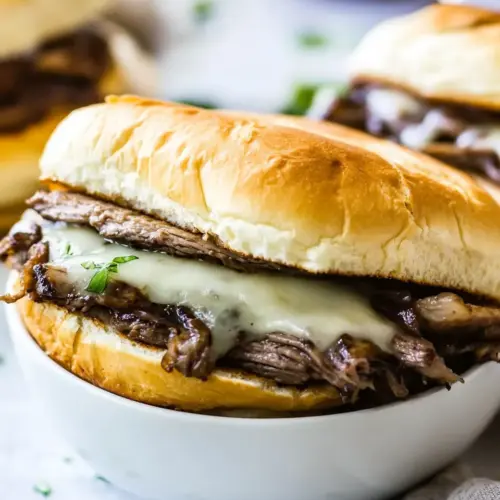
Crock Pot French Dip Sandwiches
Crock Pot French Dip Sandwiches are tender, savory, and easy to make, delivering slow cooked beef drenched in rich au jus with melty provolone cheese on toasted rolls. This easy weeknight dinner yields juicy, flavorful sandwiches with minimal hands on time, perfect for feeding a small crowd or cozy family meals. You will love the juicy bites and simple assembly.
Equipment
- Cast-Iron Skillet
- Slow Cooker
- Oven
- Baking Tray
- Knife
- Cutting Board
Ingredients
- 3 lb beef chuck roast trimmed of excess fat Trimmed and robustly marinate, providing the primary source of rich, tender beef flavor that becomes shreddable after slow cooking for hours.
- 1 tablespoon vegetable oil Heated briefly to sear the roast and develop a deep brown crust, adding savory Maillard complexity and locking in juices before slow cooking.
- 6 French rolls or hoagie buns Split and toasted lightly to provide sturdy, absorbent vessels for the shredded beef and au jus, finishing sandwiches with a pleasant chew.
- 12 slices provolone cheese Layered onto the assembled sandwiches to melt over hot beef, adding a creamy, mild tang that balances savory meat and moist jus.
- 1/3 cup reduced sodium soy sauce Added to the slow cooker to contribute concentrated salty-savoury umami that deepens the braising liquid and complements beef flavors.
- 1 cup Coke NOT diet Poured into the braising liquid to supply sweetness and caramel notes that help tenderize the meat and enhance the overall sauce complexity.
- 210.5 oz . cans beef consommé Poured as the main liquid base to create a rich, beefy au jus, infusing the roast with concentrated savory depth throughout the long cook.
- 1/4 cup dried minced onions Sprinkled in dried form to contribute subtle onion sweetness and texture, helping build aromatic layers in the braising liquid.
- 1 tablespoon beef bouillon Dissolved into the cooking liquid to boost meaty savoriness and round out flavors, ensuring a pronounced beef taste in the jus.
- 1 teaspoon garlic powder Sprinkled to impart a concentrated garlic aroma and savory backbone that complements the slow-braised beef without overpowering.
- 1/2 teaspoon onion powder Added to enhance and lift onion notes with a mild savory depth that melds into the braising liquid and finished jus.
- 1/2 teaspoon dried oregano Included to provide warm, slightly bitter herbaceous notes that pair with beef and other dried seasonings during long cooking.
- 1/2 teaspoon salt Measured to lightly season and balance other salty components, preventing the finished au jus from tasting flat or underseasoned.
- 1/4 teaspoon pepper Ground to add a subtle sharpness and depth that balances richness and enhances the overall savory profile of the braise.
- 1/4 teaspoon dried thyme Used sparingly to impart gentle, earthy floral notes that harmonize with other herbs and deepen the aromatic profile of the jus.
- 1 bay leaf Added whole to infuse a subtle, bay-like floral and slightly bitter background aroma that brightens and rounds the long-simmered au jus.
Instructions
- Heat vegetable oil over medium high heat in a cast iron skillet. Using two forks or tongs to hold roast, sear on all sides until lightly browned. Add to slow cooker and top with all remaining Slow Cooker ingredients.: The skillet should sizzle when the oil is hot, releasing a faint nutty scent that tells you it is ready. A proper sear gives the beef an appealing brown crust, which adds caramelized flavor to the au jus. When you place the roast in, listen for an immediate pronounced sizzle, and watch edges darken within a minute to two, signaling good Maillard reaction. Avoid moving the roast too quickly, or you will tear the crust and lose flavor. If the pan smokes excessively, reduce the heat a bit, otherwise you risk a bitter burned flavor.
- Cook on LOW for 4 hours then remove roast to a cutting board. Thinly slice roast across the grain. Place sliced meat back in slow cooker and continue to cook on LOW for 1-2 additional hours.: You want an even, golden brown surface all around, not a blackened exterior. This browning should smell rich and meaty, almost sweet from caramelized juices. Rotate the roast methodically, paying attention to corners and seams where juices gather. Overcrowding the pan is a common mistake that leads to steaming, so sear one side at a time and maintain medium high heat. If juices pool and the roast does not brown, wipe the pan clean and add a touch more oil before continuing.
- When ready to serve, remove roast and strain fat from broth for dipping.: As you nestle the browned roast into the cooker, pour in the beef consommé , Coke , soy sauce , and sprinkle the dried seasonings so they disperse around the meat. The aroma should begin to build a savory, layered fragrance as the sweet and salty notes mingle. This combination creates a braising liquid that breaks down connective tissue, producing tender meat and a flavorful jus. A frequent oversight is uneven seasoning distribution, so stir the liquids briefly to dissolve bouillon and help dried bits hydrate evenly.
- Split rolls and line the bottoms on a baking tray. Top each half with beef followed by 2 slices cheese. Bake at 350 degrees F or until cheese is melted. Serve with reserved au jus.: At about four hours on LOW, the roast will feel noticeably tender, with the surface glossy from the reduced braising liquid. You should see the juices gently bubbling, giving off a deep, savory steam. Resting the roast on a cutting board allows the juices to settle so you can slice more cleanly. Don’t skip checking tenderness earlier if your roast is smaller, as overcooking can dry edges. If the roast resists slicing, it needs more time, so return it to the slow cooker.
- Thinly slice roast across the grain: Cutting across the grain shortens muscle fibers, producing tender, easy to bite slices. The meat should feel silky and faintly yielding under your knife, with visible strands rather than compact chunks. Use a sharp knife and steady strokes to keep slices uniform. Slicing with the grain makes the chew tougher, which is an easy mistake, so always double check the muscle direction before you cut.
- Place sliced meat back in slow cooker and continue to cook on LOW for 1-2 additional hours: Returning the sliced beef to the au jus lets the meat reabsorb flavorful liquids and stay moist. You will notice the broth become darker and more aromatic as it reduces slightly. This step deepens the taste and ensures each slice is saturated. A common error is leaving slices out to cool, which can dry them and reduce juiciness; keep them in the hot jus until service time.
- When ready to serve, remove roast and strain fat from broth for dipping: Straining the broth yields a clearer, cleaner tasting au jus that clings to the meat without excess oil. The strained liquid should glisten but not float with fat. Taste and adjust if needed, but remember that the consommé and soy sauce already provide salt, so proceed cautiously. Leaving fat in the broth can make it overly greasy, so use a ladle to skim if you do not have a fine strainer.
- Split rolls and line the bottoms on a baking tray: Lay the halved French rolls cut side up so they toast evenly underneath the meat and cheese. You should see the crumb exposed and ready to absorb any melted cheese and slight au jus drips. Toasting the bottoms first adds structure to the sandwich, preventing sogginess. A misstep is skipping this and placing wet meat directly on soft rolls, which leads to collapse when dipped.
- Top each half with beef followed by 2 slices cheese: Arrange warm sliced beef on the roll, letting the meat pile but not overflow, then top with two slices of provolone cheese so it melts evenly across the surface. The heat from the beef will start the melting process, and the oven finish will complete it, creating a clingy, creamy layer. Overfilling can prevent the cheese from melting uniformly, so keep portions manageable.
- Bake at 350 degrees F or until cheese is melted: Place the tray in a preheated oven and watch as the cheese puffs slightly and becomes glossy, signaling it is ready. The aroma will turn rich and inviting as the edges of the rolls crisp just a touch. This step melds components and gives textural contrast. Keep an eye on the oven, because ovens vary and cheese can go from melty to browned quickly.
- Serve with reserved au jus: Pour the strained au jus into individual dipping bowls or a communal one and present alongside the sandwiches. The dipping liquid should be hot and fragrant, with a balanced savory sweetness and a hint of herb. Dunking each bite adds moisture and intensifies flavor. A common pitfall is serving the au jus lukewarm, which flattens the experience, so reheat briefly if needed before serving.
Notes
- Use a different cheese: Swap provolone cheese for Swiss or mozzarella for a stretchier melt and slightly different flavor profile.
- Roll choices: Try sturdier rolls with a tighter crumb if you plan heavy dipping, to prevent falling apart during service.
- Adjust seasoning: If your consommé is very salty, reduce added salt and taste the au jus before finishing to avoid over seasoning.
- Make ahead: Cook the roast a day ahead and refrigerate the meat in the au jus, then reheat gently and finish assembling for less active prep on serving day.
- Broth swap advice: If you cannot find beef consommé, substitute a concentrated beef broth but expect a slightly lighter au jus.
- Control grease: Chill the pot juices, remove hardened fat, then reheat the clarified au jus for a cleaner presentation.
- Portion planning: For larger crowds, slice meat thinly and offer family style bowls so guests can build sandwiches to their liking.