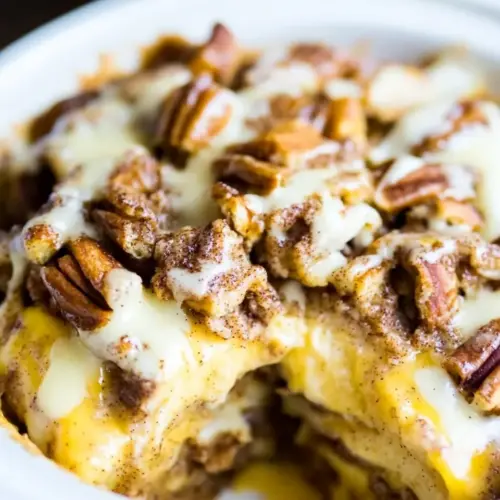
Crock Pot Cinnamon Roll Casserole
Crock Pot Cinnamon Roll Casserole blends gooey cinnamon roll spirals with a creamy custard made from eggs and half and half, finished with sticky icing and optional pecans. This easy make ahead brunch favorite delivers warm, bakery aromas and tender, caramelized edges, perfect for relaxed mornings or feeding a crowd. Try it for a fuss free treat that always disappears fast.
Equipment
- 6 quart slow cooker
Ingredients
- 2 (12-ounce) tubes cinnamon roll dough, each one cut in quarters Provide soft, pre-sweetened dough pieces that form the base and bulk of the casserole; cut quarters create bite-sized rolls that puff and bake evenly in the slow cooker, absorbing custard flavors while maintaining a tender interior and slightly caramelized edges.
- 3 eggs Bind the casserole components and create a rich, custardy texture; beaten eggs set during slow cooking to hold the bread pieces together and add protein and structure for a satisfying, sliceable dish.
- 1/2 cup half-and-half, or whipping cream Enrich the custard with fat and creaminess for a silky mouthfeel; half-and-half or whipping cream helps the eggs coat the dough and yields a luscious, tender bake with a richer flavor than milk would provide.
- 3 tablespoons maple syrup Introduce warm, amber sweetness and a subtle maple note that complements cinnamon; maple syrup sweetens the custard and contributes a touch of moisture and depth to the overall flavor profile.
- 2 teaspoons vanilla extract Add a fragrant, sweet backbone that enhances all other flavors; vanilla extract brightens the custard and amplifies the pastry-like aroma of the casserole without overpowering the spice notes.
- 1 teaspoon cinnamon Provide warm, aromatic spice that reinforces the cinnamon roll character; ground cinnamon infuses the custard and dough with classic flavor and pairs harmoniously with both the maple syrup and vanilla.
- 1/2 teaspoon nutmeg Contribute a warm, nutty edge and subtle complexity; nutmeg imparts a lightly sweet, slightly earthy spiciness that complements cinnamon and enhances the overall aromatic profile of the casserole.
- 1/3 cup chopped pecans, optional Offer crunchy texture and a toasty, buttery flavor when included; chopped pecans provide contrast to the soft casserole, add nutty richness, and can be sprinkled throughout or on top for added visual appeal.
Instructions
- Spray a 6-quart crock pot with cooking spray.: When you spray the inner pot, you create an easy release so the finished casserole lifts out more cleanly, and it prevents the edges from sticking and tearing. You should notice a faint sheen and a neutral scent from the spray; this step is small but important for presentation. If you skip this, the bottom and sides can cling, making serving messy. Avoid heavy greasing that pools, because it can make the edges overly greasy.
- Place cinnamon roll quarters evenly in crock pot.: As you arrange the quartered rolls, aim for an even layer with small spaces between pieces so the custard can soak in. Pressing them flat will change their texture, so leave them slightly puffy to preserve the spiral structure. You should see distinct pieces rather than one compact mass. A common mistake is piling them too high, which can prevent the centers from fully cooking; distribute them in a single, even layer.
- In a medium bowl, whisk together eggs, half-and-half, maple syrup, vanilla, cinnamon, and nutmeg.: Whisking melds the flavors and creates a smooth custard base. You will hear a soft whisking sound and see the mixture become homogeneous and slightly frothy on top. This step ensures even seasoning so every bite tastes consistent. Watch out for lumps; if the dairy is cold it can resist smooth mixing, so bring ingredients briefly toward room temperature for ease.
- Slowly pour on top of cinnamon rolls.: Pouring slowly allows the custard to sink into the layers instead of simply pooling, saturating the interiors for that tender middle. You should see the liquid seep between the spirals and darken the dough where it soaks in. If you pour too quickly in one spot, it can create uneven soaking, so distribute gently and go around the surface to encourage even coverage.
- Sprinkle pecans on top.: Scattering pecans before cooking gives them a chance to toast slightly and adds texture. You will feel a contrast when you press gently, and the nuts will brown a touch during the slow cook. If you add them after cooking instead, you lose the toasting effect, so add now for best crunch. A caution: too many nuts can overwhelm the sweet custard balance.
- Spoon one of the containers of icing that came with the cinnamon rolls on top.: Dabbing the included icing across the surface creates pockets that melt into a glossy, sweet finish as the casserole warms. You will see the icing soften and spread, leaving sticky ribbons. This gives the top a bakery style shine and helps attract guests to the table. Avoid over spreading to the edges where it can run into the crock and caramelize too deeply.
- Place lid on crock pot and cook on LOW for 2 1/2 to 3 hours. If your crock pot runs hot, check after 3 hours. Cinnamon rolls should be golden brown along the edge and no longer gooey in the middle.: During this slow cook, the appliance will emit a gentle hissing warmth and a heady cinnamon aroma will fill your kitchen. You want the internal texture to transition from doughy to set but tender, signaling doneness when edges are golden and the center is no longer gooey. One common mistake is opening the lid frequently, which causes heat loss and uneven cooking; trust the time window and only check near the end. If your unit runs hot, check after 3 hours to prevent overcooking.
- Once done, turn crock pot off and spoon second container of icing on top. Serve warm.: Turning the cooker off lets residual heat melt the top layer gently, and spooning the remaining icing creates a glossy, decadent finish that contrasts with the warm custard beneath. You will see it melt into shallow pools and create a ribboned glaze. Serve warm so the sugar softens and the flavors are most pronounced. A trap to avoid is letting it sit too long; the icing will sink and lose that fresh contrast if left overnight.
- Serve warm: Present the casserole while it is still warm so the texture is soft and the icing slightly melty, which makes each forkful comforting and indulgent. Guests will notice the steam and aroma immediately, and the contrast between the golden edges and soft center will be clear. If plated cold, the custard firms and the experience is less glossy, so aim for prompt serving. Reheating gently preserves the texture better than a high blast which can dry edges.
Notes
- Choose the right roll brand, I use a well known refrigerated brand and it gives predictable size and texture, which helps the custard absorb evenly and produces a uniform bake across the crock.
- Room temperature eggs and dairy, letting the eggs and half and half sit a few minutes out of the fridge helps them mix smoothly into the custard, reducing the chance of separation and ensuring an even set.
- Don’t overfill the crock, leave a little space at the top so the casserole can expand slightly without spilling, and so heat can circulate for an even finish.
- Resist frequent lid lifts, every time you open the crock you release heat and extend cooking time, which can lead to uneven texture or a less tender center.
- Toast nuts separately if desired, to control crunch and flavor, you can toast pecans in a skillet and sprinkle them on top after cooking for extra texture contrast.