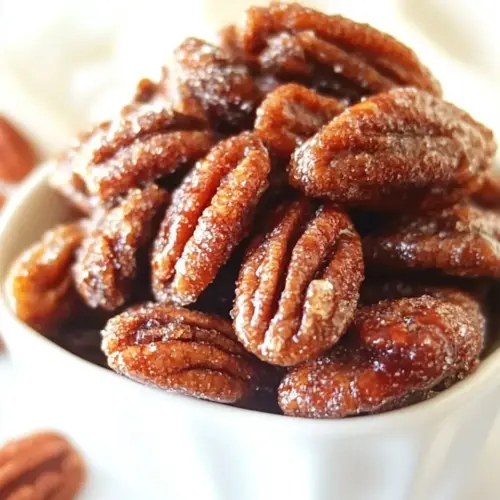
Crock Pot Candied Pecans
Crock Pot Candied Pecans are crunchy, sweet, and warmly spiced with cinnamon and vanilla, an easy snack or gift that fills the kitchen with irresistible aroma. Made with simple pantry ingredients and slow cooker technique, these candied nuts deliver a glossy, crackly coating and buttery nutty flavor. Perfect for holiday gatherings, salads, or homemade presents, they are worth making for their texture and effortless charm.
Equipment
- Slow Cooker
- Mixing Bowl
- Baking Sheet
Ingredients
- 4 cups raw pecan halves Provide a crunchy, buttery base and toasted nutty flavor that carries the candied coating; ensure pecans are fresh and evenly distributed for consistent cooking in the crock pot. Toast lightly beforehand if desired to deepen flavor and reduce excess moisture. Measure carefully to maintain the sweet-to-nut ratio that defines candied pecans.
- 1 egg white Whisk until frothy to create a sticky protein film that helps sugars and spices adhere to the nuts during cooking. Beat just until soft peaks or a glossy sheen appears to avoid rubbery texture when cooked. Use immediately after whipping for best binding performance.
- 1/2 cup brown sugar Sweeten and add a deep molasses note that complements the pecans and balances the granulated sugar; pack firmly when measuring for accuracy. Dissolve into the egg white mixture to create a rich, caramelized surface on the nuts during slow cooking. Adjust slightly for desired caramel depth without overpowering spice.
- 1 cup sugar Provide crystalline sweetness and help form the crisp, caramelized coating over the pecans when melted and cooked with liquids. Combine with brown sugar and water to create the syrup that will crystallize around the nuts as they cool. Ensure even distribution to prevent clumping or overly hard spots.
- 5 teaspoons cinnamon Add warm, aromatic spice that enhances the pecans and balances the sweetness; cinnamon also contributes subtle complexity to the coating. Mix thoroughly with the sugars to ensure even flavor on every nut. Adjust amount only slightly if a milder spice profile is preferred.
- 2 teaspoons vanilla Contribute a floral, vanilla aroma that rounds out the sweetness and deepens the overall flavor profile when stirred into the sugar mixture. Use pure vanilla for the most authentic taste and stir in at the end of mixing to preserve its volatile compounds. Small adjustments can tweak aroma without altering texture.
- 1/4 cup water Provide the liquid necessary to dissolve sugars and allow the mixture to coat the pecans evenly before the syrup reduces and crystallizes. Heat gently with sugars to create a cohesive glaze that will set around the nuts as it cools. Control the amount to avoid overly wet or under-syruped nuts.
Instructions
- How to make Candied Pecans: The air will start to smell warmly of toasted nuts as the sugars begin to caramelize, a sweet, dusty cinnamon perfume that tells you the process is underway. This initial overview sets expectations, and reminds you that patience matters here since low, even heat makes for a stable glaze. A common mistake is rushing to high heat which can scorch the sugars and produce a bitter note, so trust the gentle simmering sound and faint, toasty scent as your guide.
- Grease a slow cooker with nonstick cooking spray and add pecans to crock.: As you spray the inside of the crock, you will notice a faint chemical scent from the spray that quickly dissipates, leaving a slick surface so the pecan halves move freely as you stir. Even coating prevents sticking and hot spots, which is why I always tilt the bowl and use a paper towel to wipe excess spray around edges. Avoid using too much spray, because a heavy film can pool and change how the sugar adheres.
- Add egg white to a mixing bowl and beat until foamy.: When you whip the egg white , watch for soft peaks and a sheer glossy foam; it should hold light bubbles and look satiny. The visual cue helps you know the egg white will coat evenly. Overbeating to stiff peaks makes it harder to mix into the nuts and can create clumps, so stop when the foam is airy and slightly billowy.
- Pour onto pecans and mix well to evenly coat. Add sugars, cinnamon and vanilla and to slow cooker and mix well to evenly coat.: You will feel the texture change as the foamy egg white and sugars meet the pecan halves, the pieces becoming tacky and matte before the sugars begin to melt. Use a sturdy spoon to fold everything so the spices distribute evenly; the aroma should be sweet and warmly spiced. A common error is uneven mixing which leaves pockets of uncoated nuts, so take the time to lift and fold the entire mass, scraping the sides.
- Place a lid on the slow cooker and heat nuts on low for 2-1/2 to 3 hours. Around the 2-hour point, mix well and add water, which helps glaze the nuts. Then finish cooking.: The room will gradually fill with a toasty, sweet scent as the sugars dissolve and then start to recrystallize. When you stir at the two hour mark, you should hear a soft clinking as nuts shift and see the sugars turning tacky. Adding the water at this stage loosens any dry sugar pockets and encourages a glossy finish; too much water though will delay crystallization, so only use the quarter cup provided. Many people err by skipping the mid point stir, which can lead to uneven glazing and burnt spots near the edges, so be deliberate and thorough when you mix.
- Remove pecans from the crock pot and spread them (in a single layer) onto a baking sheet lined with parchment paper. Cool on a baking sheet.: As you spoon the nuts out, listen for that satisfying clatter and watch as they glint with a thin sheen that will dull as they cool and harden. Spreading them in a single layer ensures they dry and set rather than clumping together. If you pile them, the steam trapped between pieces keeps the coating soft and sticky, so resist crowding the pan.
- Remove from crock and spread onto a baking sheet lined with wax paper in a single layer. Cool on a baking sheet.: The cooling process is when the sugar truly crisps, and you will notice the surface change from glossy to matte as moisture leaves the coating. If any nuts are stuck together after cooling, gently pry them apart once fully set. A mistake here is moving them before they are cool enough, which can create misshapen clusters instead of separated candied pieces.
- Once cool, break apart any pecans and enjoy.: The final texture should be crisp and slightly crackly, with a warm cinnamon note and deep caramelized sweetness. Taste one to check for balance, and note the crunch that signals success. Avoid storing or packing the nuts too soon while still warm, which traps steam and makes them soft and tacky instead of crisp.
- Store in an airtight container.: You will hear the faint rustle of sugar as you pour the cooled pecans into a jar, and sealing them keeps out humidity that would soften the glaze. Store them in a cool, dry place for best longevity. A typical oversight is leaving them in open bowls, which exposes them to humidity and causes loss of crunch.
Notes
- Swap sugars carefully Use more brown sugar for a deeper molasses flavor, but keep the total sugar ratio the same to ensure proper crystallization.
- Adjust cinnamon level Increase or decrease the cinnamon to suit your taste, remembering it becomes more pronounced as the nuts heat and concentrate.
- Flavor infusion Stir in the vanilla at the end for a brighter aroma, or add it earlier for more integrated sweetness.
- Batch size Make a double batch in a wide crock for even cooking, but avoid overfilling which can prevent proper airflow and glazing.
- Gift presentation Once cooled, pack into airtight jars and add a ribbon, the nuts travel well and keep their crunch for gifting.