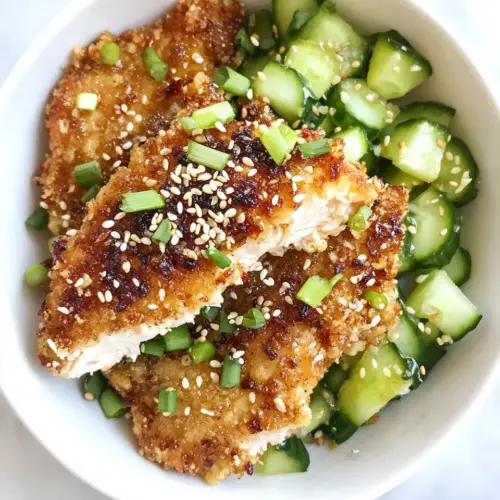
Crispy Togarashi Chicken with Sesame Cucumber Relish
Crispy Togarashi Chicken with Sesame Cucumber Relish is a crunchy, savory baked chicken recipe brightened by a cool, tangy cucumber relish. The panko and togarashi crust gives irresistible texture while toasted sesame and reduced sodium soy sauce add deep umami, making it an easy weeknight dinner that feels special. Try it for a quick gathering or a flavorful family meal.
Equipment
- Sheet Pan
- Parchment Paper
- Mixing Bowls
- Shallow plates
- Oven
Ingredients
- 2 tablespoons unseasoned rice vinegar Season lightly and balance acidity in dressings or marinades; helps tenderize chicken and brightens the cucumber relish with a mild, sweet-sour note.
- 1 teaspoons sugar Add subtle sweetness to balance the vinegar and soy flavors; dissolves quickly to harmonize the relish and breadcrumb seasoning.
- 1 teaspoon toasted sesame oil Provide a nutty aroma and depth to both relish and coating; a small amount enhances sesame character without overpowering other flavors.
- 1/2 teaspoon grated ginger Lend fresh, sharp heat and aromatic complexity; grated ginger helps cut richness and contributes a bright, warming undertone to the relish.
- 1 garlic clove, grated or finely minced Introduce pungent, savory complexity and a faint bite; finely minced garlic boosts umami and elevates both relish and marinade.
- 1/4 teaspoon kosher salt Enhance overall flavor perception and bring out other seasonings; a pinch helps seasons the relish components evenly.
- 1 large English cucumber, seeded and diced Contribute refreshing crunch and mild watery sweetness; seeding reduces excess moisture so the relish remains crisp and not soggy.
- 3 tablespoons minced red onion Provide a sharp, slightly sweet onion bite and textural contrast; minced red onion adds color and savory notes to the relish.
- 1 tablespoon toasted sesame seeds Add toasty flavor and visual appeal while reinforcing sesame notes; sprinkled on relish and finished chicken for crunch and aroma.
- 1 pound 2 boneless, skinless chicken breast, cut lengthwise, into thin cutlets Serve as the main protein, sliced thin for quick cooking and a tender bite; cutlets cook evenly and crisp well when breaded.
- 2 tablespoons all-purpose flour Aid adhesion of coating and create a light crisp crust; a thin flour layer helps the egg and breadcrumbs stick to chicken.
- 1 large egg, lightly beaten Bind coatings and add moisture for even breading; beaten egg helps panko adhere and promotes a golden crust when baked or fried.
- 1 cup whole wheat panko breadcrumbs Provide a hearty, crunchy coating with whole grain flavor; whole wheat panko forms a crisp, textured exterior for the cutlets.
- 1 teaspoons hichimi Togarashi, Japanese 7 Spice Blend Introduce warm, citrusy heat and umami typical of Japanese seven-spice; sprinkles into breadcrumbs to give the chicken its characteristic kick.
- 1/2 teaspoon kosher salt, divided Season precisely with layered salinity; dividing salt ensures the relish and chicken are both properly seasoned without over-salting.
- Freshly ground black pepper, to taste Add adjustable sharpness at the end and enhance overall flavor complexity; freshly ground black pepper provides subtle heat and aroma.
- 1 tablespoon toasted sesame seeds Reinforce sesame flavor and add finishing crunch; an additional sprinkle of toasted seeds boosts visual appeal and nutty taste.
- olive oil spray Assist in achieving a crisp, browned exterior with minimal oil; a light spray helps the breading crisp in the oven or air fryer.
- 4 teaspoons reduced sodium soy sauce Deliver concentrated savory depth and a salty, umami finish; reduced sodium soy sauce seasons and balances the relish or dipping sauce.
Instructions
- Preheat oven to 400 F degrees.: The moment you set the oven, you should notice the quiet hum of warming metal and the faint scent of dry air as the oven comes up to temperature. A properly preheated oven ensures the air inside is hot and consistent, which helps the panko crust brown evenly rather than slowly absorb oil and become soggy. One common mistake is putting the chicken in too early, which can cause uneven browning, so wait until the oven reads steady 400 F on your thermometer or display. You'll want your rack in the middle position for best circulation.
- In a small bowl, whisk together vinegar, sugar, sesame oil, ginger, garlic, and salt. Add cucumber, onion and sesame seeds and stir. Set aside to allow flavors to combine.: Right away you'll notice the sharp, bright scent of the rice vinegar softened by the sugar and deepened by toasted sesame oil. The grated ginger and garlic add a lively aromatics layer, while the diced cucumber will begin to exude a faint wetness as it marinates. This resting time lets the salt and sugar draw out moisture and fuse the flavors, so the relish tastes cohesive rather than disjointed. A frequent pitfall is over macerating the cucumber, which can make the relish watery, so stir gently and keep the pieces evenly sized. Texturally, the relish should remain crisp and slightly glossy.
- Season chicken cutlets with 1/4 teaspoon salt and pepper. Place flour on a shallow plate and egg in a medium bowl. Place panko, Togarashi, 1/4 teaspoon salt, pepper and sesame seeds on another shallow plate. Dredge each cutlet lightly in flour, then egg (shaking off excess), then panko mixture. Place on a sheet pan covered in parchment. Spray cutlets lightly with olive oil and bake for 20 minutes, rotating pan halfway through.: As you season and set up your dredging station, you'll sense the ritual rhythm of assembly. The light dusting of flour creates a dry surface for the beaten egg to grab onto, and the panko mixed with hichimi Togarashi and sesame seeds forms the crunchy exterior that will crisp in the oven. When you press the panko onto the cutlet, you should feel it adhere without packing it down, which preserves air pockets that brown. On the sheet pan, the sprayed oil will begin to heat and sizzle around the edges, producing that toasty aroma mid bake. Rotate the pan at the halfway mark so the browning is uniform; if one side gets too dark it indicates uneven heat, which you can fix by repositioning the pan. Avoid crowding the pan, or the cutlets will steam and fail to crisp properly.
- Top each cutlet with about 1/2 cup relish, 1 teaspoon soy sauce and sriracha (if desired). Serve.: The first sensory cue here is contrast, the warm, crunchy crust meeting the cool, fragrant relish. Spoon the relish so it sits atop the baked crust rather than soaking into it, preserving the texture contrast. The reduced sodium soy sauce adds a glossy savory finish and umami echo; if you use sriracha sparingly you'll add a vinegary heat that lifts the flavors without overwhelming them. A common misstep is adding the relish too early, which softens the crust, so wait until you're ready to serve. On the plate, the dish should present a lovely interplay of color, with pale green cucumber against golden panko, and you should hear a gentle crunch when you cut into the cutlet.
Notes
- Boost the heat: If you want more warmth, fold extra hichimi Togarashi into the panko, but add it gradually so you keep balance with the relish.
- Make it extra toasty: Toast the panko briefly in a dry skillet before mixing with spices to deepen the nutty crunch of the crust.
- Keep the relish crisp: Seed the cucumber and pat it dry with paper towel to reduce excess moisture that could soften the crust.
- Serve sliced: For gatherings, slice the cutlets on the bias so guests can easily pick up pieces, and spoon relish on top for neat, bite sized portions.
- Swap breadcrumbs sparingly: Whole wheat panko adds nuttiness and texture, but if you substitute regular panko, adjust seasoning to maintain depth.