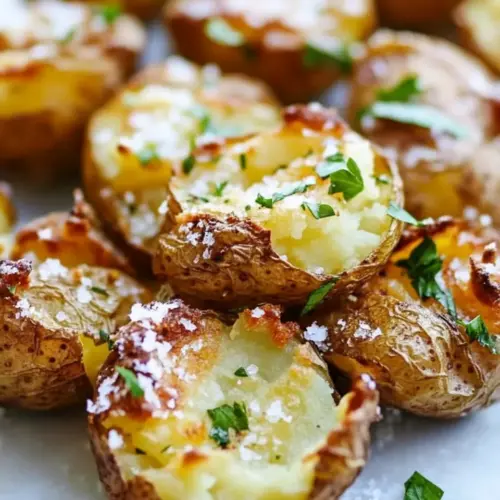
Crispy Smashed Potatoes
Crispy Smashed Potatoes offer golden, crunchy edges and a pillowy interior, finished with aromatic garlic and fresh herbs. This easy, flavorful side is ideal for an easy weeknight dinner or a crowd pleasing addition to a casual gathering, delivering big texture and buttery herb notes. Make them for reliable comfort with a refined touch.
Equipment
- Large Pot
- Rimmed Baking Sheet
- Glass or mason jar
- Small Pan
- Colander
Ingredients
- 1.5 lb . baby Yukon Gold potatoes Cook gently until tender and sturdy enough to smash; contributes the creamy interior and thin skins that crisp beautifully when roasted. Provides the bulk and texture of the dish while absorbing flavors from oil, butter, and herbs.
- Kosher salt Season liberally to enhance and balance flavors throughout the potatoes; helps draw out moisture during cooking and elevates the savory profile. Used to taste at multiple stages to ensure proper seasoning.
- 2 tbsp olive oil Coat the potatoes before roasting to promote even browning and crisp edges; supplies a clean, fruity fat that withstands high heat. Works with butter to create a golden, crisp exterior while aiding in herb infusion.
- 4 tbsp . melted butter Melt and drizzle for rich flavor and tender mouthfeel; contributes buttery depth and helps achieve a brittle, flavorful crust when combined with oil. Also aids in carrying garlic and herb flavors across the potatoes.
- 2 cloves garlic minced Infuse with pungent aromatic flavor when mixed into the butter or scattered on top; provides sharp, savory notes that complement the richness of butter and potatoes. Use minced form to distribute intense garlic flavor evenly.
- 1 tsp . fresh thyme leaves Add bright, slightly floral herbiness to cut the richness; fresh thyme leaves deliver subtle citrusy and earthy notes that pair well with potatoes and butter. Sprinkle before or after roasting for aromatic lift.
- 1 tsp chopped rosemary Offer resinous, pine-like aroma and a savory, slightly peppery flavor; chopped rosemary brings a robust herbal backbone that stands up to high-heat roasting. Use sparingly to avoid overpowering the dish.
Instructions
- Preheat oven to 425°. In a large pot, cover potatoes with water and add a generous pinch of salt. Bring water to a boil and simmer until potatoes are tender, about 15 minutes. Drain and let sit until cool enough to handle.: You will immediately notice the oven begin to radiate steady, dry heat, which is essential for crisping the potatoes. A properly heated oven ensures the oil and surfaces sizzle on contact, creating golden edges instead of soggy patches. If the oven is not hot enough the skins will brown slowly and can become leathery rather than crisp. Make sure the rack is centered so air circulates evenly, and avoid opening the door often, which cools the oven and delays browning.
- On a large rimmed baking sheet, toss potatoes with oil, season with kosher salt. Using the flat bottom of a glass or mason jar, press down on potatoes to smash flat.: As the pot warms, the scent of warm starch emerges and the surface of the water will shimmer. Salting the boiling water seasons the potatoes from the inside out, which matters more than you might think for final flavor. A typical mistake is under-salting the water, which makes the finished potatoes taste flat despite later seasoning. Use enough water to cover the potatoes by at least an inch so they cook evenly.
- Bake until bottoms of potatoes are beginning to crisp and golden, about 20 minutes.: You will hear a full rolling boil transform into a gentler simmer, and a fork will slide into the largest potato with little resistance when they are done. This stage is where the interior becomes pillowy, and timing matters, because overcooking can make them mushy and difficult to smash neatly. Check the potatoes at around 12 minutes to avoid overdoing it, especially if they vary in size.
- While potatoes are cooking, melt the butter in a small pan over low heat. When butter is melted, stir in the garlic and herbs. Remove from heat and set aside.: The steam escaping from the colander will smell faintly of starchy potato and salt. Letting them rest briefly firms the surface so they do not crumble when smashed. If you try to press them while they are too hot they may break apart, making uneven shapes and reducing crisping surface. Use a towel under your baking sheet to steady it when you work.
- Spoon the melted butter, garlic, rosemary and thyme mixture over the potatoes, brush to evenly coat them.: When you drizzle olive oil and toss, the potatoes gleam and the oil helps create contact points for browning. Even coating ensures each edge crisps, and the salt beginning here layers flavor. A common misstep is overcrowding the pan, which traps steam and prevents crisping, so give each potato breathing room on the sheet.
- Return potatoes to oven for 5 minutes. Serve immediately.: The sound is a gentle crack as the roastable surface spreads, exposing nooks and ridges that will brown. This action is key to maximizing the crunchy edge, because it increases the surface area touching the hot sheet. If you press too thin they can dry out, and if you press unevenly some bits will brown faster than others, so aim for consistent, slightly flattened discs.
- Bake until bottoms are beginning to crisp and golden about 20 minutes: During this bake you will smell toasty notes and see the undersides take on a deep golden hue where oil has concentrated. This stage creates the essential crunchy baseline before the butter finish. Avoid opening the oven frequently, which cools the surface and slows the Maillard reaction responsible for browning. If you notice smoke, your oven may be hotter than labeled; reduce temperature slightly.
- Melt the butter in a small pan over low heat: The butter will melt to a glossy pool and release a warm, dairy aroma. Gentle heat preserves its sweet nuttiness, which we want to mingle with the garlic and herbs. Overheating the butter will brown it quickly and can scorch the garlic, introducing bitterness. Keep the heat low and watch closely.
- Stir in the garlic and herbs then remove from heat and set aside: As the minced garlic meets warm butter, it blooms fragrant and perfumed oils, and the herbs release piney and floral notes. Removing the pan from heat keeps the garlic from burning while allowing flavors to infuse. A frequent error is letting the garlic sizzle at high heat until it darkens, which yields a bitter finish, so stir and retreat from the heat promptly.
- Spoon the melted butter garlic rosemary and thyme mixture over the potatoes and brush to evenly coat them: When you spoon the mixture over the hot potatoes you will see the butter pool into crevices and the herbs cling to rough edges, coating each crisp patch. This step builds flavor and glossy visual appeal. If you pour too much in one spot you can cause soggy areas, so brush gently and distribute evenly. Taste a small piece to check seasoning before the final crisp.
- Return potatoes to oven for 5 minutes: This short final blast sets the butter into the crust and toasts the herb bits, creating a final lift in aroma. You will notice an intense savory scent and a last round of sizzling as moisture evaporates and edges firm. Removing them too soon can leave the topping unintegrated, while leaving them too long risks overbrowning the garlic. Five minutes should finish them without crossing into bitter territory.
- Serve immediately: When you plate them, the sound is the soft crackle of cooled crisp edges meeting a fork, and the aroma is warm and herbaceous. Serving hot is crucial because the contrast between crunchy outside and tender inside is most pronounced right out of the oven. If you hold them for too long they will soften as steam redistributes, so plan timing so they reach the table at peak texture.
Notes
- Add a citrus lift by stirring a little lemon zest into the melted butter after you remove it from the heat; the bright oils lift the richness and add a pleasant contrast to the savory herbs.
- Swap herbs seasonally by using more thyme in spring and a touch more rosemary in colder months; this subtly shifts the aroma profile to match other seasonal dishes on your table.
- Make them extra crispy by preheating the baking sheet in the oven so the potatoes hit a hot surface immediately, which encourages fast searing and crisper bottoms.
- Keep them dairy forward by using clarified butter or ghee if you want richer flavor without burning points; it will brown beautifully while carrying the herb and garlic notes.
- Serve with a dipping sauce by pairing a small bowl of seasoned olive oil or a simple herbed yogurt for contrast; the creaminess pairs nicely with the crunchy bites.