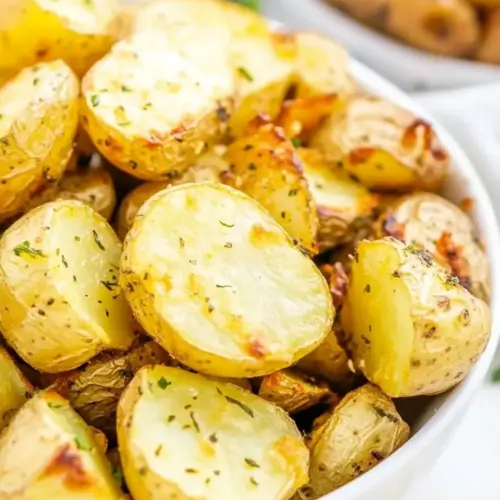
Crispy Oven Roasted Baby Potatoes
Crispy Oven Roasted Baby Potatoes deliver golden, crunchy exteriors and creamy centers with aromatic rosemary and garlic. This easy weeknight side is perfect for busy evenings and scales well for guests, making it an ideal easy weeknight dinner or potluck favorite. Try it for a reliably delicious, fuss free potato that always impresses.
Equipment
- Baking Sheet
- Parchment Paper
- Large Bowl
- Knife
Ingredients
- 2 pounds baby potatoes I used baby Yukon Gold Potatoes Provide the base and bulk of the dish with tender, creamy interiors that crisp nicely when roasted; choose baby Yukon Gold for their thin skins and buttery flavor. Cut larger pieces evenly to ensure uniform cooking and toss with oil and seasonings so surfaces brown well.
- 2 tablespoons fresh rosemary see notes if using dried rosemary Infuse aromatic, woodsy flavor that permeates the potatoes during roasting and complements the olive oil; fresh rosemary sprigs release fragrant oils when slightly crushed. If using dried rosemary, grind or crush it to avoid tough, sharp bits and add earlier so heat can bloom the herb.
- 2 tablespoons minced garlic see notes if using fresh garlic or garlic powder Add a pungent, savory depth that brightens and enhances the roasted potatoes; minced garlic browns quickly and creates delicious caramelized bits. When using fresh garlic, stir it into the oil to coat the potatoes well; if using garlic powder, sprinkle evenly for a milder, uniform garlic note.
- 2 tablespoons olive oil Coat potato surfaces to promote even browning and crisp texture while carrying flavors like rosemary and garlic; olive oil also helps seasonings adhere. Use just enough to lightly gloss each potato piece without pooling, ensuring hot oven heat produces a golden crust.
- 1 teaspoon salt Season thoroughly to bring out the natural flavors and balance the richness from the oil; salt also helps draw moisture to the surface for better browning. Adjust quantity to taste and consider finishing with a small pinch more after roasting if needed.
- 1/2 teaspoon pepper Provide mild heat and subtle sharpness to counterbalance richness and enhance overall flavor; freshly ground black pepper adds a fragrant, peppery edge. Sprinkle evenly before roasting so toasted pepper flavors develop and meld with the other seasonings.
Instructions
- Preheat the oven to 425 degrees Fahrenheit. Line a baking sheet with a piece of parchment paper or a reusable silicone mat and set aside.: As the oven warms you will notice the faint hum and eventual steady glow that signals consistent heat, which is crucial for rapid surface browning. Preheating ensures the moment the potatoes hit the pan they begin to crisp, rather than slowly warming and steaming. If the oven is not fully up to temperature you risk soggy skins, so wait until it reaches the target. A common error is placing potatoes in a cold oven which yields pale, limp edges instead of the desired bronzed finish.
- Slice the potatoes in half so they are all about the same size, slicing any especially large baby potatoes in quarters as needed. Dry the potatoes well with a clean towel or paper towels then place in a large bowl.: Cutting creates more surface area for browning, and drying removes moisture that would steam rather than roast. The feeling of working the knife through a firm potato and hearing the crisp cut is satisfying, and visually you should aim for uniform pieces so they cook evenly. Wet potatoes will resist browning and become mushy, so pat them thoroughly. A frequent slip up is skipping the drying step, which undermines crispness.
- Roughly chop the rosemary into small pieces. Drizzle the olive oil over the top of the potatoes. Add rosemary, garlic, salt and pepper to the potatoes. With clean hands or a spatula, mix the potatoes and the oil until completely coated.: When you toss everything together you should smell the herbal, garlicky aroma blooming and see the glossy sheen of olive oil coating each piece. This film facilitates even browning and flavor adhesion. Mixing by hand helps you feel the texture and ensures full coverage. Avoid over mixing where herbs clump and leave pockets of seasoning; also, using too much oil will cause splatter and greasy patches that inhibit crisping.
- Pour the potatoes onto the baking sheet. Flip the potatoes so they are all cut side down on the baking sheet to help them to become crispier.: Arranging the cut sides down presents the fleshy surface directly to the hot metal, promoting Maillard reactions that create a golden crust. You should hear a faint sizzle as they touch the pan, and see small shimmering oil pools around them. Give them space so each piece has exposure to heat; overcrowding traps steam and yields soft skins. A typical mistake is piling them close together, which results in steaming instead of roasting.
- Place the potatoes in the oven. Roast for 15 minutes, then flip them and continue cooking for an additional 15-20 minutes. Potatoes will be fork tender on the inside, and crispy golden brown on the outside. Serve and enjoy!: During roasting the kitchen will fill with roasted garlic and herb scents, and the potatoes will transform from pale to a deep golden hue with blistered edges. After the first interval flipping redistributes heat and encourages even color, and the second interval deepens the crispness. Test by piercing with a fork for tender resistance and by peeking at color; if they are not yet bronzed, continue in short increments. Overcooking can dry them out, while undercooking leaves a raw center, so err on checking visually and by texture during the final minutes.
Notes
- Swap the herb Try thyme or oregano if you do not have rosemary, both provide a savory lift though with a different aromatic profile, and they pair nicely with roasted potatoes.
- Change the garlic form Use fresh minced garlic for bold roasted notes, or garlic powder for milder, evenly distributed flavor; adjust amounts because powder is concentrated.
- Mix potato types Combine baby potatoes varieties like red, Yukon, and fingerlings for visual color contrast and subtle textural differences on the plate.
- Boost heat Add a pinch of crushed red pepper if you want warmth, scattering it sparingly so the spice does not overpower the herb and potato flavors.
- Finish with acid Squeeze lemon or sprinkle a touch of vinegar after roasting to brighten the dish and cut through the oiliness, making each bite pop.
- Make them ahead Roast fully, then reheat briefly in a hot oven to restore crispness; avoid microwaving which softens them excessively.
- Season boldly Finish with flaky sea salt for texture contrast, adding it right before serving to preserve the crunch.