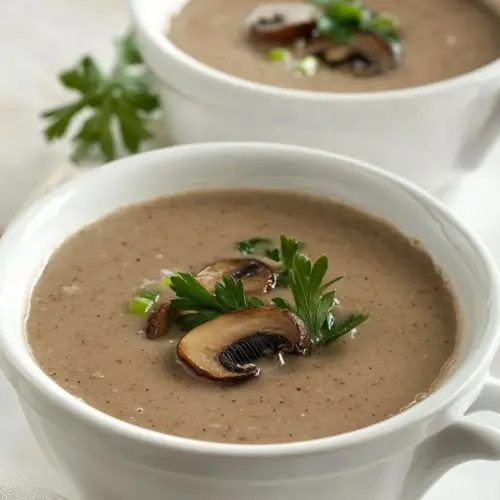
Cremini Mushroom Soup
Cremini Mushroom Soup is a creamy, savory bowl that highlights earthy mushrooms and aromatic onion. Quick and easy for weeknights, it combines rich chicken broth with sautéed cremini mushrooms and a bright finish of chopped flat leaf parsley and grated parmesan. This comforting soup is perfect for cold evenings and makes a persuasive reason to cook simply and well.
Equipment
- Medium soup pot
- Wooden Spoon
- Immersion blender or countertop blender
- Measuring Cups
Ingredients
- 1/2 cup onion, diced Sauté gently to build a sweet and savory base for the soup, softening the texture and releasing natural sugars that enhance overall flavor. Retain some translucency rather than browning to maintain a light broth character. Integrate evenly with aromatics to support the mushroom profile.
- 1 garlic clove, minced Mince finely to release pungent oils that provide depth and a subtle spicy pungency when cooked. Add early in the cooking process to mellow sharpness and meld with the onion and oil. Contributes aromatic complexity without overpowering the mushrooms.
- 1 tablespoon olive oil Heat briefly to create a hot medium for sweating the aromatics and mushrooms, imparting a smooth mouthfeel and slight fruity notes. Use enough to coat the pan for even cooking and to carry fat-soluble flavors into the broth. Avoid overheating to prevent bitterness.
- 4 cups chicken broth, low sodium Simmer steadily to deliver the liquid foundation and savory backbone for the soup, providing body and umami while allowing flavors to meld. Choose low-sodium to better control seasoning and balance with other components. Adjust quantity to achieve desired soup thickness.
- 1 1/2 pounds cremini mushrooms, diced Dice uniformly to produce tender mushroom pieces that release earthy, umami-rich juices into the broth while retaining pleasant bite. Brown lightly if desired for deeper flavor, or simply simmer to emphasize a clean mushroom taste. Serve as the primary flavor and texture element of the soup.
- 1/4 cup flat-leaf parsley, fresh, chopped Chop finely and stir in toward the end to add a bright, herbaceous contrast that lifts the overall flavor profile. Use fresh leaves for the best aromatic impact and a burst of color. Acts as a finishing herb that balances richness.
- 1/2 teaspoon black pepper Grind freshly and season gradually to introduce mild heat and a fragrant, slightly floral spice that complements mushrooms. Add a portion during cooking and adjust at the end for optimal balance. Enhances overall complexity without dominating.
- salt, to taste Season sparingly to adjust final taste and bring all components into harmony, being mindful of the low-sodium broth base. Add incrementally and taste as the soup reduces to avoid over-salting. Finishes the dish according to personal preference.
- parmesan, grated, for garnish Grate finely and sprinkle as a garnish to add a salty, nutty, umami-rich finishing touch that complements the earthy mushrooms. Use sparingly to contribute creaminess and depth without overwhelming the broth. Melts slightly on hot soup for a silky finish.
Instructions
- Using a medium soup pot, saute onion and garlic in the olive oil until translucent, about 6 minutes. Pour in the chicken broth, and add the mushrooms, parsley, and salt and pepper. Cook at a gentle boil until the mushrooms are wilted, approximately 10 minutes. Add salt to taste.: The kitchen will fill with a sweet, savory aroma as the onion softens and the minced garlic releases its fragrance, signaling that the flavor base is forming. You should see the pieces of onion turn glossy and nearly see through, and you may hear a gentle, steady sizzle rather than a hard crackle, which means the heat is right. This step matters because slowly softened aromatics develop sugars that balance the mushrooms and broth. If you rush with too high heat, the edges of the onion can brown unevenly and introduce a toasty bitterness, so keep the flame moderate. Stir occasionally with a wooden spoon to prevent sticking, and watch the color change carefully so you stop when translucency is reached. Smell is your best guide here; it should be sweet and mellow, not sharp. A good way to avoid burning the garlic is to add it after the onion has already softened for a couple of minutes, then cook just until fragrant, about 30 to 45 seconds.
- Alternately, if you prefer a smoother soup you can puree the soup. To puree, use an immersion/hand blender placed in the pot or fill a blender halfway each time, holding down the lid with a kitchen towel, and pureeing the soup until smooth, starting on low and increasing to high. A touch of milk (dairy or alternatives) can be blended into the pureed soup for a creamier consistency.: When the chicken broth hits the pot it transforms the sauté into a soup, releasing a warm savory steam that carries the mushroom scent. Immediately after adding the broth, stir in the diced cremini mushrooms so they begin absorbing heat and flavor. The flat leaf parsley will look brighter once mixed in, and the initial pinch of salt and grind of black pepper starts the seasoning process. This matters because introducing liquid at this point deglazes any fond on the pot, unlocking concentrated flavors. A common mistake is to add too much salt at the start; it is safer to under season and adjust later since flavors concentrate as the soup reduces. Visually, you want the mushrooms to float and bob in the broth before they begin to soften, and the aroma should shift to a fuller, rounder note.
- Serve topped with a small amount of Parmesan cheese and additional parsley for garnish.: As the pot simmers gently you will hear a quiet bubbling and see tiny movement across the surface, which indicates even heat distribution. The mushrooms will shrink and become darker, releasing their juices into the liquid, creating a deeper colored broth. Texture is important here, because overcooking can make mushrooms mealy while undercooking leaves them toothsome and raw tasting. The goal is tender mushrooms that still have body; they should give easily to a spoon. Stir a few times to ensure even cooking. If the heat is too high you will reduce the broth too quickly and risk concentrating saltiness, so maintain a gentle active simmer. Smell for a richer, rounded aroma; taste a mushroom to confirm tenderness.
- Add salt to taste: After the primary cooking the flavors will have concentrated, so now is the time to balance the soup. Taste a spoonful once the mushrooms are tender and add more salt only as needed, then re-taste after a minute so the seasoning can meld. This finishing salt step matters because it brings forward the mushroom umami and ties the ingredients together. A common mistake is to salt aggressively early and not adjust later; small incremental additions prevent over seasoning. Remember that if you plan to top the bowl with parmesan you may want to be slightly conservative with salt since the cheese adds salinity.
- Alternately, if you prefer a smoother soup you can puree the soup: When you choose to transform the texture, the scent shifts to a concentrated, creamy aroma as the solids break down. Using an immersion or countertop blender changes the mouthfeel to velvety and cohesive, and a splash of milk can be added to increase silkiness while softening the flavor edges. This technique matters because it creates a luxurious finish and a homogenous body that carries toppings evenly. A frequent pitfall is overheating the soup before blending; steaming, very hot liquid can erupt from a blender, so work in smaller batches and vent lids with a kitchen towel for safety. Start blending at low speed and work up so you maintain control over texture and avoid splatter.
- To puree, use an immersion/hand blender placed in the pot or fill a blender halfway each time, holding down the lid with a kitchen towel, and pureeing the soup until smooth, starting on low and increasing to high: The process will create a richer aroma as air folds into the liquid and the texture becomes silky. If using a countertop blender, fill it only halfway to prevent pressure build up, and place a towel over the lid while holding it down for safety. Immersion blending allows better control for a slightly textured finish. This step is important because the way you puree dictates the final viscosity and silkiness. Common mistakes include overfilling the blender or starting at high speed which can cause soup to erupt and create a mess. Blend in short pulses if you want to retain a little texture, and stop to check the consistency frequently.
- A touch of milk can be blended into the pureed soup for a creamier consistency: Adding a small amount of milk, dairy or alternatives, softens flavors and lends a silkier mouthfeel, making the soup feel richer without heavy cream. Incorporate it gradually while blending until you reach the desired body, and remember that a little goes a long way. This adjustment matters because it can tame any sharpness and make the soup feel more indulgent. The common error is to add too much liquid, thinning the soup excessively; add slowly and judge by the spoon. Warm the milk slightly before adding to avoid cooling the soup too much and to help it integrate smoothly.
- Serve topped with a small amount of Parmesan cheese and additional parsley for garnish: The final presentation should sparkle with a sprinkle of grated parmesan and the bright green of chopped flat leaf parsley , adding contrasting texture and a fresh note. The cheese melts slightly on the hot surface, offering bursts of salty, nutty flavor with each spoonful. This matters because the garnish elevates the bowl from simple to finished. A common mistake is to add too much garnish which overpowers the delicate mushroom flavor, so keep it light and thoughtful. Serve in warmed bowls to preserve temperature and aroma, and consider a drizzle of good olive oil if you want an extra glossy top.
Notes
- Adjust the texture: If you want a heartier bowl, skip pureeing and leave the cremini mushrooms in chunks. For a velvety finish, blend and add a splash of milk while pureeing to reach a silky consistency.
- Control the salt: Because the recipe uses chicken broth, start with less salt and finish seasoning after simmering. Taste and add small increments to avoid oversalting.
- Boost the umami: Sauté the mushrooms until they begin to brown slightly for a deeper flavor. Avoid overcrowding the pot so they caramelize rather than steam.
- Finish smartly: Add freshly grated parmesan just before serving for immediate flavor lift. It melts gently on the hot surface and enhances mouthfeel without needing cream.
- Keep aromatics gentle: Cook the onion slowly until translucent to develop sweetness. High heat can lead to uneven cooking and an unpleasant bitter edge.
- Blend safely: If using a countertop blender, work in small batches and hold a towel over the lid to prevent hot liquid from escaping. Start on low and increase speed gradually.