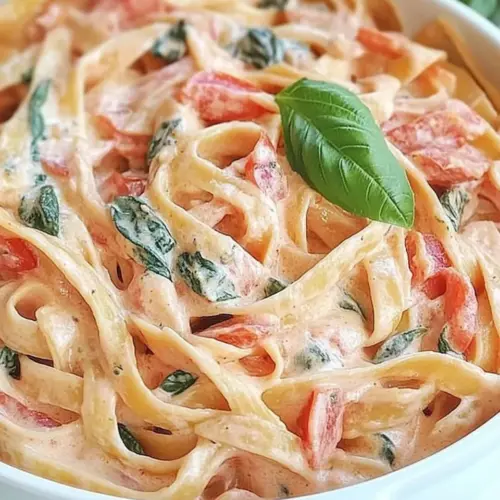
Creamy Tomato and Basil Pasta
Creamy Tomato and Basil Pasta is a rich, creamy, and comforting pasta made with crushed tomatoes, heavy cream, and fresh basil. This easy weeknight dinner delivers a smooth, velvety sauce and bright herb notes, perfect for busy evenings when you want something indulgent yet simple. Make it to sate a crowd or to treat yourself to a quick, satisfyingly saucy meal.
Equipment
- Large Pot
- Large Skillet
- Colander
- Wooden Spoon
Ingredients
- 1 tbsp butter Melted to provide a rich, silky base for the sauce and to help gently sauté aromatics; adds a subtle, creamy flavor that balances acidity. Use modest heat to avoid browning and preserve the butter's delicate taste. Incorporate at the start to coat the pan and enhance mouthfeel.
- 5 garlic cloves, minced Minced finely to release a pungent, aromatic backbone that infuses the sauce with savory depth; provides bright, garlicky notes that cut through the cream and tomatoes. Add early in the cooking process so the flavors mellow and blend without burning. Adjust quantity to taste for more pronounced garlic character.
- 1 tsp Italian seasoning Added as a fragrant blend of herbs to impart classic Italian flavors like oregano, thyme, and basil; enhances overall herbaceousness and ties tomato and cheese elements together. Sprinkle in while the sauce simmers to bloom the oils and release aromatics. Use sparingly to avoid overpowering fresh basil.
- 28 oz crushed tomatoes Poured in as the primary tomato component that delivers bright acidity, body, and natural sweetness to form the base of the sauce. Simmered to concentrate flavors and merge with cream for a balanced, velvety texture. Choose quality crushed tomatoes for a consistent, slightly chunky sauce.
- 1 cup heavy cream Poured in to create a luscious, creamy texture that mellows tomato acidity and enriches the sauce with fat. Stir in gradually and heat gently to prevent separation while achieving a smooth, decadent consistency. Adjust amount for desired creaminess and richness.
- 1 cup Romano cheese, grated Grated and folded in to contribute savory, salty, and nutty notes while helping thicken the sauce for a cohesive, cheesy finish. Add near the end of cooking so the cheese melts evenly without clumping. Taste as you go to balance saltiness with other seasonings.
- 1 tsp salt Seasoned to enhance overall flavor and balance sweetness and acidity from the tomatoes; helps bring out the natural flavors of the sauce components. Sprinkle in gradually and adjust after simmering and tasting. Be mindful of saltiness from cheese when finalizing seasoning.
- 1/2 tsp pepper Ground and added to introduce mild heat and a subtle earthy bite that complements the herbs and tomato base. Use to taste to lift flavors without overwhelming the dish. Add alongside salt and taste toward the end to fine-tune seasoning.
- 1/2 tsp garlic powder Sprinkled as an additional garlic accent that deepens the overall savory profile without adding moisture; reinforces garlic flavor in a more concentrated, shelf-stable form. Combine with fresh garlic for layered garlic notes. Use cautiously to avoid overpowering delicate cream and basil flavors.
- 1/2 cup chopped fresh basil Chopped and stirred in to provide fresh, bright herbal aroma and a clean, peppery finish that contrasts the richness of cream and cheese. Add toward the end to preserve color and fragrance, using some for garnish to enhance visual appeal. Adjust quantity for desired herb intensity.
- 16 oz penne pasta Boiled until al dente to deliver a sturdy, textured base that soaks up the creamy tomato sauce and carries all flavors in each bite. Drain and reserve a bit of pasta water to loosen the sauce if needed. Toss with sauce off heat so pasta absorbs flavors without overcooking.
Instructions
- Prepare the pasta per package directions.: The moment your water comes to a lively boil, the scent of hot starch fills the kitchen and you will hear the vigorous bubbling that tells you it is time to add the penne pasta . Cooking to al dente gives the pasta body and prevents it from dissolving into the sauce when tossed. A common mistake is overcooking the pasta , which leads to a mushy mouthfeel and a diluted final dish. If you like, reserve a cup of the starchy cooking water before draining, because that liquid can help loosen or bind the sauce later.
- Over medium high heat, melt the butter. Add the garlic and Italian seasoning. Flash cook the garlic, about 1 minute, and then add crushed tomatoes. Add heavy cream and bring to a simmer.: When the butter melts it releases a soft nutty aroma and tiny bubbles that indicate it is hot enough to bloom flavor. Adding the minced garlic and the Italian seasoning at this stage lets their oils infuse the fat, creating a fragrant base. As the garlic flashes for roughly 1 minute you should smell its sweetly toasted notes and see edges just turning translucent. Add the crushed tomatoes once that scent peaks, because adding them too late misses the chance for those aromatics to meld. Watch out for burning the garlic , which will produce bitterness; if you smell a charring note reduce the heat immediately and start again with fresh garlic if needed.
- Add shredded Parmesan cheese, salt, pepper, and garlic powder, then immediately reduce to low heat and stir continuously, until the cheese melts and the sauce is smooth. Then stir in the basil giving it 2-3 minutes to wilt.: As you pour in the heavy cream the sauce will deepen in color and take on a glossy sheen while emitting a warm, almost vanilla whisper from the dairy. Bringing it to a gentle simmer allows the proteins and fats to integrate with the tomato solids, softening acidity and building creaminess. Keep the heat controlled, because a rapid boil can cause the cream to separate and alter the texture. A common pitfall is overheating; if you see tiny fat globules forming, reduce the heat and whisk gently to re-emulsify.
- Remove from heat and toss pasta with the sauce. Garnish with additional parmesan and/or fresh basil. Enjoy!: Right after the cream simmers, add the grated Romano cheese along with the seasoning. You will notice the sauce thickening as the cheese slowly melts, releasing a savory aroma and creating a silky ribbon when you stir. Reducing to low heat is essential so the cheese incorporates smoothly without clumping or becoming grainy. Stirring continuously helps maintain a uniform texture and distributes saltiness evenly. Avoid adding cheese to a roaring boil, because the high heat often causes the dairy and cheese proteins to separate, making the sauce grainy.
- Then stir in the basil giving it 2 to 3 minutes to wilt.: When you fold in the chopped fresh basil off heat or on very low heat, you will be greeted by a bright green perfume that lifts the sauce. Allowing 2 to 3 minutes for the leaves to wilt releases essential oils and integrates that herbaceous brightness without losing color. If basil goes into high heat for too long it darkens and loses aroma, so time this step near the end. Avoid chopping the basil too far in advance, as bruised leaves will turn limp and less fragrant.
- Remove from heat and toss pasta with the sauce.: Once you take the pan off the stove, the sauce continues to thicken slightly and the steam carries a mix of creamy and tomato notes. Tossing the warm penne pasta into the sauce lets the tubes catch and hold the sauce in every bite, creating a unified texture. If the sauce seems too thick, add a splash of reserved pasta cooking water to bring it to the desired consistency. A frequent error is adding all the liquid at once; add sparingly so you do not water down the flavors.
- Garnish with additional parmesan and or fresh basil. Enjoy!: Finishing the plate with a dusting of extra grated Romano cheese and a few whole basil leaves adds visual contrast and a final hit of savory and herbal aroma. The cheese offers an initial salty note that melts slightly from the residual warmth, while the basil gives a fresh perfume as you lift the fork. A common misstep is serving without tasting first, so always check seasoning again before garnishing and serving.
Notes
- Reserve pasta water: Keep a cup of cooking water before draining the penne pasta. The starchy water helps bind the sauce to the pasta and adjust consistency without diluting flavor. Add it a little at a time until the sauce coats the pasta beautifully.
- Control your heat: When combining heavy cream and Romano cheese, reduce the heat to low to ensure a silky texture. High heat can cause separation, making the sauce grainy, which is the most common mistake at this stage.
- Fresh basil timing: Add chopped basil at the very end to keep its bright flavor and color. Overcooking will wilt the leaves into a muted green and diminish their aromatic lift.
- Use good canned tomatoes: A quality can of crushed tomatoes gives a cleaner, sweeter base for the sauce. Inferior canned tomatoes can taste metallic or overly acidic, so choose brands you trust.
- Adjust salt last: Taste after tossing the pasta with the sauce because the Romano cheese and the pasta water can change perceived saltiness. Finish seasoning cautiously to avoid over salting.