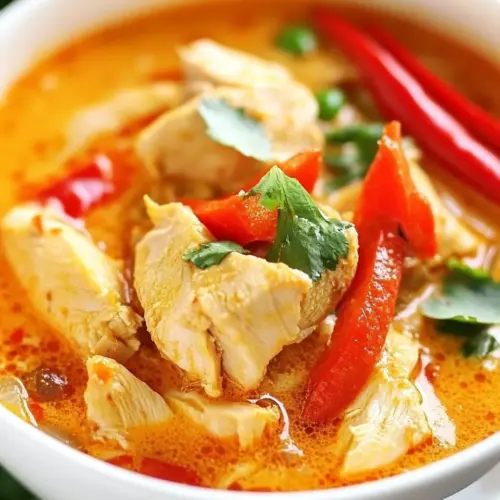
Creamy Thai Coconut Chicken Soup
Creamy Thai Coconut Chicken Soup brings together a creamy coconut broth, tangy lime, and tender chicken for a comforting, aromatic bowl. This easy weeknight dinner is creamy, fragrant, and full of layered Thai flavors, perfect when you want something both soothing and bright. Make it for a quick family meal that tastes like you spent hours cooking.
Equipment
- Instant Pot
- Wooden Spoon
Ingredients
- 2 tablespoons oil Heat and sauté to create the flavor base; oil helps brown aromatics and carry spices, promoting even cooking and preventing sticking. Use a neutral oil to let curry paste and aromatics shine without overpowering the soup.
- 1 small onion, quartered Soften and release sweetness from aromatics; quartered onion adds depth and body when simmered, mellowing into the broth and complementing the curry paste. Cook until translucent to balance the soup's heat and acidity.
- 2 lb s. (1 kg) skinless and boneless chicken breast, or chicken thighs, cut into cubes Cut and simmer to provide the primary protein and substantial texture; skinless boneless chicken cooks quickly and absorbs the curry flavors, making the soup hearty and satisfying. Choose breast for lean meat or thighs for juicier, more flavorful pieces and cut into uniform cubes for even cooking.
- 2 tablespoons Thai red curry paste, Mae Ploy brand Infuse and spice the broth with concentrated Thai flavor; red curry paste contributes heat, aromatics, and umami, forming the dish's characteristic taste profile. Use Mae Ploy or a similar brand for authentic balance and adjust quantity to control spice level.
- 1 red bell pepper, cut into thick strips Add crispness and bright pepper flavor; red bell pepper contributes color, mild sweetness, and a pleasant crunch that contrasts with tender chicken and creamy coconut milk. Slice into thick strips to retain texture after brief simmering.
- 6 slices galangal, optional Aromatize and introduce citrus-ginger notes when available; galangal slices bring a sharp, peppery, slightly piney flavor that enhances authenticity in Thai soups. Use whole slices for infusion and remove before serving if preferred.
- 6 kaffir lime leaves, torn and bruised, optional Brighten and perfume the broth with citrusy, floral notes; torn kaffir lime leaves impart an unmistakable Thai aroma and subtle acidity that lifts the soup's flavors. Bruise the leaves to release essential oils and discard before eating to avoid tough pieces.
- 3 cups chicken broth Simmer and form the soup's savory liquid foundation; chicken broth provides body, saltiness, and depth that carries the other flavors and helps cook the chicken and aromatics. Use low-sodium broth to better control final seasoning.
- 2 tablespoons fish sauce, or salt to taste Season and enhance umami while balancing salt levels; fish sauce contributes savory, slightly fermented complexity that is essential to Thai cooking and can be substituted with salt if needed. Add gradually and taste, as fish sauce is potent.
- 1 tablespoon sugar Balance and round the overall flavor profile with sweetness; sugar tempers heat and acidity while enhancing the curry's aromatic spices and the coconut's richness. Use measured sugar to achieve a subtle, harmonious sweet note without cloying the soup.
- 3/4 cup coconut milk Enrich and lend creamy mouthfeel while adding subtle coconut sweetness; coconut milk creates a luxurious texture and mellows the curry heat, integrating flavors into a smooth broth. Stir gently and avoid prolonged boiling to prevent separation.
- 2 1/2 tablespoons lime juice Brighten and provide lively acidity to finish the soup; lime juice cuts through the richness and elevates flavors, giving the dish a fresh, tangy lift. Add near the end of cooking and adjust to taste for the desired brightness.
- Cilantro leaves Garnish and impart fresh herbaceous aroma; cilantro leaves add a cooling, slightly citrusy finish and visual contrast when sprinkled over the completed soup. Use whole leaves or chopped cilantro right before serving to preserve freshness.
Instructions
- Turn on the Saute mode on your Instant Pot. Add the onion and sauté for 10 seconds before adding the chicken. Continue sautéing the chicken until the surface turns white.: The kitchen will fill with a warm metallic hum as the cooker heats, and you want the inner pot hot enough so a drop of water sizzles on contact. This initial heat is essential because it allows the oil to shimmer and the curry paste to bloom, releasing its aromatic oils. A common mistake is rushing this step on low heat, which will not develop the deep flavors you want. If your Instant Pot has a high and normal saute setting, choose high so the onion softens quickly and the surface of the chicken begins to change color within seconds. Watch for the onion edges to become translucent, and listen for the faint sizzle that signals the pan is properly hot.
- Add the Thai curry paste, bell peppers, galangal, and kaffir lime leaves (if using), and stir to mix well. Pour in the chicken broth, fish sauce, and sugar. Cover the pot and select High pressure for 6 minutes.: When the onion hits the hot oil, you should hear an immediate sizzle and smell a faint sweetness releasing. Sautéing briefly helps mellow the raw edge of the onion , creating a sweeter base note for the broth. The 10 second head start prevents the chicken from crowding the pot while the onion begins to soften. A mistake I often see is adding everything at once, which can steam ingredients instead of sautéing, diluting their aromatics. Keep the motion quick and attentive so the onion gains a gentle gloss without browning.
- When the Instant Pot beeps, turn the valve to Quick Release. Once the valve drops, carefully remove the lid. Add the coconut milk and lime juice to the soup and stir to combine well. Top with cilantro and serve immediately.: As the chicken cooks in the hot pot, you’ll see the exterior shift from pink to opaque white, and you may hear a soft searing sound as proteins tighten. That visual change indicates the meat has sealed, which helps the pieces hold tender texture after pressure cooking. This quick cook also starts the Maillard reaction just enough to add savory depth. Avoid overcooking to the point of browning here, because extended high heat can dry the cubes and make them tough after pressure cooking. If your pieces are sticking, give them a careful stir to ensure even contact with the hot surface.
- Add the Thai curry paste, bell peppers, galangal, and kaffir lime leaves: Once the chicken is opaque, adding the curry paste should provoke an immediate, fragrant bloom as the oils infuse the pot, filling the kitchen with warm, spicy notes. The red bell pepper introduces a sweet, crisp contrast that starts to soften but keeps structure during pressure cooking. If you are using galangal and torn kaffir lime leaves, their citrusy and peppery perfumes will lift the curry, making the broth more layered. Stir thoroughly to coat the chicken and vegetables with paste, scraping any browned bits, because those bits carry concentrated flavor. A common pitfall is burning the paste, so stir constantly and lower the heat if you smell bitterness.
- Pour in the chicken broth, fish sauce, and sugar: As the broth hits the pot, steam and a savory savory aroma will rise, diluting the curry into a soup-ready base. The fish sauce should be added sparingly at first because it provides salty umami quickly, and the sugar helps round the flavors. When you pour liquids into a hot pot, you may hear a vigorous hiss, which is normal. Stir to combine so the paste disperses evenly into the broth. Taste carefully after the soup comes together, because over-salting here is a frequent issue; you can always adjust later.
- Cover the pot and select High pressure for 6 minutes: Sealing the lid captures steam and concentrates aromas, and the pressure cooker will hum as it builds. The 6 minute high pressure window is designed to turn the cubed chicken tender without overcooking, and it also allows the flavors to meld efficiently. You may notice the Instant Pot taking a few minutes to reach pressure; that is the equipment doing its work. Avoid releasing the lid during this time, because opening will interrupt the gentle transformation of textures.
- When the Instant Pot beeps, turn the valve to Quick Release: The moment the cooker signals, you’ll open a little steam valve and hear a rapid rush as pressure escapes, carrying with it a concentrated, fragrant steam. Quick releasing stops the cooking quickly, preserving the delicate texture of the cubed chicken and the bright color of the peppers. Be careful to keep your hands and face away from the steam, and use a utensil to flip the valve. A common mistake is waiting too long to release pressure, which can overcook the chicken into dryness.
- Once the valve drops, carefully remove the lid: Lifting the lid will let out a final plume of aromatic steam, and you should see a gently simmering broth with suspended bits of curry and vegetables. Take a moment to stir, so the flavors mingle evenly. If you notice any separated oil on the surface, it’s usually just the natural oil from the curry paste and is not a problem. Remember to open away from your face to avoid steam burns. If the soup smells flat at this stage, a small pinch of salt or more lime juice will brighten it up.
- Add the coconut milk and lime juice to the soup and stir to combine well: Pouring in the coconut milk will immediately soften the soup’s color to a creamy hue, and the surface will look silkier. The fresh lime juice will fold in as a bright counterpoint, lifting aromatics and balancing richness. Stir gently to integrate, because vigorous boiling after adding coconut milk can cause separation. A typical error is adding coconut milk before depressurizing, which risks curdling; always finish with these delicate ingredients off heat.
- Top with cilantro and serve immediately: The final scatter of fresh cilantro releases a burst of herbal aroma and gives each spoonful a lively finish. Serve right away while the broth is warm and fragrant, and offer extra lime on the side for individual adjustment. If you let the soup sit too long before serving, the herbs will wilt and lose their bright character, so add them at the last minute for maximum impact.
Notes
- Swap proteins: Use chicken thighs instead of breasts for a richer texture and slightly more forgiving cooking, especially if you plan to reheat leftovers.
- Adjust spice level: Increase Thai red curry paste gradually to escalate heat, or add a small spoonful of chili flakes after cooking for controlled intensity.
- Boost umami: Add a touch more fish sauce near the end, tasting as you go, to deepen savory notes without overpowering the lime and coconut.
- Stretch the recipe: For a larger batch, increase broth proportionally and keep the ratio of coconut milk toward the end consistent to preserve creaminess.
- Herbal finish: Offer extra chopped cilantro and lime wedges at the table so guests can brighten their bowls individually.