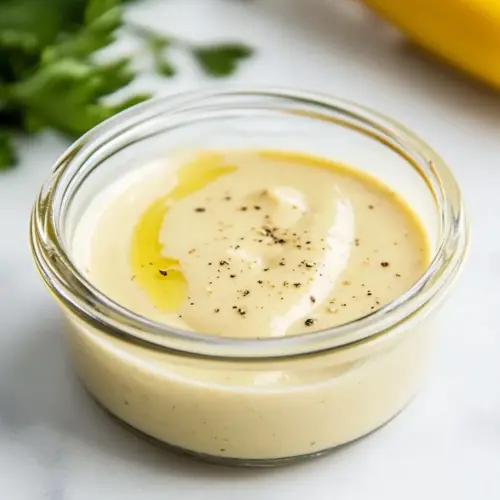
Creamy Tahini Dressing
Creamy Tahini Dressing is a silky, sesame forward sauce with bright lemon and a hint of honey, perfect for salads and grain bowls. This easy, no cook dressing blends nutty tahini with extra virgin olive oil and tangy lemon juice for a versatile pantry staple, ideal for quick weeknight dinners or meal prep and worth making for its bold, balanced flavor.
Equipment
- Small Bowl
- Measuring Spoons
- Measuring Cup
- Whisk
- Airtight Container
Ingredients
- 1/3 cup tahini sesame paste Provides a rich, nutty base and thick, creamy texture that forms the backbone of the dressing; helps emulsify the liquids and contribute a silky mouthfeel. Adds depth of flavor and a subtle roasted sesame aroma that balances the acidity from lemon. Works as a binder for other seasonings and can be thinned with water to reach desired consistency.
- 3 tablespoons extra virgin olive oil Contributes a fruity, robust fat that smooths the tahini and helps create an emulsion with the lemon juice; adds a glossy finish. Enhances mouthfeel and carries flavors across the palate while adding a touch of healthy monounsaturated fats. Helps mellow the tahini's intensity and round out the overall dressing.
- 3 tablespoons lemon juice Adds bright acidity that cuts through the richness and lightens the overall flavor profile; helps balance sweetness and oil. Activates the tahini to become more pourable and tangy, improving overall freshness. Provides a citrusy lift that makes the dressing lively with salads or bowls.
- 1 tablespoon honey Imparts gentle sweetness to counterbalance the lemon and sesame bitterness; helps round the flavor profile and prevent sharpness. A small amount enhances overall harmony and provides a pleasant glaze-like quality. Can be adjusted to taste to make the dressing more mellow or pronounced.
- 1 teaspoon garlic powder Adds a concentrated savory and aromatic note that amplifies the dressing's overall flavor without adding moisture. Provides gentle pungency reminiscent of fresh garlic but shelf-stable and convenient. Enhances savory depth and pairs well with the tahini's nuttiness and lemon's brightness.
- Salt and pepper Season to taste with salt and pepper to elevate and balance all components; salt enhances overall flavor while pepper adds subtle heat and complexity. Use sparingly and adjust at the end to avoid over-seasoning, as tahini can mute salt perception. Ensures the dressing is flavorful and well-rounded.
- Optional: 1-3 tablespoons water if needed Allows adjustment of consistency to desired pourability or creaminess, used sparingly until the dressing reaches the preferred texture. Helps achieve a smooth, drizzle-able dressing without thinning flavor when added incrementally. Useful for customizing viscosity for salads, bowls, or dipping.
Instructions
- Set out a small bowl or measuring pitcher. Measure and combine the tahini paste, olive oil, lemon juice, honey, and garlic powder.: The immediate feel when you gather your tools is one of readiness, a small quiet ritual before you create. Using a narrow measuring pitcher concentrates the action as you whisk, and the sides help keep splatter in check. You want stability under your wrist, so choose a vessel that sits flat on the counter. A common mistake is using a container that is too wide, which forces faster whisking and can leave the tahini unevenly mixed.
- Whisk the dressing until smooth. If it is thicker than desired, you can whisk in 1 tablespoon of water at a time to reach your desired consistency.: At this stage the aromas start to layer, with sesame and citrus present but not yet harmonized. Measuring carefully keeps the balance consistent, and I like adding the honey last so it settles into the mix instead of clinging to a spoon. If tahini is thick, it may resist incorporation at first, so scrape the jar to include every bit. Overcrowding the bowl with ingredients can make whisking inefficient, so keep proportions modest for easier blending.
- Taste, then add salt and pepper as needed. At this point you can also whisk in additional herbs and spices if you want.: Now you will notice the texture change, from grainy to silky. Use steady, circular wrist motion and listen for a faint, even sound as the whisk glides through the liquid. The color will shift to a glossy, pale tan. This step matters because thorough emulsification ensures the oil and tahini bind rather than separate, giving you a stable dressing that clings to food. If you rush, you may end up with thin streaks of oil, which signals incomplete mixing.
- Cover the dressing and refrigerate until ready to serve.: Adding water is about texture, not flavor, so proceed gradually and judge by how the dressing coats the back of a spoon. The first splash will loosen the mixture, and small increments let you stop when you hit the perfect pourable stage. Use room temperature water to avoid chilling the emulsion. A typical slip up is adding too much liquid at once, which makes the dressing runny and dulls the sesame's mouthfeel.
- Taste, then add salt and pepper as needed: This sensory check is essential, taste for acidity, salt balance, and sweetness. Adjust in tiny increments because each addition shifts the profile noticeably. The dressing should sing, with each component present but none overpowering. A mistake many people make is over salting early on, so season lightly and revisit after the flavors settle for a minute.
- At this point you can also whisk in additional herbs and spices if you want: This is the customization window where you can fold in parsley, cumin, or chili flakes for a different character. Sensory cues to look for are aroma and how the dressing clings after additions. Adding large amounts of fresh herbs can introduce moisture, so account for that by whisking a touch more. Avoid overpowering the tahini base, since it is the hallmark flavor you want to preserve.
- Cover the dressing and refrigerate until ready to serve: Chilling helps the flavors meld, and the dressing thickens slightly as it cools, which many people prefer. Use an airtight container to prevent odor transfer from the fridge. Before serving, give it a brisk stir to reincorporate any settled oil. A common error is leaving it uncovered, which diminishes freshness and can dry the surface.
Notes
- Measure Precisely: Use measuring spoons and cups to get the proportions right, especially for the first few times, so you can learn how the balance feels and then adjust from there.
- Room Temperature Ingredients: If your tahini is cold, let it sit briefly so it mixes smoothly; cold, stiff tahini can seize and resist emulsification.
- Slow Emulsification: Whisk the tahini and lemon together before adding oil to encourage a stable emulsion that will not separate quickly in the fridge.
- Adjust Gradually: When thinning with water, add one tablespoon at a time and test by drizzling over a spoon or salad to check consistency.
- Store Properly: Keep in an airtight container in the refrigerator for up to three weeks, and stir well before each use to recombine any settled components.