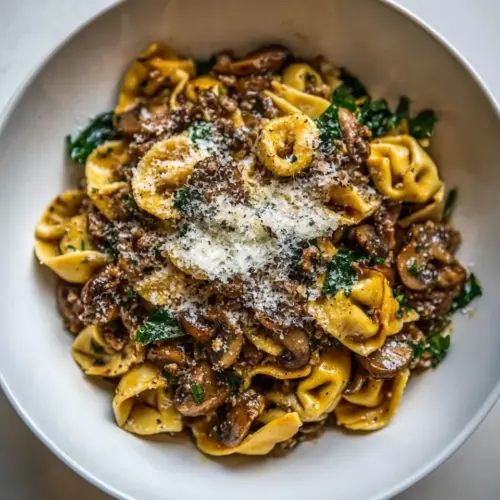
Creamy Sausage Mushroom Fennel Tortellini
Creamy Sausage Mushroom Fennel Tortellini brings together spicy Italian sausage, tender mushrooms, and aromatic fennel in a silky cream and chicken stock sauce that clings to cheese tortellini, creating a cozy, easy weeknight dinner. The dish is rich yet balanced with bright fennel fronds and spinach, perfect for family meals or casual entertaining, and a satisfying reason to try it tonight.
Equipment
- Large Skillet
- Spatula
- Saucepan for tortellini
Ingredients
- 1 tablespoon extra virgin olive oil Heat olive oil in the pan to create a flavorful cooking base, helping to brown proteins and vegetables evenly. Adds a fruit-forward richness that complements aromatics and binds the sauce components together.
- 1 pound spicy Italian sausage, removed from casing Brown spicy Italian sausage to develop savory depth and render flavorful fat that seasons the dish. Break into bite-sized pieces while cooking to ensure even distribution and caramelization for complexity.
- 1 medium sized head fennel, trimmed and thinly sliced (chop fronds for topping) Slice fennel thinly to provide a crisp, anise-like freshness and aromatic lift that brightens rich flavors. Reserve chopped fronds as a fresh, herbaceous garnish to add color and subtle licorice notes.
- 1 pound sliced white mushrooms Sauté sliced white mushrooms to introduce earthy umami and absorb surrounding flavors, contributing body to the sauce. Cook until golden to concentrate their savory character and release juices for deglazing.
- 4 cloves garlic, minced Mince garlic finely to infuse the dish with pungent aromatic heat and foundational savory flavor. Add early in cooking to mellow its sharpness and integrate into the sauce for complexity.
- 1/2 teaspoon Italian seasoning Sprinkle Italian seasoning to layer Mediterranean herb notes like oregano, basil, and thyme that harmonize with sausage and tomatoes. Use sparingly to enhance overall flavor without overpowering delicate ingredients.
- 1 cup low sodium chicken stock Pour low sodium chicken stock to deglaze the pan and build a savory, low-salt liquid base for the sauce. Use reduced-sodium stock to control sodium levels while maintaining rich chicken flavor and moisture.
- 1/2 cup heavy cream Stir in heavy cream to create a silky, luxurious sauce that mellows spice and binds ingredients together. Add gradually and simmer gently to thicken and develop a smooth, creamy texture.
- 1 pound cheese tortellini, cooked Fold in cooked cheese tortellini to provide hearty, filled pasta pockets that soak up the sauce and add comforting, cheesy bites. Ensure tortellini are warmed through and coated evenly for balanced servings.
- 1/2 cup shredded Parmesan cheese Sprinkle shredded Parmesan cheese to introduce salty, nutty umami that enhances creaminess and adds a savory finish. Stir into the sauce off heat if needed to melt smoothly and avoid graininess.
- 2 cups packed baby spinach leaves Toss in packed baby spinach leaves to add bright color, mild vegetal flavor, and a nutritional boost of vitamins and minerals. Wilt briefly into the hot sauce so leaves soften but retain freshness and texture.
Instructions
- In a large skillet set over medium heat add olive oil. When the oil is hot add in the sausage, break up with your spatula and brown. When the sausage is about half way cooked add in the fennel and sliced mushrooms. Cook together until soft and the meat is fully browned.: The moment the oil shimmers you should smell a faint, fruity warmth from the extra virgin olive oil , which primes the pan for browning. A hot but not smoking surface encourages Maillard reaction when the sausage hits the pan, creating those brown flecks that carry so much flavor. If the oil is too cool the meat will stick and release moisture instead of crisping, while if it is too hot you risk burning the oil and developing a bitter note. To troubleshoot, test with a small pinch of sausage to see if it sizzles immediately; adjust the flame if it does not.
- Add in garlic and Italian seasoning and cook until the garlic is fragrant, about 30 seconds.: As the sausage sizzles, you will hear a steady crackle and see the meat change color from pink to golden brown edges, releasing fragrant, seasoned fat into the pan. Breaking it up encourages even contact and faster browning, which builds savory depth. Patience is key here, resist stirring constantly so the meat can form those browned bits. A common mistake is stirring too often, which prevents browning and leaves the sausage steamed rather than caramelized.
- Pour in chicken stock and heavy cream and cook for a few minutes just until it's thickened a tiny bit. Since it's dairy you don't want to scorch the sauce so turn down the heat if needed.: The pan will go from one-note meat aroma to a complex, savory chorus as the fennel softens and the mushroom releases moisture, then browns at the edges. You should hear a softer sizzle as vegetables meet the hot fat and see translucency in the fennel and golden rim on the mushrooms. This step is important because the vegetables absorb and redistribute the sausage flavor, creating cohesion. Avoid adding them too early or too small a pan will steam them, preventing caramelization.
- Once the sauce is ready remove from heat and add in cooked tortellini, shredded Parmesan cheese and baby spinach. Stir to combine and give it a few minutes so the spinach can wilt in the sauce.: At this stage, the kitchen fills with layered aromas, and visually the mixture should show well colored meat and tender, slightly browned vegetables. The fennel will lose its raw crunch but retain brightness, and the mushrooms should show small brown patches rather than a uniform gray. If anything looks pale or steamy, increase the heat briefly to encourage browning, but be careful not to burn the edges. Overcooked mushrooms can become mealy and lose flavor.
- Serve with fennel fronds and shredded Parmesan cheese on top if desired.: When you add the minced garlic and dried Italian seasoning , brace for a burst of aroma in just seconds; it should smell aromatic and herbaceous immediately. The aim is to bloom the dried herbs and mellow the raw garlic without letting it toast to a bitter brown. Keep the pan moving at this point for an even fragrance. The usual error is leaving garlic too long, which turns it bitter, so be ready to proceed to the next step promptly.
- Pour in chicken stock and heavy cream and cook for a few minutes just until it's thickened a tiny bit: As the chicken stock hits the pan you will see the mixture loosen and steam, then as the heavy cream goes in the sauce will take on a glossy sheen. Gentle simmering concentrates flavors and slightly reduces the liquid, bringing the sauce to a velvety consistency. Keep the heat moderate to prevent scorching, stirring to integrate the dairy. If the sauce begins to bubble aggressively, lower the flame, because high heat can separate the cream leading to a curdled texture.
- Since it's dairy you don't want to scorch the sauce so turn down the heat if needed: The surface tension of a cream enriched sauce makes it susceptible to scorching, which yields an unpleasant cooked-milk flavor and dark flecks. You should see gentle movement in the sauce, small bubbles around the edges rather than a rolling boil. Stir occasionally and use the pan's residual heat to finish thickening. A common pitfall is walking away and returning to a burned base, which is difficult to salvage, so stay nearby.
- Once the sauce is ready remove from heat and add in cooked tortellini, shredded Parmesan cheese and baby spinach: With the pan off the burner, the residual warmth will melt the Parmesan cheese into a silky matrix that clings to the tortellini . Toss in the spinach , which will wilt gently in that warm sauce, changing from bright green to a slightly darker hue and folding into the pasta. This off heat step prevents the cheese from becoming stringy and the cream from separating. Overheating now will make the texture grainy, so fold gently and let the ingredients coalesce.
- Stir to combine and give it a few minutes so the spinach can wilt in the sauce: Stirring creates a glossy, unified plate where the tortellini is evenly coated and the wilted spinach is distributed. Smell the melded aromatics and check texture, the pasta should feel tender but not mushy, and the sauce should cling rather than pool. If it seems too loose, let it rest a minute to thicken slightly, but if it seems dry, add a splash of reserved pasta water. A frequent mistake is skipping the rest period, which results in the sauce seeming thinner once plated.
- Serve with fennel fronds and shredded Parmesan cheese on top if desired: The finishing touch of feathery fennel fronds and an extra sprinkle of Parmesan cheese adds freshness and an immediate burst of savory saltiness. Visually this elevates the dish, and texturally the fronds provide a delicate contrast. Serve promptly to enjoy the creamy sauce at its best; leaving it too long causes the pasta to absorb too much sauce and dull the textures.
Notes
- Heat control: Keep the pan at a medium to medium high range while browning so you get good color on the sausage and mushroom without burning. If you see dark, bitter bits form, reduce the heat and deglaze with a splash of chicken stock.
- Gentle dairy handling: Add the heavy cream over gentle heat and stir to integrate, because high heat can cause the sauce to separate. If you suspect scorching, remove the pan from direct heat and stir until smooth.
- Cheese finish: Stir in the Parmesan cheese off heat so it melts evenly without clumping, giving a silky mouthfeel rather than stringy pockets of cheese.
- Pasta timing: Cook the tortellini to firm al dente, because it will continue to soften slightly when tossed in the warm sauce. Overcooked pasta will tear and absorb too much sauce.
- Fennel usage: Slice the fennel thin and reserve fronds as a fresh garnish, which preserves their fresh anise note and adds a bright finish to the dish.
- Salt adjustments: Since the sausage and Parmesan cheese contain salt, use low sodium chicken stock and taste before adding salt, to avoid over seasoning.